
Enertia Eco Propellers Redefining Marine Propulsion for a Sustainable Future
The Evolution of Marine Propulsion in a Changing World
Marine propulsion is no longer evaluated solely on speed or thrust. Instead, performance expectations have expanded. Efficiency, environmental responsibility, noise reduction, and long-term operational value now sit at the center of buyer decision-making. As a result, propeller technology has entered a critical transformation phase—one driven by sustainability goals, regulatory pressure, and rising fuel costs.
Across recreational boating, commercial fleets, and specialized marine applications, operators are actively searching for propulsion solutions that deliver measurable gains without compromising reliability. Consequently, innovation within this space has accelerated. Among these advancements, Enertia Eco Propellers have emerged as a defining solution for modern marine propulsion.
Unlike conventional propellers that rely on decades-old design assumptions, Enertia Eco Propellers are engineered to align with today’s ecological, economic, and performance-driven realities. Through advanced materials, refined hydrodynamics, and purpose-built design philosophies, they represent a shift toward intelligent propulsion systems rather than simple mechanical components.
Why the Marine Industry Is Rethinking Traditional Propellers
Rising Fuel Costs and Operational Pressure
Fuel efficiency has become a decisive factor for boat owners and fleet managers alike. Even marginal improvements in propulsion efficiency can translate into substantial cost savings over time. Traditional propellers, however, often operate below optimal efficiency ranges due to cavitation, drag, and suboptimal blade geometry.
Because Enertia Eco Propellers are designed to reduce wasted energy, propulsion efficiency improves across a wide range of operating conditions. As a result, fuel consumption is reduced while performance consistency is enhanced.
Environmental Accountability Is No Longer Optional
Environmental stewardship is now embedded in marine regulations and consumer expectations. Emissions standards are tightening. Noise pollution restrictions are expanding. Waterway conservation initiatives continue to grow in scope and enforcement.
For these reasons, propulsion components are increasingly scrutinized. Enertia Eco Propellers address this challenge directly by minimizing cavitation, reducing vibration, and supporting lower engine loads. In doing so, they contribute to cleaner, quieter, and more sustainable marine operations.
Performance Expectations Have Expanded
Speed alone no longer defines performance. Acceleration, smooth handling, reduced vibration, and predictable control now matter just as much—especially in congested waterways or sensitive marine environments.
Enertia Eco Propellers are engineered with these broader performance metrics in mind. Instead of focusing on peak output alone, their design supports balanced, real-world usability.
Introducing Enertia Eco Propellers
A New Standard in Propeller Design
Enertia Eco Propellers are not incremental upgrades. They are the result of a comprehensive rethinking of how propellers interact with water, engines, and vessels. Every design element—from blade shape to material composition—serves a defined performance or sustainability purpose.
By combining hydrodynamic optimization with environmentally responsible engineering, Enertia Eco Propellers deliver value that extends far beyond propulsion alone.
Designed for Efficiency Without Compromise
Efficiency gains are achieved without sacrificing thrust, reliability, or durability. Through advanced blade profiling and optimized pitch distribution, water flow remains smoother and more controlled. Consequently, engines operate under less strain, and vessels experience improved responsiveness.
This balanced approach ensures that efficiency enhancements feel seamless rather than restrictive.
Core Benefits of Enertia Eco Propellers
The advantages of Enertia Eco Propellers extend across multiple dimensions of marine performance. Key benefits include:
-
Improved fuel efficiency through reduced drag and optimized thrust
-
Lower emissions resulting from decreased engine load
-
Reduced cavitation, minimizing vibration and noise
-
Enhanced acceleration and maneuverability
-
Extended engine lifespan due to smoother power transfer
-
Compatibility with a wide range of vessel types
-
Long-term cost savings through operational efficiency
Each of these benefits compounds over time, creating measurable value for both individual boat owners and large-scale operators.
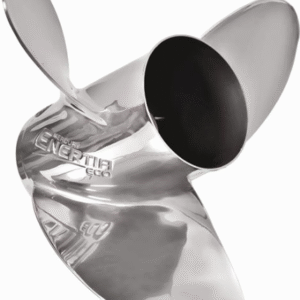
Understanding the “Eco” Advantage in Propeller Technology
Hydrodynamic Efficiency as a System
Efficiency does not exist in isolation. Instead, it emerges from the interaction between propeller geometry, water flow, engine output, and vessel design. Enertia Eco Propellers are engineered as part of this broader system.
By reducing turbulence and maintaining consistent water displacement, energy losses are minimized. As a result, more of the engine’s power is converted into forward motion rather than wasted resistance.
Reduced Cavitation for Cleaner Operation
Cavitation not only reduces efficiency but also contributes to blade erosion, vibration, and underwater noise. Over time, these effects degrade both performance and component longevity.
Enertia Eco Propellers are shaped to delay and reduce cavitation onset. Consequently, propulsion remains smoother, quieter, and more stable across varying speeds and loads.
Built for Today’s Diverse Marine Applications
Recreational Boating
Recreational boat owners value smooth acceleration, quiet operation, and fuel savings. Enertia Eco Propellers enhance the overall boating experience by delivering consistent thrust and reduced vibration, making longer outings more comfortable and economical.
Commercial and Fleet Operations
For commercial operators, efficiency directly impacts profitability. Fuel savings, reduced maintenance, and extended equipment life all contribute to lower total cost of ownership. Enertia Eco Propellers support these priorities through reliable, repeatable performance.
Environmentally Sensitive Zones
In protected waterways and eco-sensitive regions, reduced noise and emissions are essential. Because Enertia Eco Propellers operate with lower cavitation and smoother water displacement, they align well with conservation-focused operational requirements.
The Engineering Philosophy Behind Enertia Eco Propellers
Precision Engineering Driven by Purpose
Engineering excellence begins with intent. Enertia Eco Propellers are developed around a singular objective: maximize propulsion efficiency while minimizing environmental and mechanical waste. Rather than adapting legacy propeller designs, the engineering process starts from hydrodynamic fundamentals and builds upward.
Every contour, angle, and surface transition is calculated to improve how water is displaced, accelerated, and released. As a result, propulsion becomes smoother, more controlled, and significantly more efficient under real-world operating conditions.
Instead of emphasizing theoretical peak performance, the design philosophy prioritizes usable efficiency across the full RPM range. This ensures that benefits are experienced not only at top speed, but during cruising, maneuvering, and variable-load scenarios.
Advanced Blade Geometry: Where Efficiency Begins
Optimized Blade Profiles for Controlled Water Flow
Blade geometry plays a decisive role in propeller performance. Traditional propellers often rely on uniform blade shapes that fail to account for changing pressure zones along the blade length. Enertia Eco Propellers address this limitation through variable geometry profiling.
By adjusting blade thickness, curvature, and camber along the radius, water flow remains attached for longer periods. Consequently, turbulence is reduced and thrust is distributed more evenly.
This approach delivers several advantages simultaneously:
-
Improved thrust efficiency
-
Reduced drag
-
Lower cavitation risk
-
Smoother acceleration
Each benefit reinforces the others, creating a balanced propulsion system rather than a single-purpose component.
Progressive Pitch Distribution
Pitch consistency is rarely optimal across an entire blade. Enertia Eco Propellers incorporate progressive pitch distribution to align propulsion forces with real hydrodynamic behavior.
Because water velocity and pressure vary from hub to tip, pitch is carefully calibrated to match these changes. As a result, energy transfer remains efficient across the blade surface, reducing slip and enhancing forward motion.
Material Science and Structural Integrity
Lightweight Construction Without Compromising Strength
Material selection directly influences rotational efficiency. Heavier propellers require more energy to accelerate and decelerate, placing additional strain on engines. Enertia Eco Propellers utilize advanced composite and alloy solutions engineered for high strength-to-weight ratios.
This material strategy delivers:
-
Faster throttle response
-
Reduced rotational inertia
-
Lower drivetrain stress
-
Improved fuel economy
Despite reduced mass, structural integrity remains uncompromised. Load-bearing zones are reinforced precisely where stress concentrations occur, ensuring durability under demanding operating conditions.
Corrosion Resistance and Longevity
Marine environments are inherently corrosive. Saltwater exposure, temperature variation, and biological growth all contribute to material degradation over time.
Enertia Eco Propellers are engineered with corrosion-resistant materials and surface treatments that extend operational lifespan. Consequently, performance consistency is maintained season after season, reducing replacement frequency and lifecycle costs.
Hydrodynamic Optimization Beyond the Blades
Hub Design and Flow Management
Efficiency losses often originate near the hub, where disturbed water flow and pressure imbalances occur. Enertia Eco Propellers incorporate refined hub geometries that manage water intake more effectively.
By smoothing flow transitions at the hub-blade interface, turbulence is reduced before it can propagate outward. This design choice enhances overall propulsion stability and contributes to quieter operation.
Reduced Vibration Through Balanced Load Distribution
Vibration is not merely a comfort issue—it signals inefficiency and mechanical stress. Uneven load distribution across propeller blades amplifies vibration, accelerating wear on engines and drivetrains.
Enertia Eco Propellers are dynamically balanced to distribute loads evenly during rotation. As a result, vibration levels decrease, steering response improves, and mechanical components experience less fatigue over time.
Cavitation Control as a Design Priority
Understanding Cavitation at the Source
Cavitation occurs when pressure drops cause vapor bubbles to form and collapse against blade surfaces. This phenomenon erodes materials, generates noise, and reduces thrust efficiency.
Rather than treating cavitation as an unavoidable byproduct, Enertia Eco Propellers address it at the design stage. Blade edges, pressure gradients, and surface finishes are optimized to delay cavitation onset.
Measurable Benefits of Reduced Cavitation
When cavitation is minimized:
-
Noise levels decrease
-
Blade erosion slows
-
Thrust remains consistent
-
Fuel efficiency improves
These outcomes enhance both environmental performance and long-term reliability, reinforcing the “eco” advantage beyond emissions alone.
Engineering Benefits at a Glance
Key engineering-driven advantages include:
-
Variable blade geometry for optimized water flow
-
Progressive pitch distribution for reduced slip
-
Lightweight, high-strength materials
-
Corrosion-resistant construction
-
Hydrodynamically refined hub design
-
Lower vibration and noise levels
-
Enhanced durability under continuous use
Each feature is engineered to deliver tangible, measurable improvements rather than theoretical gains.
Translating Engineering Into Real-World Performance
Engineering excellence only matters when it delivers results on the water. Enertia Eco Propellers transform technical refinements into operational advantages that users can feel immediately.
Acceleration becomes smoother. Cruising efficiency improves. Handling feels more predictable. Over time, these improvements accumulate into lower fuel costs, reduced maintenance, and greater confidence in vessel performance.
Performance Validation: Turning Engineering Into Measurable Results
Performance That Extends Beyond Specifications
Performance claims only carry value when they translate into observable, repeatable outcomes on the water. Enertia Eco Propellers are designed to deliver advantages that are not limited to controlled test conditions. Instead, their performance benefits remain consistent across varying speeds, loads, and operating environments.
Because propulsion efficiency is improved at the system level, users experience gains during acceleration, cruising, maneuvering, and sustained operation. As a result, performance improvements feel practical rather than theoretical.
Fuel Efficiency Gains Across Operating Ranges
Reduced Slip and Optimized Power Transfer
Fuel efficiency is influenced heavily by propeller slip. Excessive slip converts engine power into turbulence rather than forward motion. Enertia Eco Propellers address this inefficiency through optimized blade geometry and progressive pitch distribution.oem mercruiser parts
By maintaining consistent water engagement, thrust is generated more effectively. Consequently, less fuel is required to achieve and maintain target speeds.oem mercruiser parts
Real-World Fuel Savings Impact
Even modest percentage improvements in efficiency compound significantly over time. For recreational users, this translates into longer outings and fewer refueling stops. For commercial operators, operational budgets benefit directly from reduced fuel consumption.mercruiser serial number lookup
Key fuel-related outcomes include:
-
Lower fuel burn at cruising speeds
-
Improved range per tank
-
Reduced throttle input for equivalent performance
-
More predictable fuel usage under variable loads
These advantages reinforce both economic and environmental value propositions.
Acceleration and Throttle Responsiveness
Faster Hole Shot Without Excessive Engine Load
Acceleration performance is often compromised by propeller designs that favor top-end speed at the expense of low-RPM efficiency. Enertia Eco Propellers balance this trade-off by improving thrust generation during initial acceleration.
As a result, vessels achieve plane more quickly without requiring aggressive throttle input. Engines operate within optimal load ranges, supporting both performance and longevity.
Smooth Power Delivery
Throttle response feels smoother and more linear due to reduced vibration and consistent blade engagement. This characteristic improves handling confidence, particularly in congested waterways or during docking maneuvers.
Cruising Stability and Operational Comfort
Reduced Vibration for Enhanced Control
Vibration introduces inefficiency and discomfort. Over time, it also accelerates wear across mechanical systems. Enertia Eco Propellers minimize vibration by maintaining balanced load distribution throughout rotation.
Consequently, steering input feels more precise, and overall vessel stability improves. These benefits become especially noticeable during extended cruising periods.
Noise Reduction as a Performance Metric
Noise is often overlooked in performance evaluations, yet it directly affects user experience and environmental compliance. Reduced cavitation and smoother water displacement lower underwater and airborne noise levels.
This improvement enhances comfort for passengers while supporting operations in noise-sensitive zones.
Emissions Reduction Through Efficiency
Lower Engine Load, Cleaner Operation
Emissions output is closely tied to engine workload. When propulsion efficiency improves, engines operate under reduced strain. Enertia Eco Propellers support this relationship by converting more engine power into usable thrust.
As a result:
-
Combustion efficiency improves
-
Emissions output decreases
-
Engine temperatures remain more stable
These outcomes align with sustainability goals without requiring changes to existing powertrains.
Supporting Regulatory and Environmental Goals
As marine emissions regulations continue to evolve, efficiency-driven solutions become increasingly valuable. Enertia Eco Propellers help future-proof operations by supporting compliance through mechanical optimization rather than after-the-fact mitigation.
Performance Under Variable Load Conditions
Consistency Across Payload Changes
Traditional propellers often struggle when vessel load changes significantly. Additional passengers, cargo, or equipment alter hydrodynamic behavior, reducing efficiency.
Enertia Eco Propellers maintain stable performance across variable loads by distributing thrust more evenly. This adaptability ensures predictable handling and efficiency regardless of operating conditions.
Reliability in Commercial Use Cycles
For commercial and fleet operators, reliability under continuous use is critical. Performance consistency reduces downtime, simplifies planning, and supports predictable operational outcomes.
Comparative Performance Advantages
When compared to conventional propellers, Enertia Eco Propellers consistently demonstrate advantages in key performance areas:
-
Improved fuel efficiency at cruising speeds
-
Faster and smoother acceleration
-
Reduced vibration and noise
-
More stable handling characteristics
-
Lower long-term operational costs
These advantages are not isolated metrics. Instead, they combine to create a superior overall propulsion experience.
Frequently Asked Questions About Enertia Eco Propellers
What makes Enertia Eco Propellers different from traditional propellers?
Enertia Eco Propellers are engineered with a system-level efficiency approach rather than a single-metric performance focus. Blade geometry, pitch distribution, materials, and hydrodynamics work together to reduce drag, minimize cavitation, and optimize thrust. As a result, fuel efficiency, smoothness, and environmental performance improve simultaneously rather than in isolation.mercruiser marine engine parts
How do Enertia Eco Propellers improve fuel efficiency?
Fuel efficiency improves because more engine power is converted into forward motion instead of turbulence. Optimized blade profiles reduce slip, while progressive pitch distribution maintains consistent water engagement. Consequently, vessels require less throttle input to maintain cruising speeds, which lowers fuel consumption over time.mercruiser marine engine parts
Are Enertia Eco Propellers suitable for both recreational and commercial vessels?
Yes. Enertia Eco Propellers are designed for broad compatibility. Recreational users benefit from smoother acceleration and quieter operation, while commercial operators gain from reduced fuel costs, lower maintenance demands, and consistent performance under continuous use. This versatility allows the same core technology to serve multiple marine sectors effectively.
Do Enertia Eco Propellers reduce noise and vibration?
Noise and vibration are reduced through balanced load distribution and cavitation control. By maintaining stable pressure zones along the blades, water flow remains smoother. As a result, underwater noise decreases, vibration levels drop, and overall operating comfort improves.
Will installing an Enertia Eco Propeller require engine or drivetrain modifications?
In most cases, no modifications are required. Enertia Eco Propellers are designed to integrate with existing propulsion systems. Proper sizing and configuration ensure compatibility with standard shafts and hubs, allowing upgrades without complex mechanical changes.
How do Enertia Eco Propellers support environmentally responsible boating?
Environmental benefits are achieved through mechanical efficiency rather than add-on technologies. Reduced fuel burn lowers emissions, while minimized cavitation decreases underwater noise and ecological disturbance. This approach supports sustainable boating practices without limiting operational capability.
Are Enertia Eco Propellers durable in saltwater and harsh marine environments?
Yes. Materials and surface treatments are selected specifically for corrosion resistance and long-term durability. Performance consistency is maintained even with prolonged exposure to saltwater, temperature fluctuations, and biological growth, which reduces replacement frequency and lifecycle costs.
How do these propellers perform under variable load conditions?
Performance remains stable across changing payloads. Whether carrying additional passengers, cargo, or equipment, thrust distribution adapts effectively. This consistency improves handling predictability and efficiency, especially in commercial or multi-use applications.
Will switching to an Enertia Eco Propeller affect top-end speed?
Top-end speed is typically maintained or modestly improved, depending on vessel configuration. However, the most noticeable gains occur in acceleration, cruising efficiency, and overall smoothness. These improvements often provide greater real-world value than marginal speed increases alone.
How long does it take to see a return on investment?
Return on investment depends on usage frequency and fuel costs. High-use commercial operators may see measurable savings in a relatively short period. Recreational users benefit through long-term fuel savings, reduced maintenance, and improved ownership experience over time.
Who should consider upgrading to Enertia Eco Propellers?
Enertia Eco Propellers are ideal for:
-
Fuel-conscious boat owners
-
Eco-focused operators
-
Commercial fleets seeking efficiency gains
-
Vessels operating in noise-sensitive or regulated waterways
-
Users prioritizing smooth, reliable performance
| Prop size * Diameter x Pitch | 16 x 17, 16×18, 16×19, 16×20, 16×21, 16×22, 16×23 |
|---|---|
| Roation | RH standard, LH Counter |
Be the first to review “Enertia Eco Propellers”
Related products
Outboard Props
Outboard Props
Outboard Props
Outboard Props
Outboard Props
Reviews
There are no reviews yet.