
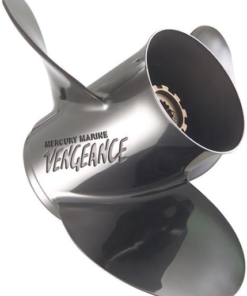
Mercury Marine Trophy Plus Propeller
Performance on the water is shaped by balance—between power and control, speed and efficiency, confidence and comfort. For boaters seeking that balance, the Mercury Marine Trophy Plus Propeller has been engineered as a dependable, high-performance solution that adapts to a wide range of real-world boating needs.
Rather than focusing on a single performance metric, this propeller has been developed to deliver consistent results across acceleration, handling, and sustained cruising. Because boating communities are diverse in skill level, use case, and vessel configuration, the Trophy Plus propeller was designed to be inclusive by nature—supporting recreational users, competitive anglers, and family-focused boaters alike.
Manufactured by Mercury Marine, a brand recognized globally for innovation and reliability in marine propulsion, the Trophy Plus propeller reflects decades of hydrodynamic research, precision manufacturing, and field validation.
Understanding the Role of a Performance Propeller
Why the Propeller Matters More Than Many Realize
A propeller functions as the final point of power transfer between the engine and the water. Although engines generate horsepower, it is the propeller that determines how effectively that power is converted into forward motion. As a result, propeller selection directly influences acceleration, fuel efficiency, handling behavior, and overall ride quality.
When a propeller is properly matched to a boat and engine combination, performance gains are realized immediately. Conversely, an ill-suited propeller can limit speed, increase fuel consumption, and reduce operator confidence.
The Trophy Plus propeller has been developed to minimize those compromises by offering a balanced design that performs reliably across varied operating conditions.
Brand Authority: The Mercury Marine Advantage
Engineering Heritage and Industry Leadership
Mercury Marine has built its reputation on engineering solutions that perform consistently in demanding marine environments. Because propulsion systems must operate under fluctuating loads, changing water conditions, and extended run times, design precision is essential.
Every Trophy Plus propeller benefits from:
-
Advanced hydrodynamic modeling
-
Precision stainless-steel casting processes
-
Extensive on-water testing across vessel categories
As a result, the product aligns with both manufacturer specifications and real-user expectations.
Trust Built Through Proven Performance
Across global boating markets, Mercury Marine products are selected not only by individual boaters but also by professional operators and competitive anglers. That trust has been earned through long-term reliability, responsive customer support, and consistent product evolution.
The Trophy Plus propeller continues this legacy by addressing modern boating demands without excluding traditional performance expectations.
What the “Trophy Plus” Name Represents
A Design Philosophy Focused on Balance
The “Trophy Plus” designation is not applied arbitrarily. It represents a design philosophy that prioritizes versatility without sacrificing performance fundamentals. Rather than maximizing top speed alone, this propeller focuses on controllable acceleration, predictable handling, and sustained efficiency.
Because many boats operate under varying loads—passengers, fuel, gear, or livewells—the Trophy Plus propeller is engineered to adapt dynamically. That adaptability supports inclusive use cases, ensuring performance remains accessible across different boating lifestyles.
Intended Audience and Buyer Profiles
Recreational Boaters
For individuals and families who value smooth operation and dependable handling, the Trophy Plus propeller offers predictable throttle response and reduced vibration. As a result, time on the water feels more relaxed and enjoyable.
Performance-Oriented Anglers
Competitive and semi-competitive anglers benefit from strong hole shot and controlled maneuvering. Because quick planing and sharp turns are often required, the four-blade design supports precise handling under pressure.
Multi-Purpose Boat Owners
Boat owners who alternate between cruising, fishing, and light watersports require a propeller that does not need constant replacement. The Trophy Plus propeller fulfills that requirement by delivering balanced performance across multiple activities.
Engineering the Advantage: How Design Translates Into Performance
Performance consistency is achieved when engineering choices align with real-world operating conditions. With the Mercury Marine Trophy Plus Propeller, design decisions were guided by hydrodynamic efficiency, load adaptability, and operator control. Every structural element contributes to predictable behavior across acceleration, cruising, and maneuvering phases.
Developed by Mercury Marine, the Trophy Plus propeller reflects a systems-based approach rather than isolated optimization. As a result, performance gains are distributed evenly instead of being concentrated in a single operating range.
Four-Blade Architecture: Stability Through Surface Engagement
Why Four Blades Matter
Unlike traditional three-blade propellers, the Trophy Plus utilizes a four-blade configuration. This design increases the total blade surface area in contact with the water at any given moment. Consequently, thrust is delivered more smoothly, especially during rapid throttle changes.
Because water engagement is more consistent, slip is reduced. This reduction allows torque to be converted into forward motion more efficiently, particularly when boats are heavily loaded or operating in rougher conditions.
Impact on Handling and Control
Enhanced blade engagement improves steering authority. During sharp turns or sudden directional changes, grip is maintained. As a result, control remains predictable, even at higher speeds or under dynamic loads.
This characteristic is especially beneficial for boaters who prioritize confidence and safety alongside performance.
Stainless Steel Construction: Strength That Preserves Efficiency
Material Selection and Structural Integrity
High-grade stainless steel is used in the construction of the Trophy Plus propeller. This material choice provides exceptional resistance to corrosion, fatigue, and deformation. Because blade shape remains intact over time, hydrodynamic efficiency is preserved.
Unlike aluminum propellers, stainless steel maintains precise edge geometry. Therefore, water flow remains clean, and energy loss is minimized throughout the propeller’s lifespan.
Long-Term Performance Stability
Over extended use, propellers are subjected to vibration, debris contact, and varying torque loads. Stainless steel construction ensures that these stressors do not compromise performance characteristics. As a result, the Trophy Plus propeller delivers consistent output season after season.
Blade Geometry and Cup Design
Optimized Blade Rake and Camber
Blade rake and camber are calibrated to support both bow and stern lift. Because lift distribution is balanced, hull attitude remains stable across speed ranges. This balance reduces excessive bow rise during acceleration while maintaining efficient planing behavior.
The result is improved visibility during hole shot and a smoother transition to cruising speed.
Progressive Cup for Water Retention
The cupping along the trailing edge of each blade enhances water retention. By preventing premature water release, the propeller maintains bite under load. Consequently, ventilation is controlled, and acceleration feels more progressive.
This feature also contributes to improved mid-range efficiency and reduced RPM fluctuation.
Ventilation System: Controlled Exhaust Management
Purpose-Built Vent Holes
Integrated vent holes allow exhaust gases to escape during initial acceleration. This controlled ventilation permits the engine to reach optimal RPM more quickly. As speed increases, water pressure naturally seals the vents, restoring full blade engagement.
Because this process is self-regulating, operator input remains simple and intuitive.
Benefits for Hole Shot and Load Carrying
When boats are heavily loaded, engines often struggle to overcome initial inertia. The Trophy Plus ventilation system addresses this challenge by reducing resistance during launch. As a result, planing occurs faster, even with passengers, gear, or full fuel tanks onboard.
Hydrodynamic Efficiency Across RPM Ranges
Low-Speed Maneuverability
At idle and low speeds, enhanced blade area improves directional control. Docking, trolling, and slow-speed navigation become more manageable. This benefit supports inclusive boating experiences by reducing operator stress.
Mid-Range Cruising Efficiency
During cruising, reduced slip and stable lift improve fuel efficiency. Because the engine operates within a consistent RPM band, throttle adjustments feel responsive rather than abrupt.
Sustained Top-End Performance
At higher RPMs, structural rigidity prevents blade flex. Therefore, speed gains achieved during acceleration are maintained. Although the Trophy Plus is not designed solely as a top-speed propeller, it delivers competitive maximum performance without sacrificing control.
Performance Outcomes Enabled by Engineering Choices
-
Faster, smoother hole shot
-
Reduced cavitation during aggressive maneuvers
-
Improved steering response in turns
-
Stable cruising RPM with lower fuel consumption
-
Consistent performance under variable loads
Each outcome is the result of integrated design elements working in unison rather than isolated enhancements.
Compatibility, Real-World Applications, and Performance Tuning
From Engineering to Everyday Use: Where the Trophy Plus Excels
Engineering value is fully realized only when it performs reliably in real-world conditions. The Mercury Marine Trophy Plus Propeller has been developed to integrate seamlessly across a wide spectrum of boats, engines, and operating styles. Because boating needs vary significantly, compatibility and adaptability are central to its design philosophy.
Manufactured by Mercury Marine, this propeller is engineered to function as a practical upgrade rather than a niche performance component.
Boat Compatibility and Ideal Vessel Types
Bass Boats and Tournament Fishing Platforms
Bass boats frequently operate under changing load conditions, including fuel, livewells, and equipment. The Trophy Plus propeller supports these demands through enhanced stern lift and controlled bow rise. As a result, planing occurs quickly, and handling remains predictable when maneuvering near structure.
Because tight turns and rapid acceleration are common in fishing scenarios, the four-blade configuration delivers consistent grip and directional stability.
Multi-Species Fishing and Utility Boats
For anglers who fish across lakes, rivers, and nearshore environments, versatility becomes essential. The Trophy Plus propeller performs reliably at both low and mid-range speeds, supporting trolling, cruising, and relocation runs without requiring propeller changes.
Recreational and Family-Oriented Boats
Recreational boaters often prioritize smoothness, comfort, and ease of control. This propeller enhances low-speed maneuverability and reduces vibration, which contributes to a more inclusive experience for operators of varying skill levels.
Engine Compatibility and Power Range Considerations
Outboard Engine Pairing
The Trophy Plus propeller is designed for compatibility with a wide range of outboard horsepower ratings. When properly matched, it allows the engine to operate within its recommended RPM range, supporting longevity and efficiency.
Because hub systems are modular, compatibility can be tailored to specific engine models using appropriate hub kits.
Importance of Correct Sizing
Proper pitch and diameter selection are critical. When sizing is correct:
-
Acceleration improves without over-revving
-
Fuel efficiency stabilizes at cruising speeds
-
Engine stress is reduced over time
Incorrect sizing, by contrast, can limit performance potential and increase operating costs.
Pitch Selection: Matching Performance Goals
Understanding Pitch in Practical Terms
Pitch represents the theoretical distance a propeller travels through water during one full rotation. Lower pitch values generally improve acceleration, while higher pitch values support greater top-end speed.
The Trophy Plus propeller is available in multiple pitch options, allowing performance to be tuned based on boat weight, engine output, and intended use.
Choosing the Right Pitch for Your Setup
-
Heavier loads or frequent passengers: Lower pitch recommended
-
Light loads with speed priority: Higher pitch may be suitable
-
Mixed-use applications: Mid-range pitch offers balanced performance
Professional consultation or on-water testing is encouraged to confirm optimal selection.
Load Handling and Real-World Performance Scenarios
Performance Under Heavy Load
When boats carry additional passengers, gear, or fuel, propulsion efficiency is often reduced. The Trophy Plus propeller mitigates this effect by maintaining water grip and controlled ventilation. As a result, planing times remain reasonable even under strain.
Rough Water and Variable Conditions
In choppy or aerated water, maintaining propeller bite becomes challenging. The four-blade design enhances water contact, which improves stability and reduces sudden RPM spikes.
This characteristic supports safer and more confident operation in less predictable environments.
Operational Benefits Across Use Cases
-
Reliable performance with changing passenger counts
-
Predictable handling during acceleration and turns
-
Reduced need for propeller swapping between activities
-
Enhanced control at docking and low speeds
-
Consistent cruising efficiency on long outings
These benefits contribute to a streamlined ownership experience.
Installation and Setup Best Practices
Professional Installation Recommended
Although installation is straightforward for experienced technicians, professional setup ensures that thrust washers, torque specifications, and hub components are correctly aligned. Proper installation protects both the propeller and the drivetrain.
Post-Installation Performance Verification
After installation, performance should be evaluated under typical operating conditions. Engine RPM, throttle response, and handling behavior should be monitored to confirm correct pitch and setup.

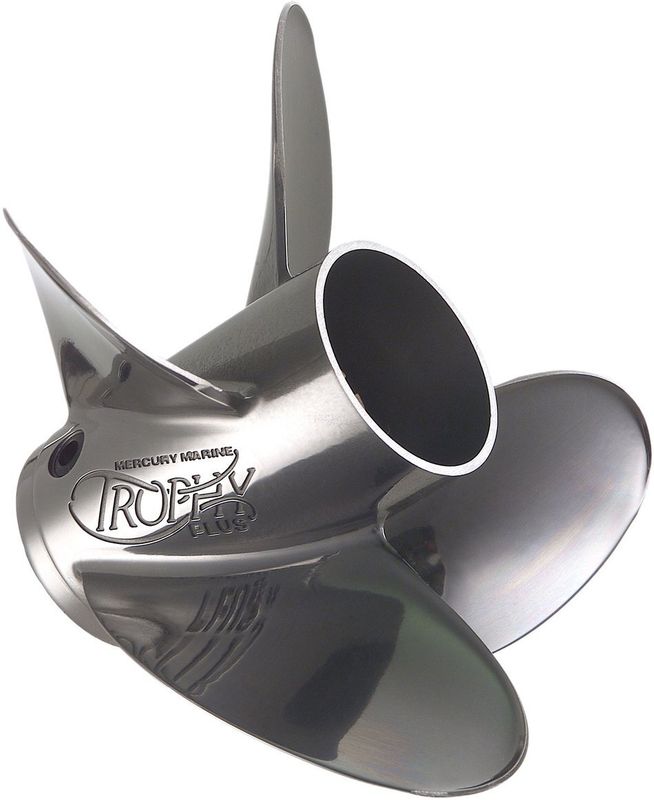
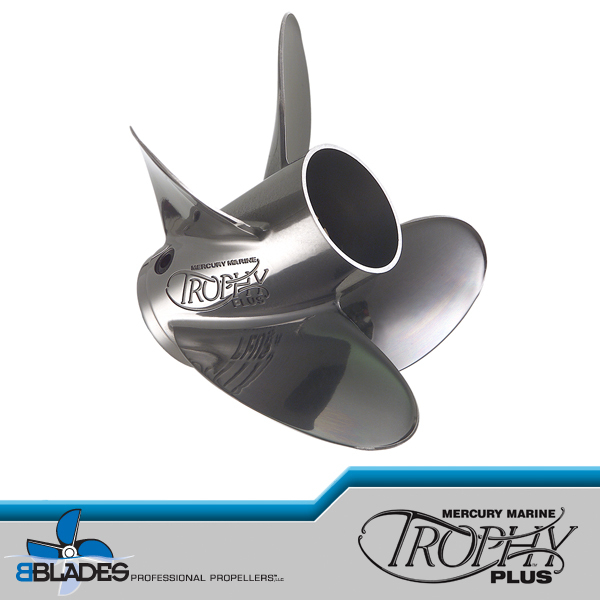
Supporting Confident Decisions in a Crowded Propeller Market
Selecting the right propeller often involves comparing multiple models with overlapping claims. While many stainless-steel propellers promise performance gains, meaningful differences emerge when designs are evaluated under real operating conditions. The Mercury Marine Trophy Plus Propeller has been positioned to deliver balanced value by addressing acceleration, handling, and efficiency simultaneously.
Developed by Mercury Marine, the Trophy Plus propeller benefits from ecosystem-level engineering, meaning it is designed to integrate predictably with Mercury power systems and common hull configurations.
Trophy Plus vs. Three-Blade Performance Propellers
Comparison with High-Speed-Oriented Models
Three-blade propellers such as speed-focused stainless models are often selected for maximum top-end velocity. While those designs can deliver marginally higher peak speed in ideal conditions, trade-offs are commonly introduced.
By contrast, the Trophy Plus propeller emphasizes control and consistency.
Key Differentiators:
-
Four-blade grip improves stability in turns
-
Reduced slip enhances mid-range efficiency
-
Better handling under load and in rough water
-
More predictable throttle response
As a result, real-world performance often feels faster and more controlled, even if absolute top speed differs slightly.
Trophy Plus vs. Mercury Tempest-Style Propellers
Performance Philosophy Differences
Tempest-style propellers are engineered with speed and bow lift as primary objectives. While effective for lightweight, speed-optimized hulls, those characteristics may be less forgiving under variable loads.
The Trophy Plus propeller, on the other hand, distributes lift more evenly between bow and stern. Because balance is prioritized, handling remains stable when fuel levels, passengers, or gear change.
Outcome for the Buyer:
-
Fewer compromises across activities
-
Reduced need for multiple propellers
-
More consistent results across conditions
Trophy Plus vs. Mercury Laser II–Style Propellers
Entry-Level Stainless vs. Advanced Four-Blade Design
Laser II–style propellers are often selected as introductory stainless-steel upgrades. While they offer improved durability over aluminum, their three-blade architecture limits adaptability.
The Trophy Plus propeller builds on stainless-steel benefits by adding:
-
Enhanced ventilation control
-
Improved grip during acceleration
-
Greater load tolerance
Therefore, buyers seeking a long-term upgrade often find the Trophy Plus to be a more scalable investment.
Cost-to-Performance Value Analysis
Upfront Cost vs. Long-Term Return
Although the Trophy Plus propeller typically represents a higher initial investment than aluminum or entry-level stainless options, long-term value is supported through durability and performance retention.
Over time, buyers benefit from:
-
Reduced replacement frequency
-
Consistent fuel efficiency
-
Lower likelihood of performance degradation
When total cost of ownership is considered, the Trophy Plus propeller often proves economically efficient.
Ownership Longevity and Resale Considerations
Durability That Protects Asset Value
Stainless steel construction resists deformation from normal wear and minor impacts. Because blade geometry remains intact, resale value of both the propeller and the boat is often preserved.
Prospective buyers frequently view premium propellers as a value signal, which can support resale negotiations.
Addressing Common Buyer Concerns
“Will I Lose Top Speed?”
In many real-world scenarios, perceived speed improves due to faster acceleration and stronger mid-range pull. While peak speed may vary slightly depending on setup, overall performance satisfaction often increases.Mercury Marine Trophy Plus Propeller
“Is Four-Blade Always Better?”
Four-blade designs are not universally superior; however, they excel in versatility. For boaters who experience varying loads, water conditions, or activities, the Trophy Plus configuration offers broader performance coverage.mercruiser parts
“Is It Worth the Upgrade?”
For buyers seeking predictable handling, improved hole shot, and long-term durability, the Trophy Plus propeller delivers measurable value beyond basic upgrades.Mercury Marine Trophy Plus Propeller
Protecting Performance Over Time
A premium propeller delivers its full value when performance is preserved throughout ownership. The Mercury Marine Trophy Plus Propeller has been engineered for durability; however, consistent results are supported through proper care, inspection, and seasonal optimization. When maintenance is approached proactively, efficiency, handling, and reliability are sustained year after year.Mercury Marine Trophy Plus Propeller
Manufactured by Mercury Marine, the Trophy Plus propeller is designed to minimize maintenance burden while maximizing service life.Mercury Marine Trophy Plus Propeller
Routine Maintenance Best Practices
Visual Inspection Before and After Use
Regular inspection is recommended, particularly after operating in shallow or debris-prone waters. Stainless steel resists deformation, yet early identification of issues prevents secondary damage.
Key areas to inspect include:
-
Leading and trailing blade edges
-
Hub and spline interfaces
-
Signs of fishing line around the prop shaft
-
Surface pitting or corrosion spots
By addressing minor issues early, long-term performance consistency is preserved.mercury marine mercruiser parts
Cleaning and Corrosion Prevention
Proper Cleaning Methods
After use—especially in saltwater environments—the propeller should be rinsed with fresh water. Mild soap may be used to remove residue. Abrasive materials should be avoided, as polished surfaces support optimal water flow.
Drying the propeller thoroughly reduces moisture retention, which supports corrosion resistance.
Protective Coatings and Storage
Applying a marine-grade corrosion inhibitor provides additional protection during extended storage periods. When boats are stored out of water, propeller covers may also be used to prevent accidental damage.
Seasonal Performance Optimization
Pre-Season Preparation
Before the boating season begins, torque specifications should be verified and hub components inspected. Confirming proper installation ensures that power transfer remains efficient and vibration-free.
Engine RPM should also be reviewed during early-season runs to confirm pitch suitability.
Mid-Season Performance Checks
As load patterns change—such as increased passenger use or equipment additions—performance should be reassessed. If RPM consistently falls outside recommended ranges, pitch adjustments may be considered.Mercury Marine Trophy Plus Propeller
This proactive approach supports engine health and fuel efficiency.
Maximizing Lifespan Through Correct Operation
Avoiding Common Performance Risks
While stainless steel provides strength, operational habits still matter. Sudden throttle application in shallow water and contact with submerged objects should be avoided whenever possible.Mercury Marine Trophy Plus Propeller
Operating within recommended RPM ranges also reduces stress on drivetrain components.
Mercury Marine Trophy Plus Propeller Professional Service When Needed
If vibration, noise, or performance degradation is observed, professional inspection is recommended. Certified technicians can assess balance, hub integrity, and blade condition accurately.Mercury Marine Trophy Plus Propeller
Long-Term Ownership Benefits
-
Sustained acceleration and handling characteristics
-
Reduced likelihood of premature replacement
-
Stable fuel efficiency over time
-
Maintained resale value of both propeller and vessel
These outcomes reinforce the Trophy Plus propeller as a long-term performance asset rather than a consumable component.Mercury Marine Trophy Plus Propeller
Owner Confidence Through Predictability
Because the Trophy Plus propeller is engineered for real-world durability, maintenance requirements remain manageable. With routine care, performance characteristics experienced on day one can be retained across multiple seasons.Mercury Marine Trophy Plus Propeller
This predictability supports inclusive ownership experiences, ensuring that both new and experienced boaters benefit equally from consistent results.
| Prop size * Diameter x Pitch | 13 3/4 x17, 13 3/4 x19, 13 3/4 x 21, 13 3/4 x 23, 13 3/4×24, 13 3/4×25, 13 3/4 x 26, 13 3/4 x 27 |
|---|
Be the first to review “Mercury Marine Trophy Plus Propeller”
Related products
Racing Outboard Props
Racing Outboard Props
Racing Outboard Props
Racing Outboard Props
Racing Outboard Props
Reviews
There are no reviews yet.