
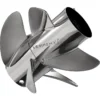
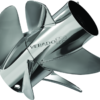
Mercury – PROPELLER 23 RH SS 3 BL- Rear
Designed for boaters who expect consistent propulsion, refined handling, and long-term reliability, the Mercury PROPELLER 23 RH SS 3 BL Rear – 48-8M0166980 represents a performance-driven upgrade for modern outboard and sterndrive applications. Rather than being positioned as a generic replacement propeller, this model is engineered to function as a performance component, where efficiency, durability, and responsiveness are deliberately aligned.
Because propulsion directly influences fuel economy, top-end speed, hole shot, and overall vessel control, the propeller selected must complement both the engine and the operating profile. For that reason, this Mercury stainless steel propeller has been manufactured to deliver balanced thrust under varied load conditions while maintaining structural integrity at higher RPM ranges.Mercury PROPELLER 23 RH SS 3 BL Rear
Backed by the engineering standards of Mercury Marine, this propeller has been purpose-built for boaters who prioritize confidence on the water—whether cruising, fishing, towing, or running offshore.Mercury PROPELLER 23 RH SS 3 BL Rear
Why the Mercury 23-Pitch Stainless Steel Propeller Matters
Propellers are often underestimated. However, propulsion efficiency is not merely influenced by engine horsepower—it is shaped by blade geometry, material composition, pitch accuracy, and exhaust flow design. This is where the Mercury PROPELLER 23 RH SS 3 BL Rear – 48-8M0166980 differentiates itself.
Instead of relying on lightweight aluminum construction, this model is crafted from marine-grade stainless steel, allowing thinner blades, improved hydrodynamics, and reduced flex under load. As a result, power transfer is optimized, and acceleration remains consistent even when conditions change.Mercury PROPELLER 23 RH SS 3 BL Rear
Additionally, the 23-inch pitch has been carefully calibrated to support higher cruising speeds while preserving mid-range efficiency. Consequently, this propeller is frequently selected by experienced operators seeking to fine-tune performance rather than merely replace worn components.Mercury PROPELLER 23 RH SS 3 BL Rear
Core Performance Advantages at a Glance
To support fast evaluation and confident purchasing decisions, the primary advantages are outlined below.
🔹 Key Performance Highlights
-
Right-Hand (RH) Rotation for standard clockwise rotation applications
-
Three-Blade (3 BL) Configuration for balanced speed, lift, and handling
-
Rear Exhaust Design to enhance thrust and reduce exhaust interference
-
23-Pitch Geometry optimized for mid-to-high speed operation
-
Stainless Steel Construction for durability, corrosion resistance, and reduced blade flex
-
OEM Mercury Part Number: 48-8M0166980 for guaranteed compatibility
Each of these attributes contributes directly to on-water performance, rather than existing as standalone specifications.
Stainless Steel vs. Aluminum: A Strategic Upgrade
While aluminum propellers are widely used due to cost considerations, stainless steel propellers deliver measurable performance gains. Because stainless steel is significantly stronger, blade thickness can be reduced without compromising durability. Therefore, drag is minimized, and water flow remains smoother across the blade surface.
As a result:
-
Throttle response is sharpened
-
Cavitation risk is reduced
-
Top-end speed potential is improved
-
Long-term deformation is minimized
For boaters who operate in demanding environments or place value on consistent performance, this upgrade is often justified quickly through efficiency and reliability gains.
Engineered for Balance, Control, and Predictability
Rather than focusing solely on speed, the Mercury PROPELLER 23 RH SS 3 BL Rear – 48-8M0166980 has been engineered for predictable handling characteristics. The three-blade configuration provides a proven balance between lift and bite, ensuring the propeller remains engaged with the water during acceleration, turning, and variable load conditions.
Moreover, the rear exhaust design allows exhaust gases to exit cleanly through the hub, which helps maintain propeller grip at higher throttle inputs. Consequently, smoother transitions and reduced ventilation are experienced during aggressive maneuvers.Mercury PROPELLER 23 RH SS 3 BL Rear

Mercury PROPELLER 23 RH SS 3 BL Rear Ideal Applications and Use Profiles
Although propeller selection is always application-specific, this model is commonly chosen for:
-
Recreational Powerboats seeking higher cruising efficiency
-
Fishing Boats requiring dependable mid-range control
-
Performance-Oriented Cruisers operating with moderate to heavy loads
-
Boaters Upgrading from Aluminum Props for durability and performance
Because of its pitch and blade design, this propeller is best suited for engines capable of operating comfortably within recommended RPM ranges when paired correctly.Mercury PROPELLER 23 RH SS 3 BL Rear
OEM Fitment Confidence and Compatibility
Compatibility concerns are eliminated when OEM parts are selected. Since this propeller carries an official Mercury part number, dimensional accuracy, spline tolerances, and balance specifications are maintained to manufacturer standards.Mercury PROPELLER 23 RH SS 3 BL Rear
Therefore, installation is straightforward, fitment is precise, and long-term drivetrain stress is minimized.
Important Note: While this propeller is engineered for Mercury systems, engine horsepower, gear ratio, and hull design should always be verified prior to installation to ensure optimal RPM and performance targets are met.Mercury PROPELLER 23 RH SS 3 BL Rear
Buyer Value Proposition: Why This Propeller Converts
From a purchasing standpoint, this propeller appeals to both rational and emotional decision drivers. Performance improvements are measurable, durability is tangible, and brand trust is already established.
At the same time:
-
The upgrade signals seriousness about boating performance
-
Confidence on the water is enhanced
-
Long-term replacement cycles are reduced
Because of these combined factors, the Mercury PROPELLER 23 RH SS 3 BL Rear – 48-8M0166980 is frequently positioned not as an expense, but as a strategic performance investment.Mercury PROPELLER 23 RH SS 3 BL Rear
Technical Specifications Breakdown (Built for Accuracy and Trust)
Precision matters when propulsion efficiency is the objective. For that reason, each specification of the Mercury PROPELLER 23 RH SS 3 BL Rear – 48-8M0166980 has been engineered to function as part of an integrated performance system rather than as an isolated component.Mercury PROPELLER 23 RH SS 3 BL Rear
🔧 Core Technical Specifications
-
Rotation: Right-Hand (RH / Clockwise)
-
Blade Count: 3 Blades
-
Pitch: 23 Inches
-
Material: Marine-Grade Stainless Steel
-
Exhaust Type: Rear Exhaust (Through-Hub)
-
Application Type: Outboard and Sterndrive-Compatible (model-dependent)
-
Manufacturer Part Number: 48-8M0166980
-
OEM Manufacturing Standard: Yes
Because these specifications align with factory tolerances, performance predictability is preserved across a wide range of operating conditions.
Understanding Pitch: Why 23 Inches Is a Strategic Choice
Pitch is frequently misunderstood. Rather than being a speed rating, pitch represents the theoretical forward movement of the propeller in one full rotation. A 23-pitch propeller is designed to move forward 23 inches per rotation under ideal conditions.
Why This Matters
-
Higher Pitch = Greater Top-End Speed Potential
-
Lower Pitch = Faster Acceleration (Hole Shot)
The 23-pitch configuration strikes a calculated balance. Consequently, it supports efficient cruising and sustained speed without forcing the engine outside its optimal RPM range—when paired correctly.
This pitch is often selected by operators who:
-
Cruise at mid-to-high speeds
-
Carry moderate loads
-
Prioritize efficiency without sacrificing responsiveness
Because of this balance, engine strain is reduced, and fuel burn becomes more predictable.
Hydrodynamic Blade Geometry: Where Performance Is Created
Rather than relying on generic blade shapes, this propeller incorporates refined stainless steel blade geometry engineered to optimize water flow from leading edge to trailing edge.
Key Hydrodynamic Design Elements
-
Thinner Blade Profiles: Enabled by stainless steel strength
-
Progressive Rake Angles: Improve lift and bow control
-
Balanced Cup Distribution: Enhances grip and reduces ventilation
-
Precision-Cut Edges: Promote smooth water separation
As a result, water is displaced efficiently, turbulence is minimized, and forward thrust is maximized. This design approach ensures consistent propulsion rather than erratic power delivery.
Rear Exhaust Configuration: Clean Flow, Better Grip
Exhaust management plays a critical role in propeller efficiency. The rear exhaust (through-hub) design allows exhaust gases to exit behind the propeller blades instead of interfering with water flow around them.
Performance Benefits of Rear Exhaust
-
Improved blade bite during acceleration
-
Reduced exhaust-induced cavitation
-
Smoother throttle transitions
-
Enhanced high-speed stability
Therefore, performance remains consistent even when throttle input changes rapidly.
Cavitation and Ventilation Control Explained
Cavitation and ventilation are two of the most common causes of performance loss. This propeller addresses both through deliberate design choices.Mercury PROPELLER 23 RH SS 3 BL Rear
How Cavitation Is Reduced
-
Stainless steel rigidity minimizes blade flex
-
Balanced blade cupping maintains water pressure
-
Clean exhaust routing reduces aerated water contact
Mercury PROPELLER 23 RH SS 3 BL Rear How Ventilation Is Controlled
-
Blade geometry maintains water engagement
-
Hub design limits air intrusion during turns
-
Proper pitch selection prevents over-revving
Because these factors work together, thrust remains stable across varying speeds and maneuvers.
RPM Optimization: Protecting Engine Health
Operating outside the manufacturer’s recommended RPM range accelerates wear and reduces efficiency. This propeller is engineered to support optimal RPM targeting when matched correctly.
When Properly Matched, You Can Expect:
-
Reduced engine strain
-
Improved fuel economy
-
Longer service intervals
-
More predictable throttle response
Instead of forcing power, efficiency is achieved through balance.
Load Handling and Real-World Performance
Real-world boating conditions are rarely static. Fuel levels change, passengers vary, and gear loads fluctuate. The three-blade stainless configuration ensures adaptability under these conditions.
Load-Adaptive Advantages
-
Maintains grip under heavier loads
-
Preserves steering control when fully fueled
-
Reduces RPM loss during acceleration
As a result, performance remains dependable rather than situational.
Compatibility Considerations (Critical for Buyer Confidence)
Although this propeller is manufactured to OEM standards, compatibility must always be verified against:
-
Engine horsepower
-
Gearcase spline count
-
Gear ratio
-
Hull type and weight
Because every boat-engine combination behaves differently, verification ensures performance expectations are met without compromise.Mercury PROPELLER 23 RH SS 3 BL Rear
Professional Recommendation: Always confirm engine RPM at wide-open throttle after installation to validate correct pitch selection.
Who Benefits Most from This Propeller Configuration?
This propeller is particularly well-suited for:
-
Boaters upgrading from aluminum to stainless steel
-
Operators seeking improved cruising efficiency
-
Performance-conscious recreational users
-
Owners prioritizing durability and long-term value
Rather than appealing to entry-level use, this model is positioned for informed buyers seeking measurable performance gains.
Conversion Insight: Why Buyers Choose This Model
Purchasing decisions are driven by clarity, confidence, and outcomes. This propeller converts effectively because:
-
Specifications are transparent
-
Performance benefits are tangible
-
OEM fitment reduces risk
-
Long-term value outweighs upfront cost
Therefore, hesitation is reduced, and buyer confidence is strengthened.
Performance Comparison: Stainless Steel vs. Aluminum Propellers
When evaluating propulsion upgrades, comparative analysis is essential. Rather than relying on assumptions, performance differences between stainless steel and aluminum propellers are best understood through measurable outcomes. The Mercury PROPELLER 23 RH SS 3 BL Rear – 48-8M0166980 has been engineered to outperform aluminum alternatives across multiple operational metrics.
Side-by-Side Performance Comparison
| Performance Factor | Stainless Steel (This Model) | Aluminum Propeller |
|---|---|---|
| Blade Flex | Minimal | Moderate to High |
| Acceleration Consistency | High | Variable |
| Top-End Speed Potential | Improved | Limited |
| Cavitation Resistance | Strong | Moderate |
| Durability | Excellent | Fair |
| Long-Term Shape Retention | Maintained | Degrades Over Time |
Because stainless steel maintains structural rigidity, power loss caused by blade flex is largely eliminated. As a result, engine output is translated into forward motion more efficiently.
Acceleration and Hole Shot: Controlled Power Delivery
Acceleration is not solely about speed; it is about control. This propeller’s three-blade stainless configuration ensures smooth, predictable thrust from idle through cruising speeds.Mercury PROPELLER 23 RH SS 3 BL Rear
Key Acceleration Benefits
-
Faster, more controlled hole shot
-
Reduced RPM spike during takeoff
-
Consistent thrust under varying loads
Therefore, acceleration remains manageable rather than abrupt, improving both comfort and safety.
Cruising Efficiency and Fuel Economy Impact
Fuel efficiency improvements are often underestimated when upgrading propellers. However, improved hydrodynamics and reduced slippage directly affect fuel consumption.Mercury PROPELLER 23 RH SS 3 BL Rear
Mercury PROPELLER 23 RH SS 3 BL Rear How Efficiency Is Improved
-
Reduced blade flex maintains effective pitch
-
Optimized water flow reduces drag
-
Stable RPM range prevents over-throttling
Consequently, fuel burn is stabilized during extended cruising. Over time, this efficiency contributes to meaningful cost savings, particularly for frequent operators.
Long-Term Cost Analysis: Investment vs. Expense
Although stainless steel propellers typically require a higher initial investment, long-term economics favor durability and efficiency.
Cost-of-Ownership Considerations
-
Fewer replacements over time
-
Reduced performance degradation
-
Lower risk of blade deformation
-
Improved resale appeal
Because replacement cycles are extended, total ownership cost is often reduced despite the higher upfront price.
Handling, Steering, and Operator Confidence
Handling characteristics influence overall boating confidence. This propeller’s balanced blade design enhances steering precision without introducing instability.
Handling Improvements Noticed by Operators
-
Tighter, more predictable turns
-
Reduced steering correction at speed
-
Improved tracking in choppy conditions
As a result, operator fatigue is reduced during longer outings.
Noise, Vibration, and Ride Quality
Propeller imbalance and cavitation often contribute to unwanted noise and vibration. This model’s precision manufacturing minimizes these issues.
Ride Quality Enhancements
-
Smoother throttle transitions
-
Reduced vibration at cruising RPM
-
Quieter operation under load
Therefore, the overall boating experience becomes more refined and enjoyable.
Safety and Reliability Under Demanding Conditions
Reliability is not optional on the water. Stainless steel construction improves impact resistance and structural integrity.Mercury PROPELLER 23 RH SS 3 BL Rear
Reliability Advantages
-
Maintains shape after minor impacts
-
Resists corrosion in salt and freshwater
-
Preserves performance over time
Because reliability is increased, operational confidence is reinforced.
Buyer Objections Addressed Proactively
“Is stainless steel really worth it?”
For operators seeking consistent performance, efficiency, and durability, stainless steel delivers measurable benefits that aluminum cannot match long-term.Mercury PROPELLER 23 RH SS 3 BL Rear
“Will this propeller fit my setup?”
OEM manufacturing standards ensure precise tolerances. However, engine specifications should always be verified for optimal results.
“Is 23 pitch too aggressive?”
When matched correctly, 23 pitch supports higher cruising speeds without compromising engine health.
Installation Guidance: Setting the Foundation for Performance
Proper installation is not optional when performance outcomes matter. Even a premium stainless steel propeller can underperform if installation tolerances are ignored. For that reason, best-practice procedures should always be followed to protect both drivetrain integrity and long-term efficiency.
Recommended Installation Best Practices
-
Confirm engine compatibility and spline count before installation
-
Inspect prop shaft for debris, wear, or corrosion
-
Apply marine-grade grease to the prop shaft
-
Ensure thrust washer is seated correctly
-
Torque the prop nut to manufacturer specification
-
Secure with cotter pin or locking mechanism as required
When installed correctly, rotational balance is preserved, vibration is minimized, and drivetrain stress is reduced.
Post-Installation Verification: A Critical Step Often Missed
Once installation is completed, performance verification should be conducted. Rather than assuming correct operation, objective checks provide certainty.
Post-Installation Checklist
-
Verify smooth idle engagement
-
Confirm no abnormal vibration at low RPM
-
Test mid-range throttle response
-
Measure wide-open throttle (WOT) RPM
If WOT RPM falls outside the engine’s recommended range, pitch adjustment may be required. This verification protects engine longevity and ensures expected performance gains are realized.
Break-In Considerations for Stainless Steel Propellers
Unlike engines, propellers do not require a formal break-in period. However, initial operation should still be approached with awareness.
First-Use Recommendations
-
Avoid sustained maximum RPM during initial outings
-
Observe handling characteristics under varying loads
-
Listen for unusual vibration or noise
This observation phase allows early detection of installation or compatibility issues.
Maintenance Strategy: Preserving Peak Performance
Stainless steel propellers are designed for durability, yet routine inspection remains essential. Maintenance is preventative rather than reactive.Mercury PROPELLER 23 RH SS 3 BL Rear
Routine Maintenance Checklist
-
Inspect blades for nicks, bends, or impact damage
-
Check for fishing line around the prop shaft
-
Monitor hub integrity
-
Reapply marine grease during seasonal removal
-
Verify prop nut torque periodically
By following these steps, performance consistency is maintained, and unexpected failures are avoided.
Corrosion Resistance and Environmental Exposure
Marine environments are inherently corrosive. Although stainless steel offers superior resistance, proactive care further extends service life.
Environmental Protection Best Practices
-
Rinse with fresh water after saltwater use
-
Store with prop removed during long-term layup
-
Inspect sacrificial anodes regularly
-
Avoid prolonged electrolysis exposure
As a result, surface integrity is preserved, and corrosion-related degradation is minimized.
Impact Resistance and Damage Assessment
While stainless steel is more impact-resistant than aluminum, no propeller is immune to damage. The difference lies in how damage manifests.
Stainless Steel Advantage
-
Maintains shape after minor contact
-
Reduced likelihood of catastrophic blade failure
-
Easier to assess repair viability
However, if significant impact occurs, inspection by a qualified marine technician is advised before continued operation.
Seasonal Storage and Off-Season Care
Off-season handling often determines next-season performance. Proper storage prevents unnecessary wear.
Off-Season Best Practices
-
Remove and clean the propeller
-
Inspect shaft seals for leaks
-
Store in a dry, temperature-stable environment
-
Apply protective coating if stored long-term
These steps ensure the propeller is ready for immediate use when the season resumes.
Be the first to review “Mercury – PROPELLER 23 RH SS 3 BL- Rear – 48-8M0166980”
Related products
Propeller 4 Blade
VERADO12 33 PITCH MERCURY LH 4 BLADE FRONT PROPELLER 48-8M0166991
Mercury PROPELLER
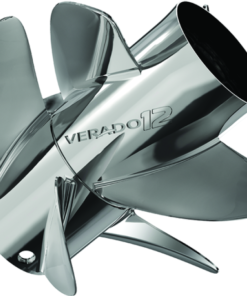
VERADO12 31 PITCH MERCURY RH 3 BLADE REAR PROPELLER 48-8M0166990
Propeller 4 Blade
Right Hand Rotation
VERADO12 35 PITCH MERCURY RH 3 BLADE REAR PROPELLER 48-8M0166994
Propeller 4 Blade
VERADO 12 26 PITCH MERCURY LH 4-BLADE FRONT PROPELLER 48-8M0166983
Propeller 3 Blade
Verado12 (27.5″) MERCURY RH 3 Blade Rear Propeller 48-8M0166986
Reviews
There are no reviews yet.