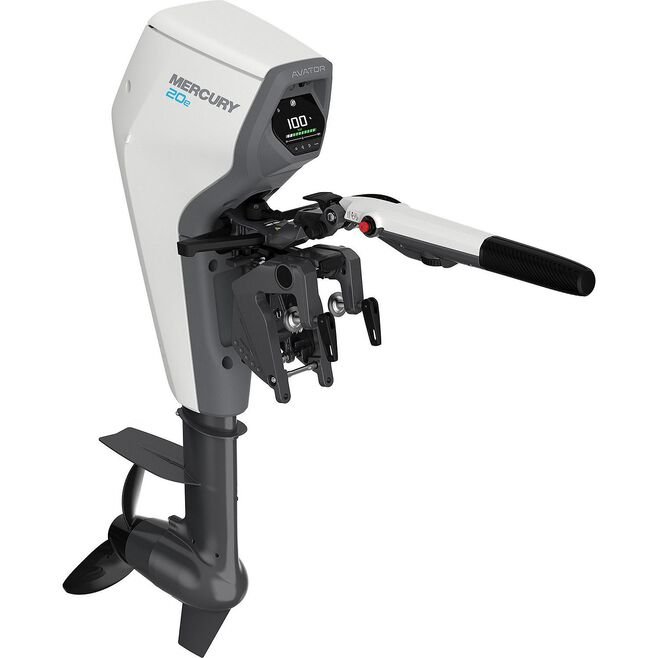
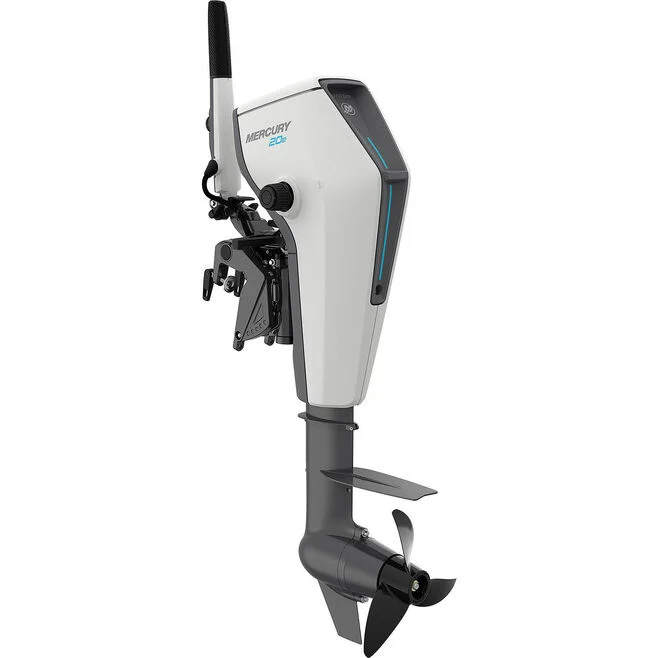
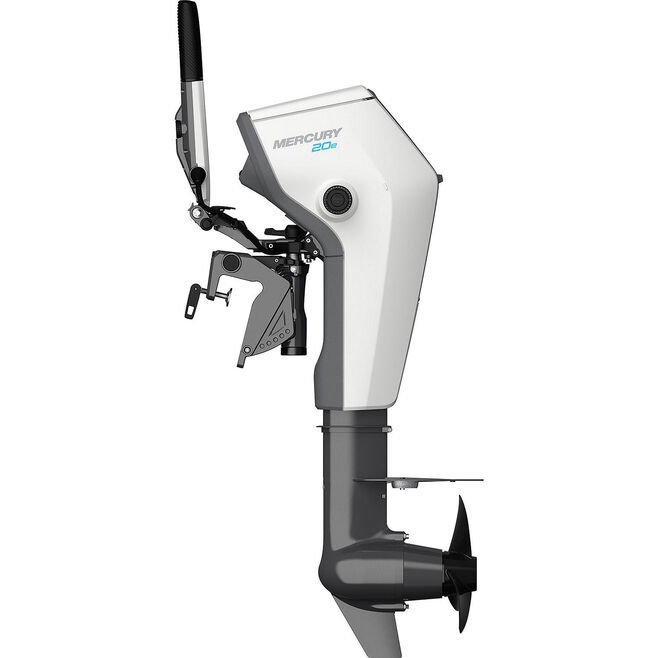
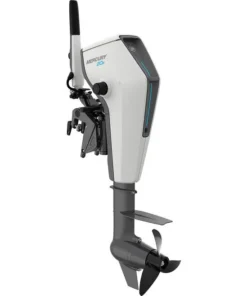
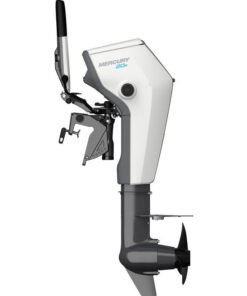
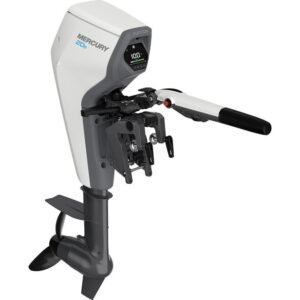
Mercury Avator 20e Tiller Electric Outboard Motor, 20″ Shaft (Battery and Harness Sold Separately) Model # 21890447 Mfg # 1003E031A
€2,877.00
MERCURY MARINE Avator 20e Tiller Electric Outboard Motor
Power up your outdoor adventures with a Mercury Avator 20e electric outboard motor. Its modular battery system lets you configure your propulsion system for optimal range and runtime. You can set it up it as a portable outboard with one 2300Wh battery or have an Avator Power Center installed to connect up to four batteries. Range-tracking features on the intelligent digital display and Mercury Avator app let you monitor your outing throughout the day so you can explore with confidence.
(Requires Avator battery, charger, display and harnessing – plus Power Center, if connecting multiple batteries. Available separately.)
Key Features
- Ability to connect and simultaneously charge up to four (4) batteries when configured with an Avator Power Center
- For peak portability, you can power the system with one 2300Wh battery and no Power Center
- Capable of acceleration similar to 5hp Mercury FourStroke outboard (varies based on boat, load and conditions)
- Up to 16 hours of runtime at 25% throttle and around 1 hour at 100% throttle with a single 2300Wh battery (varies based on boat, load and conditions)
- Charge a 2300Wh battery in as little as 10 hours with the 230W charger – available 520W charger cuts time by more than half
Mercury Avator 20e Tiller Electric Outboard Motor, 20″ Shaft
Reimagining Modern Boating Starts Here
Innovation on the water has entered a decisive new chapter, and the Mercury Avator 20e Tiller Electric Outboard Motor, 20″ Shaft stands firmly at the center of that transformation. Designed for boaters who demand quiet confidence, intelligent performance, and forward-looking sustainability, this electric outboard represents a deliberate shift away from compromise and toward purpose-built excellence. Rather than adapting legacy technology, a clean-sheet philosophy has been embraced, resulting in an outboard motor that aligns with how people boat today—and how they expect to boat tomorrow.
At the same time, usability has not been sacrificed in pursuit of innovation. Every element of the Mercury Avator 20e has been engineered to feel intuitive, inclusive, and reassuring, regardless of a user’s experience level or physical strength. Consequently, seasoned mariners and first-time electric outboard buyers alike are welcomed into a boating experience that feels familiar, yet markedly improved.
Because boating needs are diverse, flexibility has been prioritized throughout the design. From calm inland lakes to restricted waterways where emissions and noise limits apply, this electric tiller outboard adapts effortlessly. As a result, more people gain access to peaceful, responsible boating without sacrificing control, thrust, or reliability.
Why the Shift to Electric Outboards Matters Now
A Changing Boating Landscape
Across the global boating community, expectations are evolving. Environmental responsibility is no longer optional, operational simplicity is increasingly valued, and noise reduction has become a defining quality of premium on-water experiences. Against this backdrop, electric propulsion is not merely a trend—it is a response to real, practical needs voiced by modern boaters.
Fuel volatility, maintenance complexity, and restrictive regulations have created friction for many traditional outboard owners. In contrast, electric outboards eliminate fuel handling entirely, dramatically reduce service requirements, and comply naturally with tightening environmental standards. Therefore, the transition feels less like a sacrifice and more like a strategic upgrade.
Importantly, accessibility has also improved. Electric propulsion lowers physical effort, minimizes sensory fatigue, and creates a calmer environment for families, anglers, researchers, and adaptive boaters. Thus, boating becomes more inclusive, welcoming individuals who may have felt excluded by the vibration, noise, or mechanical demands of gas-powered motors.
Introducing the Mercury Avator 20e Platform
Purpose-Built by a Trusted Leader
Developed by Mercury Marine, the Avator electric outboard platform reflects decades of marine engineering expertise applied to a fully electric future. Rather than retrofitting existing designs, Mercury approached the Avator series as a ground-up innovation. As a result, efficiency, balance, and integration have been optimized from the outset.
The 20e variant, paired with a tiller handle and a 20-inch shaft, occupies a particularly strategic position in the lineup. It delivers performance equivalent to a 5-horsepower gasoline outboard, yet it does so with none of the traditional drawbacks associated with internal combustion engines. Because torque is delivered instantly, acceleration feels smooth and predictable, even under load.
Furthermore, thoughtful system integration ensures that battery management, motor control, and user interface operate seamlessly together. Consequently, the boater interacts with a cohesive propulsion system rather than a collection of disconnected components.
Designed for Real-World Use, Not Just Specifications
Everyday Practicality Comes First
Specifications alone rarely tell the full story, especially with electric propulsion. While performance metrics matter, real value is revealed through daily use. In this regard, the Mercury Avator 20e has been shaped by how people actually boat—not by theoretical benchmarks.Mercury Avator 20e Tiller Electric Outboard Motor 20 Shaft
Launching becomes easier because no warm-up sequence is required. Dockside maneuvering feels more controlled thanks to immediate torque response. Additionally, conversations onboard continue uninterrupted, as engine noise is virtually eliminated. These seemingly small improvements compound quickly, transforming routine outings into noticeably more enjoyable experiences.
Equally important, maintenance expectations are dramatically simplified. Without oil changes, spark plugs, or fuel filters, ownership becomes more predictable and less time-consuming. Therefore, time previously spent on upkeep can be redirected toward time on the water.Mercury Avator 20e Tiller Electric Outboard Motor 20 Shaft
Key Product Identity at a Glance
What Sets the Mercury Avator 20e Apart
To establish a clear understanding early, the defining characteristics of the Mercury Avator 20e Tiller Electric Outboard Motor, 20″ Shaft can be summarized as follows:
-
Electric propulsion equivalent to 5hp gasoline performance
-
Quiet, zero-emissions operation
-
Ergonomic tiller control for precise handling
-
20-inch shaft optimized for a wide range of small boats
-
Modular lithium-ion battery system
-
Intuitive digital controls and displays
-
Low maintenance ownership model
-
Designed for inclusive, accessible boating
By highlighting these attributes upfront, prospective buyers can quickly assess alignment with their needs before diving deeper into technical and experiential details.Mercury Avator 20e Tiller Electric Outboard Motor 20 Shaft
Understanding the 20-Inch Shaft Advantage
Stability, Compatibility, and Confidence
Shaft length plays a critical role in outboard performance, particularly for electric motors where efficiency and propeller immersion directly affect range and thrust. The 20-inch shaft configuration has been selected deliberately to balance versatility and control.
For many small boats, pontoons, inflatables, aluminum skiffs, and utility vessels, a 20-inch shaft provides optimal propeller depth. As a result, cavitation is reduced, steering authority improves, and efficiency remains consistent across varying water conditions. Additionally, compatibility with a broad range of transoms simplifies installation decisions for buyers.Mercury Avator 20e Tiller Electric Outboard Motor 20 Shaft
Because proper shaft length contributes to safer handling, especially in choppy water or during sharp maneuvers, confidence at the helm is reinforced. Therefore, both novice and experienced operators benefit equally from this configuration.
The Role of the Tiller in User Experience
Direct Control, Simplified Interaction
While remote-controlled outboards offer certain advantages, the tiller configuration remains the preferred choice for many small-boat applications. With the Mercury Avator 20e, the tiller has been reimagined to complement electric propulsion rather than replicate gas-engine ergonomics.
Throttle response feels linear and predictable, reducing learning curves for new users. Steering inputs translate smoothly into directional changes, enhancing precision during docking or fishing maneuvers. Moreover, ergonomic shaping minimizes wrist and arm fatigue during extended use.
Because accessibility was a guiding principle, control effort has been reduced without sacrificing feedback. Consequently, individuals with varying strength levels or mobility considerations can operate the motor comfortably and confidently.
A Quieter Way to Connect with the Water
Sound, or the Absence of It
One of the most immediate and emotionally resonant benefits of the Mercury Avator 20e is its near-silent operation. Without combustion noise or vibration, the boating environment becomes calmer and more immersive.
Wildlife encounters feel less intrusive. Conversations remain natural. Stress levels decrease. Over time, these benefits contribute to a deeper sense of enjoyment and connection with the surroundings. Therefore, the value of quiet propulsion extends beyond technical advantages into experiential well-being.
Additionally, noise-restricted waterways become accessible without special permits or exceptions. This expanded access opens new opportunities for exploration, particularly in protected or environmentally sensitive areas.
Addressing Buyer Concerns Early
Common Questions, Clear Reassurance
Electric outboards often prompt legitimate questions from prospective buyers. Accordingly, several concerns deserve early clarification:
-
Range anxiety: Intelligent battery management and predictable power delivery help users plan outings with confidence.
-
Performance doubts: Instant torque ensures responsive acceleration, even when carrying gear or passengers.
-
Reliability: Fewer moving parts inherently reduce mechanical failure points.
-
Learning curve: Intuitive controls minimize adjustment time.
By addressing these considerations upfront, hesitation is reduced and trust is established early in the decision-making process.Mercury Avator
Mercury Avator Inclusive Boating by Design
Expanding Who Gets to Boat—and How
Inclusivity is not an afterthought in the Mercury Avator 20e; it is embedded throughout the design. Reduced noise benefits individuals with sensory sensitivities. Lower physical effort supports aging boaters and those with mobility limitations. Clear interfaces assist users with varying levels of technical familiarity.Mercury Avator 20e Tiller Electric Outboard Motor 20 Shaft
Because boating should not be limited by strength, experience, or tolerance for mechanical complexity, electric propulsion removes many traditional barriers. As a result, families, educators, researchers, and adaptive boating programs find new opportunities to engage with the water safely and comfortably.Mercury Avator 20e Tiller Electric Outboard Motor 20 Shaft
Mercury Avator Conversion-Focused Value Proposition
Why Buyers Choose the Mercury Avator 20e
When evaluated holistically, the Mercury Avator 20e delivers value across multiple dimensions:
-
Operational savings through reduced maintenance
-
Regulatory compliance without additional equipment
-
Enhanced on-water comfort
-
Brand trust backed by engineering expertise
-
Future-ready technology aligned with sustainability goals
Rather than positioning electric propulsion as an alternative, this outboard establishes it as a superior choice for specific use cases. Therefore, buyers are not merely adopting something new—they are upgrading to something better suited to modern boating realities.
Engineering That Starts With Purpose
Performance in electric propulsion is defined less by raw numbers and more by how intelligently energy is converted into usable thrust. With the Mercury Avator 20e Tiller Electric Outboard Motor, 20″ Shaft, engineering priorities have been deliberately rebalanced. Instead of chasing peak horsepower at the expense of efficiency, emphasis has been placed on controlled torque delivery, thermal stability, and system-level optimization.
As a result, the motor behaves predictably across its operating range. Power is delivered smoothly rather than abruptly, which enhances safety and reduces operator fatigue. Because electric torque is available instantly, acceleration feels confident even at lower throttle inputs. Consequently, fine maneuvering becomes easier, particularly in crowded marinas or shallow-water environments.
Fully Integrated Electric Powertrain
Designed as a System, Not an Assembly
Unlike retrofitted electric outboards that combine third-party components, the Avator 20e has been developed as a unified propulsion ecosystem. Every element—motor, inverter, battery interface, controls, and software—has been engineered to function cohesively.
This integration delivers several tangible benefits:
-
Optimized energy efficiency across load conditions
-
Reduced electrical losses
-
Improved thermal regulation
-
Consistent performance regardless of battery state
Because system intelligence manages power flow continuously, output remains stable rather than degrading unpredictably. Therefore, confidence is maintained throughout an outing, not just at full charge.
Electric Motor Design and Torque Characteristics
Where Instant Power Meets Control
Electric propulsion fundamentally alters how power is experienced at the helm. Instead of building torque gradually through combustion cycles, the Avator 20e delivers torque immediately. This characteristic transforms low-speed handling and load management.
Rather than overwhelming the operator, torque delivery has been carefully tuned. Throttle input translates into proportional thrust, making response intuitive even for users new to electric outboards. Consequently, abrupt surges are avoided, and precise control is maintained.
Key advantages of this motor design include:
-
Immediate thrust for docking and positioning
-
Smooth acceleration under load
-
Minimal vibration throughout the RPM range
-
Consistent output in varying water conditions
Because vibration is nearly eliminated, structural fatigue on the transom and hull is also reduced over time, contributing to long-term durability.
Advanced Power Electronics and Inverter Control
Intelligence Behind the Silence
At the heart of the Avator 20e lies sophisticated power electronics that regulate how electrical energy is converted into mechanical motion. The inverter continuously modulates voltage and current to ensure optimal motor performance while protecting internal components.
This dynamic control delivers multiple performance advantages:
-
Stable operation during rapid throttle changes
-
Efficient cruising at partial load
-
Protection against overheating
-
Extended component lifespan
Additionally, software-driven safeguards monitor operating parameters in real time. If abnormal conditions are detected, corrective action is applied automatically. As a result, reliability is enhanced without requiring user intervention.
Modular Lithium-Ion Battery Architecture
Flexibility Without Compromise
Battery design plays a defining role in electric outboard usability. With the Avator 20e, a modular lithium-ion battery system has been adopted to balance energy density, portability, and scalability.
Rather than permanently integrating the battery into the motor housing, a removable design allows users to tailor capacity to their specific needs. Consequently, weight distribution can be optimized, and charging logistics become more flexible.Mercury Avator
Highlighted battery advantages include:
-
High energy density for extended range
-
Weather-resistant construction
-
Secure, tool-free installation
-
Compatibility with multiple charging solutions
Because the battery can be removed, charging does not require proximity to the boat. This flexibility proves especially valuable for users storing vessels on trailers or moorings without shore power access.Mercury Avator 20e Tiller Electric
Battery Management and Energy Optimization
Predictability Over Guesswork
Range anxiety often represents the primary psychological barrier to electric propulsion. To address this concern, advanced battery management software continuously evaluates remaining energy, power draw, and operating conditions.Mercury Avator 20e Tiller Electric
Instead of offering vague estimates, the system provides clear, actionable feedback. Consequently, operators can adjust speed or route proactively rather than reacting to unexpected depletion.
Energy optimization strategies include:
-
Adaptive power limiting at low charge levels
-
Real-time consumption monitoring
-
Thermal protection to preserve battery health
-
Balanced discharge for extended lifecycle
Through these measures, energy use becomes transparent and predictable, reinforcing user confidence.
Propeller and Hydrodynamic Efficiency
Turning Power Into Motion
Electric motors reward efficient propeller design more than combustion engines, as wasted energy directly reduces range. Accordingly, the Avator 20e utilizes a propeller engineered specifically for electric torque curves.
Rather than emphasizing high-speed cavitation resistance, blade geometry has been optimized for low-to-mid speed efficiency. This focus aligns with the most common operating scenarios for small electric-powered boats.
Benefits of this approach include:
-
Improved thrust at lower RPM
-
Reduced turbulence and noise
-
Enhanced battery efficiency
-
Better control during slow maneuvering
As a result, more of the stored energy is converted into forward motion rather than heat or drag.Mercury Avator 20e Tiller Electric Outboard Motor 20 Shaft
Thermal Management for Consistent Output
Heat Control Equals Reliability
Thermal stability is critical in electric propulsion systems. Excessive heat degrades efficiency, shortens component life, and reduces performance. To mitigate these risks, the Avator 20e incorporates passive and active cooling strategies throughout its architecture.Mercury Avator 20e Tiller Electric Outboard Motor 20 Shaft
Rather than relying on a single cooling pathway, heat dissipation occurs across multiple components. Consequently, localized hotspots are avoided, and sustained operation remains viable even under demanding conditions.Mercury Avator 20e Tiller Electric Outboard Motor 20 Shaft
Thermal management benefits include:
-
Stable output during extended use
-
Reduced power throttling
-
Enhanced electronic component longevity
-
Improved safety margins
Because thermal behavior is managed proactively, performance remains consistent rather than fluctuating unpredictably.
Frequently Asked Questions (FAQ)
Mercury Avator 20e Tiller Electric Outboard Motor, 20″ Shaft
What type of boats is the Mercury Avator 20e best suited for?
The Mercury Avator 20e Tiller Electric Outboard Motor, 20″ Shaft is ideally suited for small to mid-size boats such as aluminum skiffs, inflatables, jon boats, tenders, small pontoons, and utility vessels. Because the 20-inch shaft offers broad transom compatibility, installation is straightforward across many common hull designs. As a result, versatility is achieved without requiring custom modifications.
What is the gasoline horsepower equivalent of the Avator 20e?
The Avator 20e delivers performance comparable to a traditional 5-horsepower gasoline outboard. However, because electric motors provide instant torque, low-speed responsiveness often feels stronger than gas-powered alternatives. Therefore, real-world usability—especially during docking, trolling, and maneuvering—frequently exceeds expectations based solely on horsepower equivalency.
How far can I travel on a single charge?
Range depends on several factors, including boat size, load, speed, water conditions, and battery capacity. At lower cruising speeds, significantly extended range is achievable. Conversely, higher sustained power usage reduces total run time. Because real-time energy monitoring is built into the system, operators can adjust speed proactively and plan trips with confidence rather than uncertainty.
How long does it take to charge the battery?
Charging time varies depending on the charger used and the remaining battery level. Standard charging solutions typically require several hours for a full charge, while higher-capacity chargers reduce that time substantially. Since the battery is removable, charging can be completed indoors or at any suitable power source, increasing convenience and flexibility.
Is the battery included with the motor?
Battery inclusion depends on the specific purchase configuration and retailer offering. Some packages bundle the battery and charger, while others allow buyers to select components separately based on their usage needs. This modular approach ensures that users pay only for the capacity and accessories that align with their boating patterns.
Can the Avator 20e be used in saltwater?
Yes, the Avator 20e is designed for both freshwater and saltwater use. Corrosion-resistant materials and protective coatings are applied throughout the system. Nevertheless, routine freshwater rinsing after saltwater operation is recommended, as it supports long-term durability and optimal performance.
How does maintenance compare to a gasoline outboard?
Maintenance requirements are substantially reduced. Because there is no fuel system, oil, spark plugs, or exhaust, routine service tasks are eliminated. Periodic visual inspections and software checks replace traditional mechanical upkeep. Consequently, ownership becomes simpler, cleaner, and more predictable over time.
Is the motor difficult to install?
Installation is intentionally straightforward. The 20-inch shaft aligns with standard transom heights, and the tiller configuration avoids complex control rigging. In most cases, installation can be completed without specialized tools. As a result, both first-time owners and experienced boaters benefit from a streamlined setup process.
How quiet is the Mercury Avator 20e during operation?
Operational noise is minimal. Without combustion, vibration and engine sound are dramatically reduced. In many conditions, only water movement around the hull is audible. This quiet performance enhances comfort, improves onboard communication, and allows access to noise-restricted waterways.
Does cold or hot weather affect performance?
The system is engineered to manage temperature variations through integrated thermal controls. While extreme temperatures can influence battery efficiency to some degree, onboard management software adjusts operation to protect components and maintain stable output. Therefore, predictable performance is preserved across a wide range of environmental conditions.
Is the Avator 20e suitable for beginners?
Yes. The intuitive throttle response, simplified controls, and low vibration environment make the Avator 20e particularly approachable for new boaters. Because power delivery is smooth and predictable, learning curves are shortened and confidence builds quickly.
Can the motor be used for trolling or fishing applications?
Absolutely. Precise low-speed control and silent operation make the Avator 20e especially well suited for fishing and trolling. Boat positioning becomes more accurate, while reduced noise minimizes disturbance to fish and surrounding wildlife.
What safety features are built into the system?
Multiple electronic safeguards monitor temperature, power draw, and system integrity in real time. If abnormal conditions are detected, protective measures are applied automatically. These features operate in the background, ensuring safety without distracting the operator.
Is the Avator 20e environmentally friendly?
Yes. Zero direct emissions, elimination of fuel spills, and reduced noise pollution significantly lower environmental impact. As a result, the motor aligns well with sustainability goals and regulatory requirements in protected waterways.
Will this motor meet future regulations?
Electric propulsion is inherently compliant with increasingly strict emissions and noise regulations. By adopting the Avator 20e, owners position themselves ahead of regulatory changes rather than reacting to them later. Therefore, long-term usability is strengthened.
What kind of ownership experience should I expect?
Ownership is characterized by simplicity, predictability, and reduced operational friction. With fewer service demands, lower running costs, and enhanced comfort, the Avator 20e supports more time on the water and less time managing equipment.
Be the first to review “Mercury Avator 20e Tiller Electric Outboard Motor, 20″ Shaft (Battery and Harness Sold Separately) Model # 21890447 Mfg # 1003E031A”
Related products
Electric Start
Mercury 25hp EFI Tiller FourStroke Outboard Motor, 15″ Shaft – Manual Tilt/Trim – Electric Start

Electric Start
Reviews
There are no reviews yet.