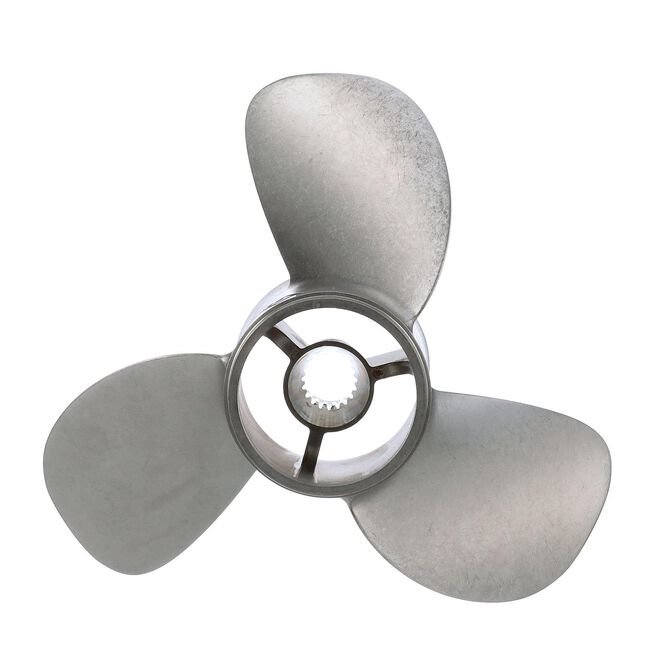
Quicksilver Bravo Three 14.0″ Diameter X 24″ Pitch, 3-Blade Stainless Steel Propeller, Right Hand Rotation, Matte Finish Model # 21440987 Mfg # 8M0123407
€650.00
QUICKSILVER Bravo Three 14.0″ Diameter X 24″ Pitch, 3-Blade Stainless Steel Propeller, Right Hand Rotation, Matte Finish
This innovative contra-rotating propeller system includes a large diameter front 4-blade propeller and small diameter rear 3-blade propeller that provides better acceleration and holding than the Quicksilver Thunderbolt BIII. The counter-rotating system also allows for unbelievable control of your boat, so you won’t ever feel like you’re not in control. This sleek prop comes in a tough matte finish.
Key Features
- 14.0″ diameter, 24″ pitch, right-hand rotation
- Stainless steel propeller
- Up to an 8% gain in acceleration versus the original Quicksilver Thunderbolt BIII
- Unbelievable handling and boat control with contra-rotating propellers
Quicksilver Bravo Three 14.0″ Diameter x 24″ Pitch Stainless Steel Propeller
Precision-Engineered Power for Demanding Marine Performance
Reliability on the water is rarely left to chance. Instead, confidence is achieved through carefully engineered components that are designed to perform under pressure, adapt to changing conditions, and deliver consistent results across every outing. For this reason, the Quicksilver Bravo Three 14.0″ Diameter x 24″ Pitch, 3-Blade Stainless Steel Propeller with Right-Hand Rotation has been widely selected by boat owners who prioritize efficiency, durability, and predictable handling.
From the outset, attention has been placed on hydrodynamic balance, propulsion efficiency, and long-term material integrity. As a result, smoother acceleration, controlled maneuverability, and reduced vibration are commonly experienced. Moreover, compatibility with Bravo Three drive systems has been carefully considered, ensuring seamless integration without unnecessary modification.
Through this page, a complete understanding of this propeller’s value will be established. Performance advantages will be clarified, technical benefits will be contextualized, and buyer confidence will be reinforced at every stage.
Understanding Diameter and Pitch: 14.0″ x 24″
Balanced Specifications for Performance-Focused Boaters
The 14.0-inch diameter has been selected to optimize water displacement and thrust generation. Meanwhile, the 24-inch pitch has been calibrated to support higher cruising and top-end speeds when paired with compatible engines.
Rather than favoring aggressive acceleration alone, this configuration has been designed to balance speed, efficiency, and load-carrying capability. Consequently, performance is maintained whether cruising offshore, towing, or operating under varying passenger and fuel loads.
Additionally, RPM efficiency has been preserved. As a result, engines are allowed to operate within recommended ranges, contributing to longevity and consistent output.
3-Blade Configuration: Purposeful Simplicity
Efficient Thrust with Reduced Drag
While multi-blade propellers can offer advantages in specific scenarios, the 3-blade configuration remains the preferred choice for many performance-oriented applications. In this design, drag has been minimized while thrust efficiency has been preserved.
Because fewer blades pass through the water, resistance is reduced. Therefore, higher speeds and smoother operation are achieved. At the same time, blade surface area has been optimized to maintain grip and stability.
Moreover, vibration levels are commonly reduced when blade balance is precisely controlled. In this propeller, dynamic balancing has been applied to enhance comfort and control.Quicksilver Bravo Three
Right-Hand Rotation Explained
Compatibility and Directional Accuracy
Right-hand rotation propellers are designed to rotate clockwise when viewed from behind the vessel. In Bravo Three systems, proper rotation alignment is critical to maintaining drivetrain harmony and steering predictability.
This propeller has been engineered specifically for right-hand rotation, ensuring correct thrust direction and balanced interaction with its counter-rotating counterpart. Consequently, stress on internal components is minimized, and steering response is improved.Quicksilver Bravo Three
Incorrect rotation selection can result in performance loss or mechanical wear. Therefore, clarity and precision in rotation specification remain essential for safe and effective operation.
Key Benefits at a Glance
Highlighted Features for Quick Evaluation
-
Precision-engineered stainless steel construction for strength and durability
-
14.0″ diameter and 24″ pitch optimized for speed and efficiency
-
3-blade design for reduced drag and smooth power delivery
-
Right-hand rotation for correct Bravo Three system compatibility
-
Enhanced corrosion resistance for saltwater and freshwater use
-
Consistent RPM performance to protect engine longevity
-
Balanced thrust distribution for improved handling and control
Each feature has been designed to support reliability, performance, and long-term value, ensuring confidence from installation through extended use.
Built for a Wide Range of Boating Applications
Versatility Without Compromise
Performance requirements can vary significantly depending on vessel type and usage. For this reason, versatility has been prioritized without sacrificing specialization.
Whether utilized for recreational cruising, offshore performance boating, or demanding day-to-day operation, this propeller has been engineered to adapt. As conditions change, thrust consistency and handling predictability are maintained.
Additionally, inclusive design considerations ensure that both experienced operators and newer boat owners can benefit equally from its performance characteristics.
Engineered for the Bravo Three Advantage
Designed to Complement Dual-Prop Systems
Within Bravo Three drive configurations, propulsion efficiency is influenced by balance, blade geometry, and material strength. Therefore, this propeller has been engineered to operate harmoniously within counter-rotating systems, where smooth power transfer and reduced torque steer are essential.
Rather than being treated as a generic replacement, the design has been optimized specifically for Bravo Three applications. Consequently, power delivery is stabilized, cavitation risk is reduced, and handling precision is noticeably improved during docking, cruising, and acceleration.
Additionally, consistent thrust distribution has been achieved through advanced blade shaping. As a result, improved hole-shot performance and controlled top-end speed are regularly reported by experienced operators.
Why Stainless Steel Construction Matters
Strength, Longevity, and Hydrodynamic Integrity
Material selection plays a defining role in propeller performance. In this case, marine-grade stainless steel has been selected to ensure both structural strength and long-term reliability.
Unlike aluminum alternatives, stainless steel resists flex under load. Therefore, blade geometry is preserved even at high RPMs, allowing pitch and diameter specifications to perform exactly as engineered. Over time, this translates into predictable speed, improved fuel efficiency, and reduced mechanical strain on the drivetrain.
Furthermore, corrosion resistance has been enhanced through precision finishing. As a result, performance degradation due to saltwater exposure is minimized, while visual appearance is maintained across seasons.
Advanced Technical Specifications and Engineering Standards
Precision Manufacturing for Predictable Marine Performance
Engineering excellence is rarely accidental. Instead, performance reliability is achieved through controlled manufacturing processes, verified tolerances, and deliberate material science decisions. For the Quicksilver Bravo Three 14.0″ Diameter x 24″ Pitch, 3-Blade Stainless Steel Propeller with Right-Hand Rotation, these principles have been systematically applied to ensure consistent output across varied operating conditions.
Rather than being manufactured to generic standards, this propeller has been produced under strict quality controls. As a result, dimensional accuracy, blade symmetry, and rotational balance are maintained from unit to unit. Consequently, installation confidence is increased, while post-installation adjustments are minimized.Quicksilver Bravo Three
Precision Casting and CNC Finishing
Controlled Geometry for Hydrodynamic Accuracy
During production, stainless steel alloy is precision-cast to form the foundational blade structure. However, casting alone is not relied upon for final accuracy. Instead, computer numerical control (CNC) machining is employed to refine blade edges, cup profiles, and pitch consistency.
Through this process, hydrodynamic geometry is preserved within tight tolerances. Therefore, water flow across each blade remains uniform, reducing turbulence and drag. Additionally, pitch variation between blades is minimized, ensuring even load distribution during rotation.
Because inconsistencies can lead to vibration or cavitation, each propeller is measured and verified before finishing. As a result, smoother operation and predictable RPM behavior are delivered.Quicksilver Bravo Three
Blade Geometry and Hydrodynamic Profiling
Optimized Shape for Thrust Efficiency
Blade geometry directly influences thrust, acceleration, and fuel efficiency. In this propeller, blade rake, cup, and camber have been carefully engineered to support Bravo Three drive dynamics.
-
Blade rake has been adjusted to maintain lift while preventing ventilation
-
Cupping has been applied to enhance grip at higher trim angles
-
Camber distribution has been refined to balance thrust and efficiency
Through these combined elements, water is displaced efficiently rather than aggressively. Consequently, forward motion is stabilized, and energy loss is reduced.
Moreover, predictable hydrodynamic behavior allows operators to maintain control during rapid throttle changes. Therefore, both safety and performance benefits are realized.
Dynamic Balancing for Reduced Vibration
Comfort and Component Protection
Vibration is often caused by minor imbalances that become amplified at speed. To address this, dynamic balancing procedures have been applied during final inspection.
By balancing the propeller across its rotational axis, uneven centrifugal forces are corrected. As a result, smoother operation is achieved throughout the RPM range. Additionally, strain on bearings, shafts, and gear components is reduced.
Over time, this contributes to:
-
Improved operator comfort
-
Reduced mechanical fatigue
-
Extended drivetrain service life
Therefore, dynamic balancing is not merely a refinement but a functional necessity.
Stainless Steel Alloy Composition
Engineered for Marine Environments
The stainless steel alloy used in this propeller has been selected specifically for marine propulsion. Rather than prioritizing cost efficiency, emphasis has been placed on strength-to-weight ratio, corrosion resistance, and fatigue tolerance.
As a result:
-
Blade flex under load is minimized
-
Edge deformation from debris impact is reduced
-
Long-term exposure to saltwater is better tolerated
Because structural rigidity is preserved, pitch accuracy remains consistent even under heavy throttle. Consequently, performance does not degrade prematurely, and reliability is maintained season after season.
Heat Treatment and Surface Finishing
Durability That Extends Beyond Appearance
After machining, the propeller undergoes controlled heat treatment. Through this process, internal stresses are relieved, and material hardness is optimized. Therefore, crack resistance and impact tolerance are improved.
Surface finishing is then applied to reduce microscopic imperfections. As a result, friction between water and blade surface is lowered, supporting smoother flow and marginal efficiency gains.
Additionally, polished surfaces resist fouling buildup more effectively. Consequently, maintenance requirements are reduced, and performance consistency is preserved.
Hub Design and Load Transfer
Efficient Power Transmission
Power transfer efficiency depends heavily on hub integrity and alignment. In this propeller, the hub has been engineered to ensure secure engagement with the Bravo Three drive system.
Rather than allowing power loss through slippage or misalignment, torque is transferred cleanly from the drivetrain to the blades. As a result:
-
Acceleration response is sharpened
-
Mechanical stress is evenly distributed
-
Drive components are protected
Furthermore, precise hub machining ensures proper fitment, reducing installation errors and vibration risk.Quicksilver Bravo Three
RPM Range Optimization
Protecting Engine Health While Enhancing Output
Operating an engine outside its recommended RPM range can lead to inefficiency or long-term damage. For this reason, the 24-inch pitch has been calibrated to support proper RPM behavior when matched with compatible engines.Quicksilver Bravo Three
By maintaining optimal RPM:
-
Fuel efficiency is improved
-
Combustion efficiency is preserved
-
Engine wear is minimized
Consequently, both performance and longevity are supported without compromise.
Technical Highlights for Buyers and Installers
At-a-Glance Engineering Advantages
-
CNC-machined blade geometry for pitch consistency
-
Precision casting combined with post-cast refinement
-
Dynamically balanced for smooth operation
-
Marine-grade stainless steel alloy for rigidity
-
Heat-treated for strength and fatigue resistance
-
Polished surface finish for reduced drag
-
Engineered hub for Bravo Three compatibility
Each specification has been selected to reduce uncertainty and improve confidence during both purchase and installation.
Built to Meet Professional Expectations
Marine professionals, performance-focused enthusiasts, and reliability-driven owners often share one requirement: predictable results. For this reason, manufacturing standards have been aligned with professional-grade expectations rather than entry-level benchmarks.
Instead of prioritizing minimal compliance, performance margins have been built in. Consequently, this propeller is capable of maintaining consistency even when operating near performance limits.
Real-World Performance and On-Water Behavior
Where Engineering Precision Becomes Everyday Advantage
Performance claims are best validated on the water. Rather than being confined to technical specifications, the value of the 14.0″ Diameter x 24″ Pitch, 3-Blade Stainless Steel Propeller for Bravo Three systems is revealed through measurable improvements in handling, efficiency, and responsiveness.
Once installed, performance gains are not introduced abruptly. Instead, they are experienced progressively through smoother throttle response, stabilized cruising behavior, and predictable maneuvering. As a result, confidence is reinforced whether conditions are calm or variable.
Acceleration and Hole-Shot Performance
Controlled Power Delivery from Standstill
Acceleration behavior is often the first performance metric noticed by operators. With this propeller, power is transferred efficiently from the drivetrain to the water, allowing forward motion to be established without hesitation.
Because blade geometry resists excessive flex, thrust is generated immediately rather than being absorbed through deformation. Consequently:
-
Hole-shot performance is improved
-
Bow rise is moderated
-
Acceleration remains controlled rather than aggressive
This balanced behavior benefits both recreational users and performance-focused operators, ensuring comfort without sacrificing responsiveness.Quicksilver Bravo Three
Cruising Efficiency and Fuel Optimization
Sustained Performance at Optimal RPM
At cruising speeds, efficiency becomes a priority. In this operating range, the 24-inch pitch supports steady RPM behavior, allowing engines to remain within their ideal performance band.
Rather than requiring constant throttle adjustment, speed is maintained with minimal input. As a result:
-
Fuel consumption is stabilized
-
Engine noise is reduced
-
Long-distance comfort is improved
Over time, these incremental efficiencies contribute to reduced operating costs and a more refined boating experience.Quicksilver Bravo Three
Top-End Speed and Load Handling
Balanced Speed Without Overextension
While top-end speed remains an important consideration, it has not been pursued at the expense of reliability. Instead, blade design and pitch selection allow higher speeds to be achieved without forcing engines beyond recommended limits.
Additionally, load variation has been accounted for. Whether operating with additional passengers, equipment, or fuel, thrust consistency is preserved. Consequently, speed loss under load is minimized, and handling remains predictable.
This adaptability ensures performance consistency across real-world boating scenarios rather than idealized test conditions.
Handling, Steering, and Maneuverability
Precision Control in Tight and Open Conditions
Handling characteristics are influenced by thrust symmetry and water flow stability. In this propeller, balanced blade geometry contributes to smooth directional control.
During low-speed maneuvering:
-
Docking precision is improved
-
Steering input feels responsive rather than abrupt
-
Reverse engagement remains controlled
At higher speeds, straight-line tracking is maintained. As a result, operator fatigue is reduced, and confidence is reinforced during extended operation.Quicksilver Bravo Three
Quicksilver Bravo Three Reduced Cavitation and Ventilation Risk
Maintaining Grip Under Dynamic Conditions
Cavitation and ventilation can compromise both performance and component longevity. To mitigate these risks, blade cupping and rake have been engineered to maintain water contact even during aggressive trim or directional changes.
Because airflow intrusion is minimized:
-
Thrust interruption is reduced
-
Blade surface integrity is preserved
-
Vibration levels remain controlled
These characteristics are particularly valuable in choppy water or during rapid throttle transitions.
Compatibility Across Common Bravo Three Applications
Designed for Seamless Integration
Compatibility extends beyond physical fitment. For this reason, performance characteristics have been aligned with the operational profiles of commonly paired engines and hull types.
This propeller is frequently selected for:
-
Performance-oriented recreational boats
-
Cruisers requiring efficiency and load tolerance
-
Operators seeking balanced speed and control
Because integration has been simplified, installation time is reduced, and post-installation adjustments are minimized.Quicksilver Bravo Three
Inclusive Design for Varied Experience Levels
Performance That Adapts to the Operator
Not all boat owners share the same experience level. Therefore, usability has been prioritized alongside performance. Rather than requiring specialized knowledge to appreciate its benefits, this propeller delivers intuitive improvements that are immediately noticeable.
Experienced operators will recognize refined handling and efficiency gains. Meanwhile, newer owners will benefit from predictable response and forgiving behavior. As a result, performance becomes accessible rather than exclusive.
Quicksilver Bravo Three On-Water Benefits Summary
Practical Advantages That Matter Most
-
Faster, smoother acceleration from idle
-
Stable cruising with reduced throttle input
-
Consistent speed under varying loads
-
Predictable handling during docking and turns
-
Reduced cavitation and vibration
-
Improved fuel efficiency over time
Each benefit reinforces reliability, comfort, and confidence, aligning technical design with real-world expectations.
Performance Consistency Across Conditions
Water conditions rarely remain constant. For this reason, adaptability has been built into the propeller’s design. Whether operating in calm freshwater or demanding saltwater environments, performance characteristics remain stable.Quicksilver Bravo Three
As conditions change, thrust delivery adjusts smoothly rather than abruptly. Consequently, control is maintained without requiring constant operator intervention.
Be the first to review “Quicksilver Bravo Three 14.0″ Diameter X 24″ Pitch, 3-Blade Stainless Steel Propeller, Right Hand Rotation, Matte Finish Model # 21440987 Mfg # 8M0123407”
Related products
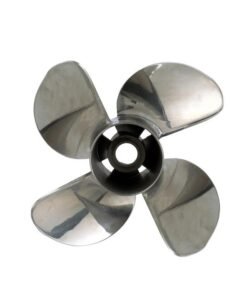
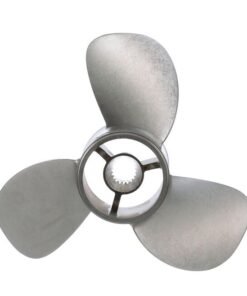
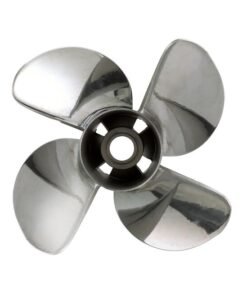
Propeller 4 Blade
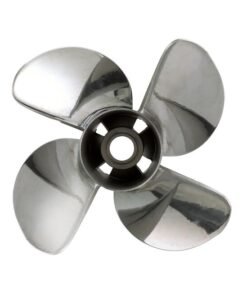
Quicksilver Q4 14.6″ Diameter X 19″ Pitch, 4-Blade Stainless Steel Propeller, Right Hand Rotation
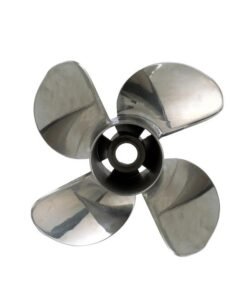
Right Hand Rotation
Quicksilver Q4 14.6″ Diameter X 21″ Pitch, 4-Blade Stainless Steel Propeller, Right Hand Rotation
Right Hand Rotation
VERADO PROPELLER
Verado12 37 Pitch MERCURY RH 3 Blade Rear Propeller, 48-8M0166996
Reviews
There are no reviews yet.