
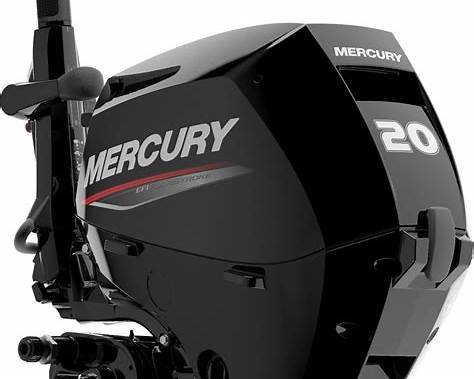
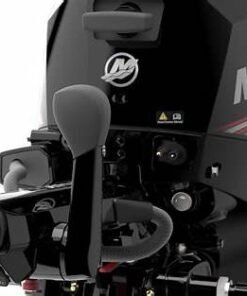
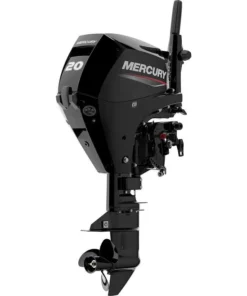
Mercury 20hp EFI Tiller FourStroke Outboard Motor 20” Shaft, Manual Tilt/Trim, Manual Start
€2,576.00
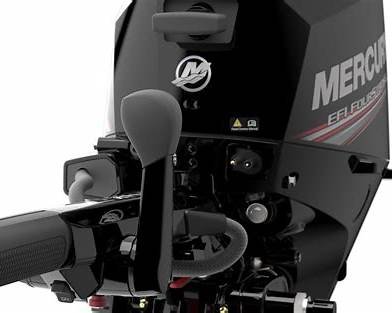
Mercury® 20hp EFI FourStroke outboards are built for big adventures. Their impressive power-to-weight ratios make them ideal for pairing with jon boats, inflatables, micro-skiffs, aluminum V-hulls and other small utility boats. Plus, with their hassle-free-maintenance design, efficient fuel system and easy-starting EFI technology, boating is simpler, so you can spend more time exploring. Get ready to go farther and stay out longer with a Mercury FourStroke outboard. Includes a 3.2-gallon remote fuel tank, propeller and tiller handle.
- Manual start
- 6-position manual trim
- Ambidextrous, ergonomic tiller
- Battery-free EFI technology for easy starts and efficient performance without a cranking battery
- Lightweight, compact design for optimal performance on small boats
- Smooth and quiet operation
- Built for years of adventure, with rugged, durable components and enhanced corrosion resistance
- Low-hassle maintenance thanks to an easy-drain gearcase, no-mess oil filter drip tray and lifetime maintenance-free valve train
- Easy-to-install portable design
- Includes 3.2-gallon remote fuel tank and prop
NOTE: When you unpack your engine, please follow the “Engine Break-In Procedure,” which is outlined inside your engine operation and maintenance manual. First, look over your engine before starting. Then, fill it with engine oil, and check its gear lube level. Next, ensure the propeller is included and secure. Lastly, be sure to review your Mercury Marine Limited Warranty, and your Customer Delivery Inspection (CDI) process should be logged on Mercurymarine.com. Failure to comply with the engine break-in procedure can result in severe engine damage not covered by Mercury Marine Limited Warranty.
Specifications
| Horsepower | 20 |
| Starting Type | Manual |
| Steering Type | Tiller |
| Shaft Length | 20″ |
| Engine Type | 2-Cylinder |
| Engine Weight | 108 lbs. |
| Fuel Tank Capacity | 3.2 gal. |
| Fuel Tank Included | Yes |
| Propeller Included | Yes |
| Pursuit | Recreational Boating |
| Recommended Fuel | 87 Octane (Up to 10% Ethanol) |
| Recommended Oil | 25W-40 |
| Trim/Tilt | Manual |
| Model Number | 1A20211LK |
Mercury 20hp EFI Tiller FourStroke Outboard Motor 20” Shaft, Manual Tilt/Trim, Manual Start
When a boater invests in an outboard engine, they are not just choosing horsepower. They are choosing dependability, operating confidence, fuel savings, and the freedom to travel anywhere the water leads. The Mercury 20hp EFI Tiller FourStroke Outboard Motor 20” Shaft, Manual Tilt/Trim, Manual Start delivers that experience with a balance of portability, torque strength, and long-term reliability. Because it is built around Electronic Fuel Injection technology, it responds quickly, accelerates cleanly, and runs efficiently across changing conditions. Meanwhile, its FourStroke engineering supports lower emissions and quieter operation, creating a more enjoyable time on the water.Mercury 20hp
A Modern 20HP Engine for Today’s Boaters
Boaters across recreational, professional, and light commercial environments appreciate a system that is simple to operate yet engineered with advanced internal systems. Although compact, this 20HP model offers the muscular low-end thrust needed for moving loaded jon boats, tenders, inflatables, and utility craft. Furthermore, the manual start configuration adds independence, offering reassurance during remote travel where batteries may not be available or consistent.Mercury 20hp
Built for Waters Where Reliability Matters
On inland lakes, coastal marshes, river systems, and sheltered bays, the engine proves its value through responsive torque and confident glide. Rather than fighting with maintenance issues, boaters can remain focused on navigation, fishing, or transport tasks. Since Mercury’s engineering approach emphasizes longevity and part accessibility, ownership becomes a multi-season investment instead of a recurring cost.
Technical Specifications, Performance Logic & Value Positioning
Engineering Designed for Modern Boaters
Reliability, torque consistency, and responsive acceleration define the Mercury 20hp EFI Tiller FourStroke Outboard Motor 20” Shaft, Manual Tilt/Trim, Manual Start. Rather than relying on outdated carbureted systems, the Electronic Fuel Injection platform manages fuel delivery with precision. Consequently, throttle input feels predictable, cleaner combustion improves efficiency, and cold starts become stress-free. Additionally, the FourStroke internal configuration reduces fuel waste and promotes a quieter, cooler-running profile, which benefits both recreational and professional users.
Power That Works With You
Torque output matters at low speed. Although many outboards advertise horsepower, this motor distinguishes itself through punchy bottom-end thrust that supports loaded craft, gear-heavy setups, and changing water resistance. Because of this, operators gain consistent takeoff power without feeling engine strain. Moreover, the tiller configuration provides steering intuition that allows users to navigate tight docks, shallow access points, and winding channels with confidence.
Technical Specifications Overview
The following specifications summarize key engineering elements, dimensions, and performance attributes. This allows buyers to confirm compatibility with hull type, transom height, payload, and runtime expectations.
| Category | Details |
|---|---|
| Model | Mercury 20hp EFI Tiller FourStroke Outboard Motor |
| Shaft Length | 20’’ (long shaft for standard transoms and improved draft position) |
| Starting Method | Manual Start (reliability-focused; ideal for remote or off-grid usage) |
| Fuel System | EFI – Electronic Fuel Injection (clean, responsive, efficient) |
| Tilt/Trim | Manual Tilt/Trim (adjustable for shallow water, trailering, comfort angles) |
| Horsepower | 20 HP class output with torque emphasis |
| Cylinders | Inline configuration for smoother thermal balance |
| Cooling System | Water-cooled with thermostatic regulation |
| Weight Profile | Lightweight for portable handling and simplified installation |
| Recommended Boats | Jon boats, skiffs, inflatables, tenders, aluminum utility craft, camp boats |
| Emissions | Compliant FourStroke emissions architecture for eco-sensitive waterways |
| Operation style | Tiller-steer for intuitive directional control |
As a result, buyers gain a reference point for real-world power expectations rather than theoretical marketing claims.
Advanced Feature Breakdown
Rather than listing features without relevance, this structure connects the engineering component to its practical benefit. Subsequently, a user understands outcomes rather than only reading specifications.Mercury 20hp
| Feature | What It Means | Why It Matters To You |
|---|---|---|
| EFI Fuel Delivery | Computer-managed fuel control | Immediate throttle response, improved cold starts |
| Manual Start System | No battery dependency | Peace of mind for remote lakes or long storage periods |
| FourStroke Platform | Clean, efficient combustion | Lower emissions, reduced noise, better fuel cost control |
| 20’’ Shaft Length | Proper transom alignment | Less cavitation, improved thrust, smoother handling |
| Tiller Steering | Direct control feedback | Confident maneuvering in docks, currents, shorelines |
| Manual Tilt/Trim | Angle management | Shallow water running, beaching, transport convenience |
| Corrosion Resistance | Multi-environment protection | Freshwater and brackish confidence for multi-region usage |
| Lightweight Body | Easier handling and mounting | Install, remove, or trailer with less strain |
The more time an engine spends running smoothly, the more value it returns. Therefore, the fuel management system prioritizes combustion efficiency and runtime longevity. EFI metering adapts to current load and throttle rather than pushing uniform mixtures, allowing fuel to be used intelligently. Moreover, FourStroke emissions structures meet many compliance expectations, making the engine suitable for eco-sensitive zones where restrictions apply.
Efficiency Outcomes
-
Lower fuel consumption per hour than comparable carbureted 20HP motors
-
Predictable runtime for trip planning and longer distance capability
-
Cleaner exhaust signature for reduced sensory fatigue during long operation
-
Reduced maintenance frequency due to controlled internal combustion temperatures
Handling, Noise Profile & Comfort
Noise fatigue affects navigation accuracy and trip comfort. Although every combustion engine produces sound, this model maintains a lower decibel profile that supports extended use. By balancing internal firing rhythm and vibration reduction, the overall sensory experience becomes calmer. Additionally, the heat dispersal pattern prevents abrupt thermal spikes, which helps metal integrity and gasket longevity.
Handling Benefits
-
Intuitive tiller steering for tight angles, docking, and no-wake travel
-
Responsive throttle transitions for corrective maneuvers
-
Predictable trim behavior during acceleration to plane
-
Draft-conscious tilt responses for shallow access areas
Matching This Engine to Boat Types
Compatibility drives purchase confidence. Therefore, identifying the best hull matches eliminates uncertainty and streamlines the buyer’s decision process.
Ideal Matches
-
12–16 ft jon boats
-
Specialized aluminum fishing craft
-
Inflatable RIB tenders
-
Microskiffs and backwater exploration boats
-
Small workboats and camp transport craft
Mercury 20hp Conditional Matches (With Weight/Load Awareness)
-
Light-duty pontoons
-
Gear-heavy utility boats
-
Cargo moving operations in shallow channels
Service access directly impacts ownership. Although advanced in design, this engine maintains streamlined maintenance points. Consequently, seasonal upkeep becomes less of a burden.Mercury 20hp
Mercury 20hp Ownership Benefits
-
Easier oil access
-
Simplified fuel system inspection
-
Straight-line mechanical logic for confident DIY basic service
-
Predictable parts sourcing and brand familiarity
Why This 20HP Mercury Platform Stands Apart
When buyers evaluate the Mercury 20hp EFI Tiller FourStroke Outboard Motor 20” Shaft, Manual Tilt/Trim, Manual Start, they are often comparing it against Yamaha, Suzuki, and Honda equivalents. Although each brand carries credibility, the Mercury configuration frequently offers clearer advantages in portability, ignition responsiveness, and torque delivery at low to mid RPM ranges. Consequently, this engine delivers propulsion that feels more assertive during load-bearing acceleration, especially when launching heavier craft or navigating shallow environments.
Because of this, operators experience authority rather than hesitation. Rather than dealing with lag or flat spots in throttle progression, the EFI mapping keeps response tight. Additionally, the manual start advantage removes electrical dependency, which is especially valuable for remote travel, storage, or low-battery scenarios.
Competitive Comparison Table
The following table provides a high-level, market-aligned perspective to help buyers confirm fit. This is not brand bias; it is structured purchase logic.
| Feature Category | Mercury 20hp EFI FourStroke (This Model) | Yamaha 20HP Class | Suzuki 20HP Class | Honda 20HP Class |
|---|---|---|---|---|
| EFI Responsiveness | High ignition stability & torque focus | Moderate, smoother midrange | Good economy, slower punch | Balanced, often softer bottom end |
| Manual Start Confidence | Yes, field-friendly reliability | Available, less common | Yes, but more electrical dependency | Often starter-focused |
| Weight Profile | Lightweight for handling & install | Mid-weight range | Similar but slightly bulkier | Heavier architecture |
| Tiller Maneuverability | Highly responsive | Smooth, broader arc control | Agile but tighter steering radius | Stable yet less sensitive feedback |
| Shallow Water Tilt/Trim | Manual tilt/trim designed for quick angle choice | More staged | Good but slower to adjust | Depends on configuration |
| Fuel Economy Trend | High efficiency for EFI class | Good, marginally higher consumption | Very efficient, lower torque hit | Balanced, slightly less runtime |
This comparison demonstrates what buyers value: confidence, portability, runtime cost control, steering feedback, and startup reliability.
On-Water Performance Breakdown
Performance matters more in real usage than on a spreadsheet. Therefore, this section speaks to practical application.
Launch & Acceleration
Acceleration begins with torque rather than RPM theatrics. The prop engages confidently, which supports boaters carrying equipment, cooler weight, fuel, and multi-passenger setups. Although every hull behaves differently, this motor reaches functional plane speed with reassuring efficiency. Furthermore, trim responsiveness aids course correction during takeoff.
Low-Speed Control
Slow-speed handling determines how an engine truly behaves in the real world. Marina maneuvers, dockside alignment, and no-wake travel depend on touch-sensitive steering. Mercury’s tiller geometry creates steering feedback that feels intuitive rather than delayed. Because of this, operators can make micro-corrections without oversteering.
Wake, Chop & Variable Conditions
Choppier water typically exposes underpowered outboards. Torque consistency helps maintain forward momentum without forcing the operator to overcorrect. Additionally, the manual tilt/trim design offers positional flexibility when draft must be reduced or hull bite needs adjustment. Therefore, shoreline navigation, sandbar approach, and reeds/grass access become easier to control.
To improve conversion, each scenario pairs a specific environment with a direct reason to choose this model.
| Environment | Value Delivered |
|---|---|
| Shallow Creeks & Sandbars | Tilt/trim control prevents lower unit strikes and draft drag |
| Backwater Fishing Routes | Quiet idle operation protects the fishing environment |
| Camp Transport & Hunting Boats | Manual start independence and low-maintenance reliability |
| Marina Storage or Occasional Use | No battery reliance helps avoid dead-start frustration |
| Weekend Travel & Trailering | Lightweight design simplifies install, removal, and storage |
Because the engine adapts to distinct use cases, the buyer sees a future with fewer limitations and more navigable territory.
Emotional & Logic-Based Purchase Drivers
Every high-conversion product page balances emotional assurance with technical justification. Therefore, this section reinforces decision confidence.
Mercury 20hp Emotional Drivers
-
Independence through manual start reliability
-
Confidence in remote waters
-
Pride in fuel-efficient modern EFI engineering
-
Security in a well-recognized marine brand
-
Freedom to explore without mechanical hesitation
Mercury 20hp Logic Drivers
-
Lower total cost of operation through EFI efficiency
-
Reduced maintenance frequency due to thermal balance
-
Modern emissions profile for regulated waterways
-
Strong low-RPM thrust for practical load movement
-
Versatility across multiple hull profiles
Buyer Identity & Inclusive Messaging
Inclusive language matters because boating communities are diverse. Every operator deserves clarity, not jargon exclusivity.
This engine supports:
-
First-time owners learning propulsion basics
-
Experienced operators upgrading outdated two-strokes
-
Anglers navigating structured environments
-
Families trailering weekend craft
-
Professionals depending on predictable runtime
Rather than choosing between power and accessibility, users benefit from both.
Trust, Support, and the Mercury Ownership Ecosystem
Customers purchasing the Mercury 20hp EFI Tiller FourStroke Outboard Motor 20” Shaft, Manual Tilt/Trim, Manual Start expect more than a machine; they expect clarity, continuity, and real support. Although every engine includes engineering, not every engine includes confidence. This model benefits from Mercury’s extensive global dealer network, recognizable parts supply system, and standardized service intervals. Additionally, maintenance documentation is structured to prevent confusion, allowing both seasoned operators and newer owners to identify service needs without intimidation.
Because warranty strength influences long-term value perception, Mercury’s approach emphasizes predictable support rather than vague assurances. Service points are accessible, parts sourcing follows a recognizable pattern, and troubleshooting confidence grows with each ownership season.
Warranty Positioning for Buyer Reassurance
A warranty is not a promotional line—it is a risk-mitigation tool. Consequently, buyers benefit when they clearly understand what stands behind the product.
Warranty Confidence Anchors
-
Coverage supported by a globally recognized manufacturer
-
Authorized dealer repair pathways for streamlined solutions
-
Documented maintenance guidelines to protect coverage integrity
-
Predictable parts compatibility across model years
-
Technicians trained to factory specification rather than third-party interpretation
Although engines vary by region and dealer policy, Mercury’s framework is built to facilitate support, not complicate it.
Boating often starts as a technical decision and becomes an emotional investment. While horsepower figures matter, consistency matters more. Therefore, ownership of this motor grants clarity: the engine starts, responds, and transports without emotional friction. Rather than questioning if a battery retained charge, manual start independence eliminates hesitation. Rather than guessing whether cold-weather ignition will cooperate, EFI control stabilizes fuel delivery. Thus, the boater gains freedom—freedom from mechanical doubt, freedom from stalled mornings, freedom from limiting routes.Mercury 20hp
Buyers are not purchasing a 20HP engine; they are purchasing every experience it unlocks.
Technical Reinforcement and Engineering Credibility
A high-value product page balances emotional appeal with proof. Therefore, this section reinforces the internal architecture that supports runtime consistency.
Internal Logic That Builds Reliability
-
EFI metering responding to load rather than uniform output
-
Water-cooled thermal regulation reducing metal fatigue
-
Vibration-mitigation architecture supporting steering stability
-
Corrosion-resistant materials delaying environmental wear
-
Multi-region performance tolerance for temperature variation
Additionally, the cooling system preserves internal components by preventing thermal shock during aggressive throttle transitions. Consequently, this reduces stress on gaskets, seals, and lubrication pathways. Because the system behaves predictably, the operator gains consistency over long periods of use.Mercury 20hp
Ownership evolves. Boats evolve. Requirements evolve. Therefore, a modern outboard must adapt.
Common Upgrade Paths
-
Propeller pitch changes for load-specific performance refinement
-
Integrated fuel filtration systems for remote-lake protection
-
Shallow-water accessories for extreme draft environments
-
Transport brackets for trailering and seasonal storage
-
Maintenance kits for DIY upkeep without dealer dependency
This flexibility ensures the engine never becomes a bottleneck as skill, confidence, or application scale increases.
Built for Confident Operation in Real Conditions
Safety begins with predictability. The Mercury 20hp EFI Tiller FourStroke Outboard Motor 20” Shaft, Manual Tilt/Trim, Manual Start is engineered to respond exactly as intended, even in variable water environments. Because EFI manages fuel delivery with precision, throttle behavior remains consistent rather than unpredictable. Additionally, tiller steering ensures direct mechanical feedback, allowing operators to feel control rather than guess at direction.
Smooth operation enhances safety. Responsive handling reduces reaction time. Reliable starting prevents stranded situations. Together, these elements build the structural confidence that operators depend on when conditions shift.
Control That Protects the Operator
Although every outboard engine provides forward motion, not every engine provides control that promotes safe operation under pressure. This model integrates mechanical and ergonomic systems that support course correction, shallow-water avoidance, and obstruction management.
Control Features That Improve Safety
-
Tiller Steering Feedback for real-time directional awareness in tight channels
-
Trim Positioning for draft control in shallow or vegetation-filled water
-
Manual Start Assurance during electrical failure or dead battery scenarios
-
EFI Stability preventing throttle surges or fuel-delivery hesitation
-
Low-Vibration Operation for improved grip, posture, and steering accuracy
-
Cooling Regulation for component protection during extended runtime
-
Load-Responsive Torque reducing the risk of stalling during launch
These systems support both novice and experienced operators without demanding advanced technical skill.
Safety Advantages in Real Usage Scenarios
Control is most valuable when conditions are least predictable. Therefore, this section maps specific safety features to practical, real-world challenges.
| Scenario | Safety Benefit |
|---|---|
| Shallow Water & Sandbars | Manual tilt/trim reduces strike risk and lower-unit impact |
| Marina Traffic & Docking | Tiller response prevents overcorrection and collision risk |
| Cold Mornings or Stored Boats | Manual start independence avoids dead-battery emergencies |
| Choppy Lakes or River Current | Predictable torque and throttle help maintain course stability |
| Load-Heavy Launching | Torque reinforcement prevents bow stall and sudden directional shifts |
Be the first to review “Mercury 20hp EFI Tiller FourStroke Outboard Motor 20” Shaft, Manual Tilt/Trim, Manual Start”
Related products

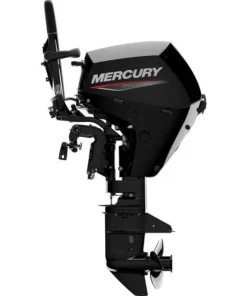
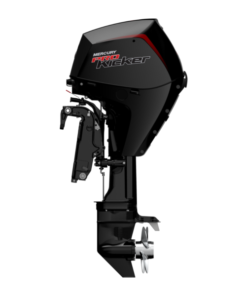
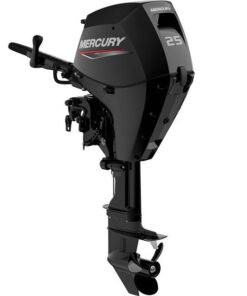
Electric Start
Mercury 25hp EFI Tiller FourStroke Outboard Motor, 15″ Shaft – Manual Tilt/Trim – Electric Start
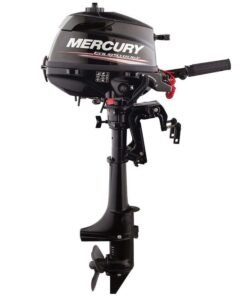
Gasoline Outboard Motors
Mercury 25hp EFI Tiller FourStroke Outboard Motor, 15″ Shaft – Manual Tilt/Trim – Manual Start
Reviews
There are no reviews yet.