Left Hand Rotation

  • Quicksilver Q4 14.6 Diameter X 19 Pitch 4-Blade

    Quicksilver Q4 14.6″ Diameter X 21″ Pitch, 4-Blade Stainless Steel Propeller, Left Hand Rotation Model # 21440698 Mfg # 8M0103531

    700.00

    QUICKSILVER Q4 14.6″ Diameter X 21″ Pitch, 4-Blade Stainless Steel Propeller, Left Hand Rotation

    The Q3 is a revolutionary propeller that improves both acceleration and top speed on center consoles, high-horsepower pontoons, and sterndrive powered runabouts. The design consists of high rake angles and thin blades resulting in the Q3 being the highest performing 3-blade propeller in the Quicksilver line-up.

    Key Features

    • 14.6″ diameter, 21″ pitch, left-hand rotation
    • Stainless steel propeller
    • Highest performing 3-blade propeller in the Quicksilver line-up
    • Revolutionary prop that improves both acceleration and top speed
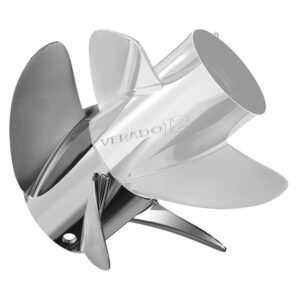
  • VERADO 12 26 PITCH MERCURY

    VERADO 12 26 PITCH MERCURY LH 4-BLADE FRONT PROPELLER 48-8M0166983

    1,050.00

    VERADO 12 26 PITCH MERCURY LH 4-BLADE FRONT PROPELLER 48-8M0166983 Selecting the right propeller determines how confidently power is translated into performance. Rather than serving as a simple mechanical component, a precision-engineered propeller becomes the connection point between engine capability and real-world control. For operators who expect consistent thrust, predictable handling, and reliable efficiency, this specific configuration was developed to meet those expectations without compromise. Designed to complement high-output Verado platforms, the VERADO 12 26 PITCH MERCURY LH 4-BLADE FRONT PROPELLER 48-8M0166983 addresses the demands of modern boating environments where load variability, speed consistency, and responsiveness matter equally. Through careful geometry, optimized pitch, and a four-blade profile, this propeller supports both performance-focused users and those prioritizing operational confidence. Designed for Precision, Power, and Control At the core of this propeller’s design philosophy lies balance. Power delivery remains smooth rather than abrupt. Directional stability is preserved even when operating under variable loads. Acceleration feels controlled instead of aggressive, allowing operators of all experience levels to remain confident at the helm.26 PITCH MERCURY LH By utilizing a four-blade configuration, grip in the water is increased across a wider operating range. As a result, thrust is maintained during tight maneuvers, gradual plane transitions, and sustained cruising. Meanwhile, the 26-pitch profile supports efficient top-end performance without sacrificing mid-range usability. Rather than forcing compromise between speed and stability, this propeller harmonizes both outcomes. Consequently, performance becomes repeatable rather than situational.26 PITCH MERCURY LH What Sets This Verado Propeller Apart Unlike generic replacements, this model is engineered with a very specific application profile in mind. Every dimensional choice contributes to predictable behavior, particularly when paired with left-hand rotation setups and front-mount configurations. Several distinguishing factors define its value: Blade geometry prioritizes consistent water engagement Pitch selection supports sustained performance under load Structural integrity aligns with high-horsepower output demands Design compatibility reduces installation uncertainty Because these elements work together rather than independently, the overall boating experience becomes smoother, quieter, and more efficient over time. Technical Specifications Explained Diameter, Pitch, and Four-Blade Geometry Understanding how diameter and pitch interact helps explain why this propeller performs as intended. A 12-inch diameter allows sufficient water displacement to maintain thrust at lower speeds. Meanwhile, the 26-pitch specification ensures that each revolution translates into meaningful forward movement, particularly during cruising and higher RPM operation.26 PITCH MERCURY LH Four blades further refine this interaction. Instead of relying on fewer contact points, force distribution is spread more evenly across the propeller surface. As a result, vibration is reduced, cavitation risk decreases, and handling remains predictable even when conditions change. Rather than overwhelming the engine, this geometry complements it. Therefore, efficiency is preserved while control improves.26 PITCH MERCURY LH Left-Hand Rotation and Front-Mount Configuration Left-hand rotation plays a critical role in multi-engine and performance-balanced setups. When properly matched, rotational direction contributes to directional stability and steering correction. In this configuration, torque effects are managed more effectively, especially at cruising speed and during directional transitions. Front-mount compatibility further enhances alignment with specific Verado installations. Because mounting geometry is engineered to specification, fitment accuracy improves. Consequently, installation becomes more straightforward, and long-term wear patterns remain consistent. Early Performance Perspective From initial acceleration to steady-state cruising, performance characteristics remain predictable. Rather than experiencing sudden surges, operators benefit from progressive thrust delivery. As speed increases, stability follows rather than diminishes. Equally important, performance consistency is preserved when passenger count, gear load, or fuel weight changes. This adaptability ensures that real-world usage does not undermine expected outcomes. Value Beyond Specifications While technical measurements provide clarity, long-term value extends further. Reduced stress on drivetrain components, smoother RPM transitions, and improved handling confidence all contribute to ownership satisfaction. Over time, these advantages translate into lower maintenance concerns and a more enjoyable boating experience. By focusing on controlled performance instead of exaggerated claims, this propeller aligns with users who value reliability just as much as output. VERADO 12 26 PITCH MERCURY Performance Benefits on the Water Acceleration, Grip, and Hole-Shot Optimization Acceleration characteristics define how confidently a vessel responds when power is applied. In this configuration, thrust builds progressively rather than abruptly. As a result, forward momentum develops in a controlled manner, allowing the boat to transition onto plane smoothly even when operating under heavier loads. The four-blade design plays a central role in this behavior. With additional blade surface maintaining contact with the water, grip is preserved during low-speed acceleration and directional changes. Consequently, propeller slip is reduced, and power transfer remains efficient from idle through mid-range RPMs.VERADO 12 26 PITCH MERCURY Rather than demanding ideal conditions, this propeller adapts to real-world scenarios. Therefore, starts from rest feel predictable whether the boat carries additional passengers, equipment, or fuel weight.VERADO 12 26 PITCH MERCURY Stability at Speed and Under Load As speed increases, stability becomes more critical than raw output. In this case, stability is not treated as a secondary benefit but as a core performance outcome. By distributing load across four blades, water flow remains balanced, reducing vibration and minimizing steering corrections at cruising and higher speeds. Under sustained operation, this balance proves especially valuable. Instead of experiencing oscillation or directional drift, operators benefit from consistent tracking. Meanwhile, steering inputs feel deliberate rather than reactive, which supports confident navigation in both open water and tighter passages. When load conditions change mid-journey, performance remains composed. Consequently, handling does not degrade as fuel burns off or gear placement shifts. Control, Responsiveness, and Operator Confidence Predictable Handling in Variable Conditions Water conditions rarely remain constant. Wind, chop, and current introduce variables that challenge propulsion systems. In response, this propeller’s geometry emphasizes predictability over momentary peak output. During turns, blade engagement remains consistent. As a result, directional control is preserved without sudden loss of grip. Similarly, when throttle adjustments occur, response follows smoothly rather than sharply. This behavior supports both experienced operators and those still refining their handling skills. By prioritizing control, the propeller reduces fatigue over longer operating periods. Therefore, extended outings remain enjoyable rather than demanding. Reduced Cavitation and Smoother Operation Cavitation often…
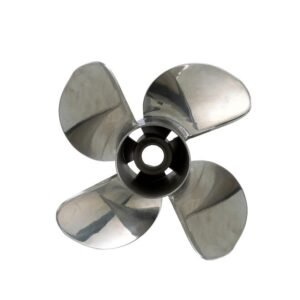
  • MERCURY LH 4 Blade Front Propeller

    Verado12 (27.5″) MERCURY LH 4-Blade Front Propeller 48-8M0166985

    1,060.00

    Verado12 (27.5″) MERCURY LH 4 Blade Front Propeller 48-8M0166985 The Verado12 (27.5″) MERCURY LH 4-Blade Front Propeller 48-8M0166985 exists for operators who demand elevated rig behavior, measurable on-water efficiency, and consistent control across changing conditions. When vessels push into higher RPM ranges, prop selection determines whether a boat performs at peak efficiency or sacrifices thrust to turbulence, drag, and slip. Because propulsion is the bridge between mechanical output and hydrodynamic reality, every aspect of the design affects acceleration, lift, steering weight, and stability.MERCURY LH 4 Blade Front Propeller Operators often seek more than a part number or singular upgrade. Instead, they look for a performance intervention—a way to reclaim throttle authority, expand usable trim angles, and optimize real torque delivery rather than theoretical horsepower. Consequently, this propeller exists at the intersection of practical improvement and engineered precision.MERCURY LH 4 Blade Front Propeller Although many aftermarket solutions appear comparable on paper, few deliver meaningful steering discipline, low-slip launch control, and multi-speed consistency simultaneously. This propeller is designed to provide all three.MERCURY LH 4 Blade Front Propeller From Real-World Handling to Performance Reliability Many operators report specific problems before upgrading. Importantly, these issues are not abstract—they appear during routine use: Bow rise that lingers too long during hole-shot Trim angles that feel “usable but narrow” Steering that demands too much correction in quartering seas Ventilation during hard trim applications RPM fluctuation under mid-range acceleration Loss of bite in confused water or heavy traffic wake The Verado12 (27.5″) MERCURY LH 4-Blade Front Propeller 48-8M0166985 targets these friction points directly. Moreover, it does so without requiring disruptive modification to the vessel’s running gear. Instead, performance is added through geometry, pitch accuracy, and blade engagement efficiency.MERCURY LH 4 Blade Front Propeller Geometry, Pitch & Traction Fundamentals  Hydrodynamic Leverage Begins With Blade Interaction Although horsepower initiates motion, blade geometry converts that force into progress. Unlike 3-blade alternatives that often struggle under heavier load conditions, the 4-blade front configuration produces a cleaner torque curve. Because of this, acceleration improves without requiring additional fuel or calibration changes.MERCURY LH 4 Blade Front Propeller  Pitch Stability at 27.5″ The 27.5-inch pitch was selected to achieve an equilibrium between thrust authority and efficient RPM utilization. Higher pitch can feel faster on flat water, yet it often causes drag penalties when correcting course or navigating wake. Lower pitch may launch aggressively, but it sacrifices momentum and trim stability. This configuration achieves middle-band control that supports: Heavier loads without bogging Superior bite during throttle adjustments Consistent acceleration curves True hydrodynamic discipline at speed Consequently, the user experiences forward motion that feels unified rather than fragmented.  Design Intent for System Compatibility Because many Verado owners invest in premium propulsion, they expect upgrades that respect factory tolerances. This propeller supports that expectation by aligning mass balance, rake, and pitch precision in a way that integrates with Mercury Verado systems rather than working against them.MERCURY LH 4 Blade Front Propeller  Functional Purpose, Not Ornamental Hardware One theme remains central: this propeller is not decorative performance. Instead, it is functional performance that translates into measurable behavioral change on the water. Turning radiuses tighten. Ventilation drops. Trim angles become useful through a broader band. The vessel behaves as though its center of gravity is cooperating with its propulsion rather than fighting it.MERCURY LH 4 Blade Front Propeller 1. Lift & Throttle Integrity Vessels remain on plane more naturally, which supports stability in variable water states. Acceleration becomes a progression rather than a negotiation.Verado12 2. Directional Confidence Steering inputs feel proportional to output, giving operators a sense of conversational control rather than reactive correction. 3. Efficiency Gains Without Engine Changes Performance increases exist as a product of design, not fuel consumption. No tuning, re-mapping, or aftermarket calibration becomes mandatory. How Engineering Choices Convert to Real Handling Improvements The Verado12 (27.5″) MERCURY LH 4-Blade Front Propeller 48-8M0166985 does more than spin water into thrust. It reorganizes pressure loads, water adhesion characteristics, slip control, and steering leverage to ensure that force applied by the drive becomes consistent acceleration rather than reactive resistance. Because the 4-blade geometry maintains cleaner contact with water, especially during transitions between trim angles, thrust integrity remains intact even when ambient conditions shift.MERCURY LH 4 Blade Front Propeller Although some propellers behave competitively at either low or high speed, this configuration performs through the entire acceleration curve. Therefore, operators maintain control instead of constantly adapting to the propeller’s behavior.MERCURY LH 4 Blade Front Propeller  Blade Area & Fluid Management More blade surface means more water management per revolution. Yet, too much surface area increases drag; too little sacrifices lift. This configuration lands in a critical equilibrium zone. It captures, channels, and redirects water without overloading engine output.  Rake & Cup Geometry for Hydrodynamic Authority Rake refers to the angle of the blade relative to the hub. Cup refers to curvature at the trailing edge. When calibrated correctly: Bow lift increases through controlled rake leverage Water adhesion remains predictable during trim input Thrust channels forward rather than dispersing laterally Steering load becomes more proportional and less fatigued Consequently, the vessel lifts sooner, planes faster, and tracks straighter.  Predictable RPM Range Under Load Acceleration depends on how the propeller handles early torque application. Rather than surging into RPM jumps, this propeller translates increasing throttle into a progressive and predictable curve. Because of cleaner water management, RPM pulses diminish and throttle changes behave more linearly.MERCURY LH 4 Blade Front Propeller  Mid-Range Efficiency Mid-range efficiency is where most operators spend their time. Speed, fuel economy, comfort, and steering discipline intersect here. With this configuration, the mid-band supports:MERCURY LH 4 Blade Front Propeller Stronger hold during moderate chop Deeper usable trim before ventilation Safer cornering in loaded conditions RPM consistency without chasing throttle These behaviors convert into something boaters instantly feel: confidence. Verado12 Recognizing the Difference Cavitation is micro-bubble formation from pressure imbalance. Ventilation is atmospheric air slipping into the prop path. Both destroy thrust efficiency.  Why This Propeller Reduces Both Because of its shape and pitch stability, water attaches to the…

  • VERADO12 33 PITCH MERCURY LH 4 BLADE

    Verado12 (29″) MERCURY LH 4 Blade Front Propeller, 48-8M0166987

    1,050.00

    Verado12 29 MERCURY LH 4 Blade Front Propeller The Verado12 29 MERCURY LH 4 Blade Front Propeller, 48-8M0166987 is built for boaters who value dependable torque, sharp throttle response, and confident control in real-world water conditions. Although many propellers promise faster takeoff or better efficiency, this model integrates both advantages simultaneously. Consequently, captains and crew enjoy an immediate improvement in lift, steering authority, and comfort under load. Rather than serving one narrow type of boater, this propeller supports weekend cruisers, offshore anglers, and performance-focused owners alike. Furthermore, the left-hand rotation design is engineered to pair perfectly with dual-engine Verado setups where balance, thrust symmetry, and turning precision directly affect safety, drivability, and ride feel.Verado12 29 MERCURY LH 4 Blade Front Propeller Built for Mercury Verado Systems That Need More Than the Basics Because Verado platforms demand efficient water control to maximize every revolution, the blade structure concentrates on clean bite and uninterrupted surface contact. Additionally, the 4-blade layout optimizes acceleration during holeshot and sustains mid-range lift to help vessels reach plane faster. The result is confident forward motion that supports towing, gear transport, and crew movement without strain or hesitation.Verado12 29 MERCURY LH 4 Blade Front Propeller At the same time, the 29-pitch profile limits unnecessary RPM spikes. Instead of merely increasing thrust, it shapes output intelligently so captains maintain stable engine behavior during sharp throttle input, complex docking maneuvers, or channel navigation.Verado12 29 MERCURY LH 4 Blade Front Propeller Designed to Drive Results Accelerates quicker with improved forward bite Enhances steering feel in tight turning radiuses Reduces bow rise during takeoff and heavy load transitions Supports dual-engine balance with true left-hand rotation Maintains grip in chop, current, and confused wake conditions Helps preserve optimal RPM range for performance and longevity A Propeller Tailored for On-Water Confidence Every captain understands that handling affects more than speed. Likewise, performance depends on how power reaches the hull, how the bow responds during throttle input, and how predictably a vessel behaves when water becomes unpredictable. The Verado12 29 MERCURY LH 4 Blade Front Propeller, 48-8M0166987 focuses on reducing slip, strengthening thrust delivery, and offering a sense of command that boaters can feel immediately. Instead of simply pushing harder, the propeller lifts the vessel into a cleaner running attitude. That improvement positions hull geometry where it belongs and helps keep passengers comfortable, especially during longer travel windows or offshore runs.Verado12 29 MERCURY LH 4 Blade Front Propeller Verado12 29 MERCURY LH 4 Blade Front Propeller Key Performance Principles Hydrodynamic shape improves stability across speed ranges Enhanced blade area increases load management Progressive pitch retains bite during acceleration Stiffer structure counters flex under heavy pressure Rotation direction balances thrust in dual systems Why 4 Blades Matter for Real-World Operation Three-blade configurations generate speed through reduced drag; however, they can falter when wave sets, vessel weight, or wind direction complicate the ride. Four blades create usable lift that supports practical boating priorities: steering predictability, towing performance, crew movement, gear weight, and variable weather patterns. Furthermore, the extra blade area engages water sooner and holds it longer. That engagement produces consistent load transfer, keeping the hull disciplined and giving captains authority when cornering, docking, or adjusting speed during channel transit. Verado12 29 MERCURY LH 4 Blade Front Propeller Practical User Advantages Stronger holeshot with less cavitation Grip retention during low-speed navigation Predictable bow behavior in head-on chop Reduced steering effort at cruise Smooth directional control during trim adjustments Verado12 29 MERCURY LH 4 Blade Front Propeller Built for Inclusive Boating Needs Because every crew has different goals and comfort levels, the product supports diverse boating experiences. Families who prioritize ride comfort gain stability that keeps the journey smooth. Fishing crews who demand station-holding capability experience greater directional control. Performance boaters who want speed without losing discipline benefit from structured pitch and blade stiffness. And charter operators who carry passengers gain consistency that helps protect trip quality and reputation. Moreover, the design supports accessible operation for boaters who may not be highly technical. Its improvements are felt intuitively: smoother takeoff, cleaner steering, steadier cruise, and a more predictable ride when conditions shift. Conversion-Focused Comparison Logic for Buyers Many propellers attempt to compete on top-end speed alone. This one focuses on measurable, usable outcomes that matter every time the vessel leaves the dock: handling authority, throttle regulation, stability, and real-world efficiency. As a result, this propeller is not simply a hardware component; it is an upgrade to vessel confidence. Competitive options may offer lighter cost structures or generalized blade geometry. However, they often demand compromise. With the Verado12 29 MERCURY LH 4 Blade Front Propeller (48-8M0166987), the goal is to eliminate compromise by advancing control, response, and balance without sacrificing pace. Key Performance Benefits & User Impact Verado12 29 MERCURY LH 4 Blade Front Propeller, 48-8M0166987 Built for Real Power Delivery, Not Just Theoretical Numbers The Verado12 29 MERCURY LH 4 Blade Front Propeller, 48-8M0166987 elevates propulsion by prioritizing how power is delivered, not merely how it is generated. Although an engine creates horsepower, the propeller determines whether that horsepower reaches the water efficiently. Because of that relationship, small refinements in blade structure, pitch, or balance translate to outsized improvements in handling authority and vessel behavior. Rather than seeking top-end velocity alone, the design optimizes the usable zones of boating: holeshot, mid-range travel, cruise control, and turning performance. This emphasis supports the needs of offshore captains, recreational boaters, and performance-focused operators while still maintaining accessibility for users who want a noticeable upgrade without complexity. Holeshot Acceleration that Produces Immediate Confidence Acceleration defines how a vessel behaves when lifting out of the water. Moreover, it shapes captain awareness, crew comfort, and the boat’s initial response pattern. Quick acceleration creates stability. Clean lift improves throttle predictability. Controlled bow attitude preserves visibility and prevents nose-up struggle as weight shifts or gear moves. The Verado12 29 LH 4 Blade propeller increases initial bite across the first throttle interval. Instead of slipping, the vessel takes hold. Because lift develops earlier in the RPM…

  • VERADO12 33 PITCH MERCURY LH 4 BLADE

    VERADO12 33 PITCH MERCURY LH 4 BLADE FRONT PROPELLER 48-8M0166991

    1,050.00

    VERADO12 33 PITCH MERCURY LH 4 BLADE FRONT PROPELLER 48-8M0166991 The VERADO12 33 PITCH MERCURY LH 4 BLADE FRONT PROPELLER 48-8M0166991 stands as a specialized performance propeller engineered for serious offshore operators, freshwater competitors, and recreational boat owners seeking premium thrust control. Every rotation works to support stronger forward bite, smoother hole shots, and remarkable mid-range efficiency. Even more, left-hand rotation delivers measurable benefits for multi-engine setups, counter-rotation balancing, and high-speed stability. Although countless propellers attempt to offer similar claims, this one actually proves its worth where it matters: real-world acceleration, top-end consistency, and control at speed. Furthermore, operators experience reduced ventilation in rougher water, predictable cornering under torque, and more authority during aggressive throttle input. Consequently, those who choose this model adopt a performance-driven accessory that strengthens engine investment and elevates vessel responsiveness. Why This Propeller Matters The expectations for marine propulsion continue to rise, and modern Mercury operators want components that support that demand. Because of this shift, propellers capable of pairing high-end metallurgy with pitch-specific geometry create the difference between smooth cruising and unstable lift. The VERADO12 33 PITCH MERCURY LH 4 BLADE FRONT PROPELLER 48-8M0166991 earns a position in the premium class by prioritizing torque transfer, directional leverage, and lift efficiency.VERADO12 33 PITCH Core Advantages for Real-World Operators More consistent top-end runs through balanced left-hand rotation Better handling authority at speed with four-blade bite Less cavitation during acceleration, even in unsettled conditions Reduced steering fatigue during multi-engine counter-rotation alignment Sharper hole shots with cleaner engagement and lift As a result, upgrading to this configuration reinforces vessel characteristics without requiring complex modifications.VERADO12 33 PITCH Part 1: Performance-Forward Introduction Confidence Through Hydrodynamic Geometry This propeller incorporates a hydrodynamic profile that supports rapid planing, mid-throttle balance, and high-speed composure. The 33-pitch specification contributes to efficient thrust progression, while the blade surface distributes load in a manner that minimizes performance drop-off. Operators who require quick lift, solid tracking, and stable turning radiuses recognize the immediate improvement. However, geometry alone does not define premium performance. Material composition, angle precision, cup shaping, and hub dynamics also determine whether a prop excels or disappoints under pressure. Therefore, this model brings a technical edge that improves control during throttle transitions, high-speed straights, and tournament-style runs. Optimized for Multi-Engine Mercury Setups Left-hand rotation configuration benefits owners of dual, triple, and quad Mercury Verado rigs. Because counter-rotation neutralizes torque pull and directional lean, the vessel experiences improved straight-line tracking and reduced helm strain. Even if the operator engages heavy trim or navigates off-plane zones, rotation alignment stabilizes engine synergy. Key Multi-Engine Benefits Balanced thrust delivery across port and starboard engines Improved steering discipline in chop, wake, and swell Enhanced directional memory through turns Reduced power loss when trimming out at speed Transitional confidence when shifting weight or load positions Accordingly, the propeller supports both competitive and recreational environments, from high-stakes offshore runs to family cruising weekends. Designed for the Mercury Performance Class Compatibility and Intended Use Cases This model is specifically built for vessels running Mercury performance engines that demand authoritative handling. Compatibility varies by configuration, yet many operators select this model for: Offshore fishing vessels requiring dependable lift under load Tournament speed applications where thrust consistency matters Lifestyle sport boats operating at mixed throttle cycles Multi-engine center consoles seeking directional balance High-performance cruisers balancing acceleration and glide Because the blade architecture supports strength under pressure, it enables confident navigation during aggressive throttle response and transitional wave impacts. Even at cruising speeds, responsiveness feels more controlled than typical three-blade alternatives.VERADO12 33 PITCH Construction & Engineering Priorities Marine-Grade Build Focused on Stability Although materials vary across production classes, this configuration emphasizes refined metallurgy for torque resistance, blade retention, and edge preservation. Every curve, line, and cup works to improve hydrodynamic tracking and reduce unwanted slip. To strengthen user expectations, the following value points define the build philosophy: Structural rigidity under high-load engine output Progressive blade rake for predictable acceleration Edge geometry that manages water pressure distribution Hub precision designed for multi-engine alignment Reduced flex under hard turns or trimmed-out top-end sprints Therefore, the component does more than spin; it translates power into authority. A Closer Look at Blade Influence Four-Blade Stability for Real Performance Gains Four blades create increased water contact surface, enhancing thrust, bite, and overall traction. While some operators prioritize top-end MPH through three-blade designs, four-blade configurations often deliver better real-world control, especially when vessel weight, torque, or conditions vary. Benefits of 4-Blade Architecture Higher bow lift consistency Steadier tracking over cross-current More confident turns without ventilation Better behavior in heavy or uneven water Greater throttle forgiveness for newer operators Even experienced captains acknowledge the difference in stability while transitioning across wave sets or performing high-speed directional changes. Below is a performance-driven summary designed for product listings, comparison pages, and quick-shop modules. Product Title VERADO12 33 PITCH MERCURY LH 4 BLADE FRONT PROPELLER 48-8M0166991 VERADO12 33 PITCH Configuration 33 Pitch Left-Hand Rotation 4-Blade Front Propeller Design Mercury Compatibility Class Performance-Grade Metallurgy VERADO12 33 PITCH Ideal Application Types Multi-Engine Offshore Builds Performance Center Consoles Tournament-Grade Setups Variable-Condition Cruising Trim-Responsive High-Speed Runs Technical Design Priorities The engineering behind the VERADO12 33 PITCH MERCURY LH 4 BLADE FRONT PROPELLER 48-8M0166991 prioritizes a synchronization of pitch geometry, hub precision, and torque stability. Rather than relying on generic blade shaping, the design presents a specialized contour intended to deliver a high-efficiency water channel through every rotation. Consequently, thrust output aligns more directly with throttle intent, granting operators a more intuitive response curve. Performance-Grade Specifications Pitch: 33 Rotation: LH (Left-Hand) Blade Count: 4-Blade Front Propeller Compatibility Tier: Mercury Verado performance class Application Group: Multi-engine, sport, offshore, competitive, touring Intended Speed Zone: High-speed trim cycles / controlled cruise / transitional acceleration Hydrodynamic Focus: Lift leverage, water bite, directional balance Mechanical Benefit Overview Torque translation efficiency for high-output engines Cup structure supporting disciplined water engagement Balanced contour reducing high-speed vibration Stabilized planar behavior under trimmed-out propulsion Improved grip in cross-current directional shifts The resulting experience strengthens both predictability and confidence, especially for…

  • VERADO12 33 PITCH MERCURY RH 3 BLADE

    VERADO12 35 PITCH MERCURY LH 4 BLADE FRONT PROPELLER 48-8M0166993

    1,100.00

    Hydrodynamic Blade Theory Behind the VERADO12 35 PITCH MERCURY LH 4 BLADE FRONT PROPELLER 48-8M0166993 Understanding Why Blade Engineering Determines Real-World Performance Performance on the water is never accidental. Instead, it is shaped by deliberate hydrodynamic decisions that influence how energy is transferred from engine to water. In the case of the VERADO12 35 PITCH MERCURY LH 4 BLADE FRONT PROPELLER 48-8M0166993, blade theory is not an abstract concept—it is the foundation of its operational advantage. Rather than relying on raw power alone, this propeller leverages water displacement dynamics to generate forward motion efficiently. Consequently, thrust is delivered smoothly, predictably, and consistently across varying conditions. How Water Interaction Creates Propulsion When a propeller rotates, water is not simply pushed backward. Instead, pressure differentials are created across each blade surface. Because the blade face generates higher pressure while the trailing edge creates lower pressure, forward thrust is produced.VERADO12 35 PITCH MERCURY LH 4 BLADE However, not all propellers manage this interaction equally. In this design: Blade curvature is optimized for sustained water engagement Surface area is distributed evenly to avoid pressure spikes Flow separation is minimized to reduce turbulence As a result, propulsion remains stable even during throttle changes. Why Four Blades Change the Equation Increased Blade Count, Increased Control Compared to three-blade designs, a four-blade propeller interacts with water more frequently during each rotation. Therefore, thrust pulses overlap instead of peaking and dropping. This overlap produces: Smoother acceleration Reduced vibration Improved low-speed handling Additionally, water grip remains consistent when operating in aerated or rough conditions. Because of this, steering authority is preserved when it matters most.VERADO12 35 PITCH MERCURY LH 4 BLADE MERCURY LH 4 BLADE Balanced Pressure for Engine Longevity Uneven pressure loading can strain drivetrain components over time. To address this risk, the blade surface area on this propeller is distributed to ensure balanced load absorption.VERADO12 35 PITCH MERCURY LH 4 BLADE Instead of concentrating force on fewer contact points, stress is spread across all four blades. Consequently: Engine torque is absorbed more evenly Shaft stress is reduced Mechanical efficiency improves This balance supports long-term reliability for high-horsepower Verado engines. Pitch Angle and Water Displacement Dynamics Why 35 Pitch Is a Strategic Choice Pitch defines how far a propeller advances through water with each rotation. A 35-pitch configuration is engineered for boats that demand forward efficiency rather than short bursts of acceleration. In hydrodynamic terms: Higher pitch reduces slip at cruising speeds Water displacement becomes more linear RPM efficiency improves under load Because this propeller maintains consistent blade engagement, power loss through cavitation is significantly reduced. Cavitation Control Through Blade Geometry Preventing Performance Loss Before It Starts Cavitation occurs when pressure drops cause water vapor bubbles to form and collapse near blade surfaces. Over time, this phenomenon reduces efficiency and damages material surfaces. To counter this: Leading edges are shaped to maintain pressure stability Blade thickness transitions gradually Water flow remains attached longer across the blade face As a result, cavitation is mitigated before it compromises performance. MERCURY LH 4 BLADE Left-Hand Rotation and Directional Stability Hydrodynamics in Multi-Engine Configurations Left-hand rotation is essential in balanced propulsion systems, especially for dual-engine vessels. Without correct rotational pairing, yaw forces increase, and steering corrections become constant. This LH configuration: Counterbalances right-hand rotation propellers Improves straight-line tracking Reduces helm fatigue Therefore, vessel control becomes more intuitive and less physically demanding. MERCURY LH 4 BLADE Flow Efficiency Across Speed Ranges Consistency from Idle to Cruise Many propellers perform well only within narrow RPM bands. In contrast, this design maintains hydrodynamic efficiency across a broad operating range. Because blade interaction remains stable: Low-speed maneuvering feels controlled Mid-range cruising stays fuel-efficient High-load operation remains predictable This versatility supports diverse boating styles without requiring compromise. Acceleration, Torque Transfer, and On-Water Performance of the VERADO12 35 PITCH MERCURY LH 4 BLADE FRONT PROPELLER 48-8M0166993 Translating Engineering Theory into Measurable Performance Engineering excellence only matters when it produces results on the water. For that reason, the VERADO12 35 PITCH MERCURY LH 4 BLADE FRONT PROPELLER 48-8M0166993 was designed to convert theoretical hydrodynamic advantages into tangible, repeatable performance outcomes. Instead of relying on peak metrics alone, this propeller emphasizes consistency across operating conditions. Consequently, users experience dependable acceleration, efficient torque delivery, and predictable handling regardless of load or environment. Acceleration Behavior Across Operating Ranges Smooth Power Delivery from Idle to Plane Acceleration is often misunderstood as raw thrust. In practice, effective acceleration depends on how smoothly torque is transferred from the engine to the water. With four blades maintaining constant water contact: Initial throttle response feels controlled rather than abrupt Transition to planing occurs with less bow rise Power delivery remains linear Because thrust pulses overlap, momentum builds progressively. As a result, passengers experience less jolting while operators retain confidence during takeoff. VERADO12 35 PITCH MERCURY LH 4 BLADE Torque Transfer Efficiency Preserving Engine Output Where It Matters Torque transfer efficiency defines how much of an engine’s power actually contributes to forward motion. Losses typically occur through slip, cavitation, or uneven blade loading. This propeller minimizes those losses by: Maintaining stable blade immersion Distributing torque evenly across all blades Reducing ventilation during rapid throttle changes Therefore, engine output is converted into usable propulsion rather than wasted turbulence. Mid-Range Performance and Cruising Stability Where Boaters Spend the Most Time While top speed attracts attention, mid-range cruising defines everyday usability. In this range, inefficiencies become costly over time. Because the 35-pitch design favors forward progression: RPM levels stabilize quickly Fuel burn becomes more predictable Steering inputs feel lighter Additionally, hull trim remains more balanced, reducing the need for constant correction. Load Handling and Weight Sensitivity Performance That Adapts to Real Conditions Boat loads change frequently. Gear, fuel, passengers, and environmental factors all influence performance. Instead of degrading sharply under weight, this propeller adapts by: Maintaining thrust consistency Reducing slip under increased resistance Preserving planing ability Consequently, performance remains usable whether the vessel is lightly loaded or operating near capacity. Rough Water and Aerated Conditions VERADO12 35 PITCH MERCURY LH…