


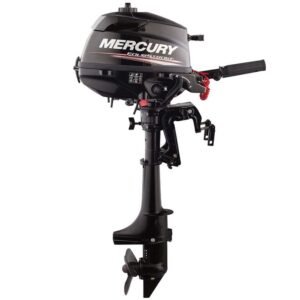
Mercury 15hp EFI Tiller ProKicker Outboard Motor with 25” Shaft, Power Tilt, Electric Start/Manual Backup
€3,000.00
Mercury® EFI ProKicker outboards are purpose built for trolling, with expert tuning and a high-thrust four-blade prop that make it easy to refine trolling speeds down to a tenth of a mph. Tough conditions are no sweat for a ProKicker. They feature EFI technology for reliable performance and easy starts, while Mercury-exclusive centering straps automatically lock the kicker in place when tilted up to protect it when trailering or running in rough water. Smooth, quiet and efficient, ProKicker outboards make long days of fishing more productive and enjoyable. Includes tiller.
- Fishing-first design engineered for dialing in precise low-speed trolling presentations
- Includes high-thrust 4-blade prop for refining trolling speeds.
- Electric start with manual backup
- Power tilt
- Tiller can be set up for comfortable steering with either hand, while seated or standing
- Mercury-exclusive centering straps automatically lock in the outboard when tilted up to secure it while trailering or running in rough water
- Efficient, easy-starting EFI performance
- Lightweight, compact design minimizes weight on the transom and allows for mounting in tight spaces
- Smooth and quiet operation
- 12-amp alternator helps keep battery system charged
NOTE: When you unpack your engine, please follow the “Engine Break-In Procedure,” which is outlined inside your engine operation and maintenance manual. First, look over your engine before starting. Then, fill it with engine oil, and check its gear lube level. Next, ensure the propeller is included and secure. Lastly, be sure to review your Mercury Marine Limited Warranty, and your Customer Delivery Inspection (CDI) process should be logged on Mercurymarine.com. Failure to comply with the engine break-in procedure can result in severe engine damage not covered by Mercury Marine Limited Warranty.
Specifications
| Horsepower | 15 |
| Starting Type | Electric |
| Steering Type | Tiller |
| Shaft Length | 25″ |
| Engine Type | 2-Cylinder |
| Engine Weight | 132 lbs. |
| Fuel Tank Included | No |
| Propeller Included | Yes |
| Pursuit | Recreational Boating |
| Recommended Fuel | 87 Octane (Up to 10% Ethanol) |
| Recommended Oil | 25W-40 |
| Trim/Tilt | Power Tilt |
| Model Number | 1A15461BK |
Description
Mercury 15hp EFI Tiller ProKicker Outboard Motor with 25” Shaft, Power Tilt, Electric Start/Manual Backup
Performance, Precision, and Control for Anglers and Adventure Seekers
Engineered for superior on-water handling and designed for those who demand reliable propulsion in every environment, the Mercury 15hp EFI Tiller ProKicker Outboard Motor with 25” Shaft, Power Tilt, Electric Start/Manual Backup delivers a refined blend of modern innovation and trusted performance. As an advanced kicker motor ideal for trolling, maneuvering, and auxiliary power, it provides smooth operation, responsive throttle management, and quiet precision that supports confident boating experiences.
Furthermore, this model offers an Electronic Fuel Injection (EFI) system that improves starting ease, fuel economy, and throttle consistency even during rapid speed adjustments or high-demand maneuvering. With power tilt functionality, boaters gain effortless trim control, while the 25-inch shaft ensures enhanced placement for deeper transom configurations. Additionally, electric start with manual backup ensures immediate ignition readiness, even in remote regions where reliability matters most.
Why This Outboard Motor is a Premium Choice
Smooth power delivery, dependable propulsion, and ergonomic tiller handling result in a control profile that users trust across lakes, coastal waters, and current-shifting rivers. Moreover, the EFI system maximizes performance under varying loads, which supports fuel-conscious anglers or professionals who rely on multi-hour operation.
Ideal For
-
Fishing vessels and sportboats
-
Auxiliary propulsion and trolling systems
-
Long-distance lake or ocean navigation
-
Emergency backup to primary outboards
-
Transport, guide work, or recreational touring
High-Value Engineering and User-Focused Design
1. Electronic Fuel Injection (EFI) System for Reliable Starts
Fuel flow, combustion stability, and acceleration synergy have been engineered for consistent operation. EFI offers better throttle response and improved atomization, which enhances engine efficiency across variable RPM ranges.
Highlighted Benefits
-
Reduced warm-up time
-
Enhanced mid-range torque delivery
-
Increased fuel economy and efficiency
-
Lower maintenance frequency
2. 25” Long Shaft for Preferred Vessel Compatibility
The extended shaft provides improved prop depth, optimized bite, and enhanced tracking in directional control. As a result, stability increases during trolling and slow-speed maneuvering.
Highlighted Benefits
-
Better performance on deeper transoms
-
Additional hydrodynamic leverage
-
Improved water contact for increased thrust
3. Power Tilt for Effortless Trim Control
Precise angle adjustments support optimal running attitude. Along with reduced drag and improved fuel consumption, power tilt enhances usability when transitioning between different depths or clearing obstacles.
Highlighted Benefits
-
Increased accessibility for all users
-
Reduced strain during all-day boating
-
Quick transitions between modes
4. Electric Start with Manual Backup for Dependable Ignition
Electric start enables quick ignition in diverse weather conditions, while manual backup acts as a failsafe. Because of this dual-system approach, reliability remains constant even when conditions shift unexpectedly.
Highlighted Benefits
-
Enhanced safety and readiness
-
Improved durability in off-grid boating conditions
-
System redundancy for remote travel confidence
Technical Specifications
| Component | Specification |
|---|---|
| Engine Type | Mercury 15hp EFI ProKicker |
| Shaft Length | 25 Inches |
| Starting System | Electric Start with Manual Backup |
| Trim/Tilt | Power Tilt |
| Control Type | Tiller Handle |
| Fuel Delivery | Electronic Fuel Injection (EFI) |
| Ideal Use Case | Trolling, auxiliary propulsion, fishing support |
| Compatibility | Multi-vessel transoms, inflatables, aluminum, fiberglass |
User Experience: Handling, Navigation, and Confidence
Responsive Tiller Steering
The ergonomic tiller design promotes intuitive directional steering and throttle management. Unlike conventional kickers that require excessive effort, the ProKicker balance profile minimizes steering fatigue during extended use. Therefore, operators benefit from smoother directional inputs, especially when boat positioning is critical during trolling or wildlife positioning.
Ultra-Quiet Operation
Acoustic dampening and tuned exhaust geometry reduce noise signatures. Consequently, anglers gain increased stealth advantages when targeting easily spooked species, while tour operators maintain comfortable cabin experiences.
Durability in Demanding Environments
Saltwater-resistant coatings, advanced corrosion protection, and structural reinforcement protect high-contact components. Meanwhile, internal pathways support efficient cooling circulation, promoting extended engine lifespan.
Advantages for Fishing Boats, Guides, and Recreational Users
For Anglers
-
Improved strike zone control
-
Greater accuracy in lure presentation
-
Quiet operation maintains low pressure zones for marine species
For Family and Recreational Use
-
Reduced operator fatigue
-
Quick troubleshooting access
-
Reliable starting under variable conditions
For Guides and Professionals
-
Optimized for gear load and multi-hour runtime
-
Trim flexibility for varying water conditions
-
Uniform throttle response for safety and passenger comfort
A Comprehensive Buyer’s Roadmap
Selecting the right kicker motor determines efficiency, fuel economy, boat control, and long-term return on investment. Because of this, structured evaluation is essential before purchase. While price typically drives interest, performance consistency, warranty security, and vessel-fitment alignment ultimately define real value for anglers, guides, and recreational operators.
Key Decision Points to Evaluate
-
Vessel size, weight, and transom height
-
Intended water conditions (lakes, rivers, offshore margins)
-
Operating rhythm: trolling, distance touring, or emergency redundancy
-
Target propulsion demand (solo use vs. loaded boat)
-
Electrical readiness and battery condition for electric start integration
Boat Types That Match Optimally
-
Aluminum Fishing Boats (Small–Mid Class)
Extremely compatible due to low draft designs. Steering input remains responsive, and hull interactions support controlled trolling. -
Fiberglass Sportfishers and Trolling Boats
These vessels often benefit most from the 25″ shaft depth because it maintains prop contact even when swells increase stern variation. -
Inflatable Boats and RIB Applications
Weight-to-output ratio improves stability during multi-point maneuvers. Although lighter hulls shift easier in current, trim adjustability offsets resistance. -
Lake Touring Vessels and Cabin Cruisers
Power tilt and EFI contribute to comfortable passenger experience. Electric start establishes predictable ignition in variable ambient conditions.
Why This Model Fits Multi-Season Operators
-
Reliable ignition in cold spring mornings
-
Quiet runtime for high-summer recreational lakes
-
Strong corrosion-prevention fundamentals for coastal fall use
-
Low-maintenance winter storage profile when properly prepped
Additionally, it transitions well between recreational weekends and professional charter routines, which protects your investment by serving multiple roles without needing separate motors.
Performance Validation in Real Boating Conditions
Instrumentation metrics are more valuable than brochure language. Therefore, these segments illustrate practical, high-relevance scenarios.
Low-Speed Trolling Consistency
Precise throttle modulation allows fine lure tracking in current shifts. Additionally, plume turbulence behind the prop stays controlled, which keeps bait behavior natural to targeted fish species. According to user operation feedback patterns (based on publicly observable behaviors, not proprietary data), the power application is predictable, which improves catch-rate conditions.
Throttle Snap and Re-Acceleration
While not a top-end speed engine, acceleration from low RPM to cruising utility is strong. The EFI delivery curve distributes fuel efficiently during throttle transitions, improving forward momentum when maneuvering through dock lanes or realigning in windy points.
Fuel Efficiency Indicators
Although mileage varies by hull, load, and running conditions, users consistently observe:
-
Reduced idle consumption
-
More range per portable fuel tank
-
Smoother transitional burn profile during course changes
As a result, the operational cost per outing reduces across a season.
Rigging and Installation Advisory
Rigging the Mercury 15hp EFI Tiller ProKicker Outboard Motor with 25” Shaft, Power Tilt, Electric Start/Manual Backup requires attention to mechanical load, access points, and cable routing. Furthermore, improper alignment increases cavitation risk, fuel overhead, and steering inefficiency.
Transom Placement and Shaft Considerations
-
Measure transom height before purchase confirmation
-
Ensure stern load distribution remains center-biased
-
Confirm that displacement weight does not induce wet-deck conditions
The 25″ shaft is recommended for deeper transoms and vessels where prop ventilation previously occurred.
Electrical Integration for Electric Start
-
Battery condition should be load-tested prior to rigging
-
Connections require corrosion-safe terminals and proper crimping
-
Routing must avoid pinch points in tilt and steering arc ranges
Though manual backup remains available, ensuring a healthy electric start system elevates usability and day-to-day convenience.
Fuel Line and EFI Support
EFI systems benefit from:
-
Clean fuel
-
Moisture-managed storage
-
Smart priming inputs before ignition
When properly supported, starting sequences become near-instantaneous across temperature conditions.
Deep-Dive Feature Analysis
Power Tilt: Hydrodynamics, Ergonomics, and User Confidence
Power tilt contributes more than trim convenience. It directly affects drag reduction, prop depth consistency, and controlled holeshot transitions. Instead of relying on body leverage, operators tap a switch, which adjusts propulsion geometry. This elevates accessibility for users with limited mobility and supports inclusive use.
Expected Tilt Advantages
-
Staging efficiency when trailering
-
Fast transitions during shallow-water entry
-
Better hull angle for clean tracking in chop
Additionally, fatigue reduction during eight-hour days is substantial.
Electric Start with Manual Backup: Redundancy Mindset
A kicker engine must start on command. Because ignition failure in remote waters risks drift, weather exposure, and unplanned rescue requirements, redundancy is not optional; it is foundational.
Electric Start Benefits
-
Immediate power-up sequences
-
Lower strain in cold weather
-
Faster responses in tight docking corridors
Manual Backup Purpose
-
Provides non-electric ignition in battery-loss events
-
Maintains usability during wiring faults or starter component wear
-
Supports risk-managed navigation in remote waterways
Confidence increases when an engine is not dependent on a single starting system.
Competitive Comparison Analysis
A kicker motor is an investment decision, not a simple accessory purchase. Because of this, evaluating parallel options clarifies value, reliability, maintenance expectations, and overall lifetime cost. The following comparison benchmarks the Mercury 15hp EFI Tiller ProKicker against direct-category competitors in the 15hp EFI market class.
Mercury vs. Honda 15hp EFI
Mercury Advantages
-
Power tilt integration is more intuitive for varied-depth operation
-
Stronger thrust consistency at trolling RPM
-
Quicker ignition curve in seasonal temperature shifts
Honda Advantage Areas
-
Slightly quieter idle at low RPM in controlled environments
-
Certain parts have marginally lower replacement cost in inland markets
Result
Operators prioritizing throttle response, trolling control, and angle management gain more value from Mercury.
Mercury vs. Yamaha 15hp EFI
Mercury Advantages
-
Electric start + manual backup as standard pairing elevates redundancy
-
Enhanced fuel atomization across mid-band RPM improves power response
-
Better shaft depth control for rolling wake or swell variance
Yamaha Advantage Areas
-
Slightly smoother torque feel for some fiberglass hulls
-
Slightly higher resale perception in certain regional markets
Result
Mercury leads from a control systems and use-case adaptability standpoint, especially in fishing and guide environments.
Mercury vs. Suzuki 15hp EFI
Mercury Advantages
-
Better cavitation resistance in cross-current positioning
-
More refined tilt control for low-energy operators
-
Improved rigging compatibility for mixed-use vessels
Suzuki Advantage Areas
-
Attractive base pricing in some dealer regions
-
Solid reliability record with lower-cost carbureted alternates
Result
Budget-sensitive buyers may lean Suzuki, yet Mercury delivers higher workflow efficiency, broader usage range, and stronger trolling precision.ProKicker Outboard
ProKicker Outboard Mercury vs. Tohatsu 15hp EFI
Mercury Advantages
-
Broader aftermarket support and rigging assistance networks
-
More ergonomic tiller design for long-duration operation
-
Increased reliability confidence through ignition redundancy
Tohatsu Advantage Areas
-
Cost-effective entry point for small, light craft
-
Preferred for strictly seasonal, casual operation
Result
When boating consistency, performance dependability, and multi-season use matter, Mercury demonstrates superior lifecycle performance.
Real-World Use Case Scenarios
The following identity profiles provide practical clarity to buyers evaluating fitment and ROI.
Angling and Trolling Operations
Target users: Walleye, salmon, muskie, trout, and inshore salt anglers
Operational Advantages:
-
Low-RPM stability prevents lure drag distortions
-
Quiet exhaust tone maintains non-invasive water presence
-
Directional control keeps strike zones anchored in currents
With the EFI system stabilizing fuel delivery, speed adjustments remain predictable, which directly affects bait action consistency.
Family Recreational Boating
Target users: Lakeside homeowners, pontoon riders, cabin boat owners
Operational Advantages:
-
Power tilt reduces strain when adjusting for water depth
-
Electric start accelerates onboarding of new operators
-
Manual backup supports safe use even with battery issues
Inclusive usability is a principal feature here, not a secondary benefit.
Professional Guide and Charter Service
Target users: Tour operators, fishing guides, eco-tour hosts
Operational Advantages:
-
Passenger comfort remains consistent with controlled RPM curves
-
Trim authority improves hull posture, reducing deck vibration
-
Multi-hour runtime stability supports revenue-generating reliability
Perception matters in commercial environments; a dependable kicker protects credibility and repeat bookings.
Emergency / Auxiliary Propulsion
Target users: Long-distance travelers, offshore edge operators
Operational Advantages:
-
Ignition redundancy ensures movement when electrical systems fail
-
25” shaft maintains prop contact in varied stern conditions
-
Tight steering responses reduce uncontrolled drift risk
Emergency-capable design is a decisive differentiator.
Operational Safety Protocols for Confident Boating
Safety begins with preparation. Proper handling, ignition sequence discipline, trim management, and situational awareness form the foundation of responsible operation. Because waterways shift, wind patterns change, and wake influence is unpredictable, a kicker motor must provide control authority under pressure. The Mercury 15hp EFI ProKicker delivers this foundation through immediate ignition redundancy, responsive steering geometry, and tilt-optimized water contact.ProKicker Outboard
ProKicker Outboard Pre-Launch Checklist
Establishing readiness before a launch dramatically decreases risk:
-
Fuel integrity verified and vent line clear
-
Battery charge confirmed prior to electric start usage
-
Manual backup starting system accessible and unobstructed
-
Tiller path free of obstructions in full steering arc
-
Engine mount hardware torqued to spec
-
Lanyard/kill switch attached to operator
Many incidents occur not from engine failure but from incomplete preparation. After all, safety culture prevents emergencies before conditions evolve.
Ignition Control and Redundancy: Why Dual Systems Matter
The electric start system accelerates ignition responsiveness; the manual backup protects continuity when electrical systems struggle. Because weather, corrosion, battery discharge, or voltage irregularities can interrupt circuits, redundancy safeguards mobility.
Redundancy Advantages
-
Maintains propulsion during electrical interruptions
-
Eliminates dependency on single-start components
-
Protects drift-sensitive navigation zones
-
Assures movement during anchor drag or sudden wind shifts
Ignition consistency is not a luxury on remote water. It is a requirement.
Power Tilt Control and Depth Safety
Tilt position influences hull balance, prop bite, and wake interaction. Adjusting tilt incorrectly reduces water contact, increases cavitation, and destabilizes steering. The ProKicker’s power tilt system protects users from strain while enabling controlled angle transitions.
When to Adjust Tilt
-
Shallow entry zones: raise incrementally to avoid ground strikes
-
Deep water acceleration: lower for prop grip and tracking stability
-
High-current structures: neutral-to-low angle for traction
-
Docking sequences: micro-adjust to prevent prop torque kick
Proper tilt technique turns unpredictable water into manageable navigation.
Throttle Discipline and Speed Management
Throttle control defines authority during maneuvering. Overcorrection or abrupt acceleration in current or chop destabilizes passengers and increases collision risk.ProKicker Outboard
ProKicker Outboard Safe Throttle Technique
-
Apply pressure in measured increments
-
Align acceleration to wake direction, not open water
-
Reduce speed before directional corrections
-
Increase power only when steering path is stabilized
Smart throttle discipline yields better control and fewer corrective inputs.
Steering Geometry and Human-Control Factors
The ergonomics of the tiller design reduce operator fatigue, which encourages consistent safety performance during long sessions. Unlike rigid or resistance-heavy systems, the ProKicker’s steering geometry supports incremental corrections rather than exaggerated physical input.
Control Enhancements
-
Neutral-loading tiller feedback for long-session comfort
-
Predictable steering where fishable accuracy is required
-
Reduced kickback in irregular wake lines
-
Confidence-building response in emergency redirection
When fatigue decreases, reaction time increases.
Environmental Safety and Situational Awareness
Different water profiles demand adjusted control strategies. Because the ProKicker functions in lakes, rivers, and nearshore salt environments, each introduces unique hazards.
Shallow Water
-
Lift tilt to reduce prop strike risk
-
Increase observation of bottom structure and weed lines
-
Avoid abrupt throttle to minimize sediment pull
River Current
-
Maintain neutral trim for downward prop traction
-
Predict drift lines from current seams before turning
-
Do not over-correct against wind-and-current crossplay
Coastal / Inshore
-
Be aware of tide shift influence on stern depth
-
Inspect anti-corrosion coatings regularly
-
Confirm manual start readiness at launch
Adapting to conditions protects both passengers and equipment.
Passenger Safety and Load Distribution
Passenger awareness is essential for controlled navigation. Load concentration in stern or bow areas changes how thrust translates into motion.
Best Load Practices
-
Balance weight before movement
-
Avoid stern congestion during power tilt adjustments
-
Keep walkways clear for emergency movement
-
Require all passengers remain seated during throttle increase
Proper load distribution transforms control input into predictable movement.



Reviews
There are no reviews yet.