
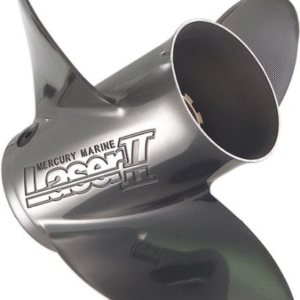
Mercury Marine Laser II propeller
€330.00
Description
Mercury Marine Laser II Propeller – Precision Performance Engineered for Confident Boating
Reliable propulsion defines how a boat feels on the water. Performance determines how confidently operators accelerate, cruise, and maneuver across varying conditions. With those expectations in mind, the Mercury Marine Laser II propeller stands as a purpose-built solution designed to balance speed, efficiency, and control for a wide range of recreational and performance-oriented boaters.
Engineered by Mercury Marine, this propeller reflects decades of hydrodynamic expertise and on-water testing. Rather than offering a generic replacement option, the Laser II series delivers a refined stainless-steel design focused on predictable handling, responsive throttle behavior, and long-term durability.
Because boaters operate in diverse environments, adaptability matters. This propeller addresses that reality by supporting multiple hull styles, engine configurations, and boating objectives. From casual cruising to spirited acceleration, the Laser II helps users feel connected to their vessel without unnecessary complexity.
Why the Mercury Marine Laser II Propeller Is a Trusted Choice
Selecting a propeller involves more than matching spline counts or pitch numbers. Performance characteristics, material quality, and real-world reliability all influence long-term satisfaction. The Mercury Marine Laser II propeller integrates these factors into a single, well-balanced solution.
Designed for outboards and sterndrives, this model supports mid-range horsepower applications while maintaining consistent efficiency. As a result, many boat owners choose it when upgrading from aluminum props or replacing worn OEM equipment.
Moreover, stainless steel construction ensures structural integrity under load. That durability translates into better edge retention, improved thrust, and resistance to deformation. Consequently, operators experience smoother operation across a broader RPM range.
Precision Stainless-Steel Design That Enhances Control
Material selection plays a critical role in propeller performance. Stainless steel offers advantages that extend beyond appearance. Compared to aluminum, stainless steel maintains blade shape under stress, which directly affects acceleration and top-end stability.
Because the Mercury Marine Laser II propeller uses precision-cast stainless steel, each blade contributes evenly to thrust generation. This balance improves steering response and reduces vibration. Additionally, sharper leading edges help the propeller bite cleanly into the water, even during aggressive maneuvers.
Over time, that consistency protects drivetrain components by minimizing irregular load transfer. As a result, users benefit from both immediate performance gains and long-term mechanical confidence.
Engineered for Responsive Acceleration and Efficient Cruising
Acceleration defines the boating experience, especially when transitioning onto plane. The Laser II propeller supports quick holeshot performance without sacrificing mid-range efficiency. That balance proves valuable for operators who carry variable loads or navigate changing water conditions.
While strong initial thrust matters, cruising efficiency remains equally important. This propeller’s blade geometry promotes steady RPM progression, which helps optimize fuel consumption during extended runs. Therefore, boaters can enjoy longer outings without frequent refueling interruptions.
Importantly, these performance benefits do not require advanced tuning knowledge. The design works predictably across recommended engine ranges, making it accessible to both experienced enthusiasts and first-time propeller upgraders.
Designed to Complement a Wide Range of Boating Styles
Boating preferences differ, and inclusive design ensures broader usability. The Mercury Marine Laser II propeller accommodates diverse needs without forcing compromises. Whether operators prioritize smooth family cruising, light-load performance, or responsive handling, this propeller adapts effectively.
For anglers, steady low-speed control matters when maneuvering near structure. For recreational users, predictable acceleration improves comfort and confidence. Meanwhile, performance-minded boaters appreciate the crisp throttle response that stainless steel construction provides.
Because of that versatility, this propeller often serves as a dependable all-around solution rather than a niche upgrade.
Key Benefits at a Glance
Highlighted advantages for quick evaluation:
-
Stainless-steel construction for durability and consistent blade shape
-
Responsive acceleration for faster planing
-
Smooth mid-range performance for comfortable cruising
-
Improved handling and steering control
-
Designed for compatibility with select Mercury outboards and sterndrives
-
Reliable choice for recreational and light-performance boating
These benefits work together to create a balanced on-water experience. Instead of optimizing for a single metric, the Laser II propeller supports overall usability.
Confidence Through Engineering, Not Guesswork
Propeller selection often involves trial and error. However, proven engineering reduces uncertainty. Mercury Marine applies hydrodynamic testing and manufacturing precision to ensure each Laser II propeller meets consistent performance standards.
Because tolerances remain tight, users can expect predictable results when matching recommended pitch and diameter specifications. That reliability simplifies the buying process and reduces the need for repeated adjustments.
In turn, boaters gain confidence knowing their propulsion system aligns with manufacturer-backed design principles rather than aftermarket experimentation.
Built for Long-Term Value and Ownership Satisfaction
A propeller represents an investment in both performance and reliability. Stainless steel construction contributes to longevity by resisting corrosion and physical wear. Over time, that resilience helps maintain performance characteristics that aluminum alternatives may lose.
Additionally, the Mercury Marine Laser II propeller retains value due to brand recognition and consistent demand. For owners who eventually upgrade vessels or configurations, this propeller remains a sought-after component.
Because long-term ownership costs matter, durability and resale considerations add practical value beyond immediate performance gains.
Technical Specifications That Support Confident Propeller Selection
Choosing the correct propeller requires clarity around specifications. Technical details guide compatibility, performance expectations, and long-term satisfaction. The Mercury Marine Laser II propeller presents those specifications in a way that supports informed decision-making rather than guesswork.
Instead of overwhelming buyers, Mercury structures the Laser II lineup around practical pitch and diameter ranges. This approach allows boat owners to align engine output, hull characteristics, and intended usage more accurately.
Because precision matters, each Laser II propeller undergoes controlled manufacturing processes that maintain consistent blade geometry. That consistency ensures predictable RPM behavior, reliable thrust curves, and repeatable on-water performance.
Available Pitch and Diameter Options Explained Clearly
Pitch selection directly affects acceleration, top speed, and engine load. Understanding how pitch interacts with engine RPM helps users optimize their setup without unnecessary trial cycles.
The Mercury Marine Laser II propeller is available in multiple pitch configurations, typically ranging from mid to higher pitch values suitable for performance-oriented recreational boating. Lower pitch options improve holeshot and load-carrying capability, while higher pitch options favor speed and efficiency at cruising RPM.
Diameter complements pitch by influencing water displacement and blade surface area. Mercury engineers balance these variables to maintain efficient thrust without overloading the engine. As a result, operators experience smoother RPM transitions and stable handling across speed ranges.
Engine Compatibility and Application Guidance
Compatibility represents a primary concern for buyers evaluating stainless-steel propellers. The Laser II propeller supports a wide selection of Mercury outboard and sterndrive engines, particularly in mid-range horsepower categories.
Because spline configuration, gearcase size, and horsepower ratings vary, Mercury provides clear fitment guidance. Matching the propeller to the correct engine ensures proper seating, torque transfer, and drivetrain protection.
For many users, this propeller serves as a direct upgrade from factory-installed aluminum props. Others select it as a refined replacement that enhances performance while maintaining OEM compatibility standards.
Recommended Applications by Boat Type
Different hull designs respond uniquely to propeller characteristics. Recognizing those differences helps buyers align expectations with real-world results.
Commonly paired boat types include:
-
Lightweight fiberglass runabouts
-
Sport boats requiring responsive acceleration
-
Performance-oriented pontoons
-
Small center-console boats
-
Recreational vessels with moderate load variation
Because the Laser II balances lift, grip, and efficiency, it performs well across these platforms without requiring aggressive tuning changes.
Blade Geometry Designed for Predictable Handling
Blade shape influences how a boat responds during turns, acceleration, and speed transitions. The Laser II propeller features a blade profile engineered to reduce slip while maintaining smooth water flow.
Rather than relying on excessive blade cup, Mercury optimizes rake and surface distribution. This design improves lift and steering authority without introducing instability. Consequently, operators experience confident control during cornering and directional changes.
Additionally, balanced blade spacing reduces vibration. Over extended use, that refinement enhances comfort and reduces fatigue during longer outings.
Stainless Steel Advantages in Real-World Use
Material performance becomes most apparent under load. Stainless steel maintains structural integrity when aluminum alternatives flex. That rigidity preserves blade geometry, which directly supports consistent thrust output.
Because the Mercury Marine Laser II propeller resists deformation, performance remains stable even when navigating choppy water or carrying variable passenger loads. Edge retention further improves bite during acceleration, especially when conditions demand responsive power delivery.
Over time, corrosion resistance adds practical value. Stainless steel withstands freshwater and saltwater exposure more effectively, extending service life and maintaining appearance.
Performance Outcomes Boat Owners Commonly Experience
While results vary based on setup and conditions, many users report measurable improvements after switching to the Laser II propeller.
Typical performance observations include:
-
Faster planing times compared to aluminum props
-
Smoother throttle response across RPM ranges
-
Improved mid-range efficiency
-
Enhanced steering precision at speed
-
Reduced vibration during steady cruising
These outcomes reflect the cumulative effect of material choice, blade geometry, and manufacturing precision rather than reliance on a single performance metric.
Simplified Decision-Making for First-Time Upgraders
Propeller upgrades often feel intimidating for newer boat owners. Mercury addresses that concern by designing the Laser II as an accessible step into stainless-steel performance.
Because the propeller performs predictably within recommended specifications, users avoid extreme tuning adjustments. This predictability builds confidence and reduces the likelihood of mismatched setups.
Furthermore, broad application support allows owners to focus on enjoyment rather than constant recalibration.
Designed by a Brand with Proven Marine Engineering Expertise
Marine propulsion demands specialized knowledge. Mercury Marine applies decades of experience to every propeller design, including the Laser II series.
Engineering decisions reflect real-world testing rather than theoretical optimization alone. That balance ensures products perform consistently across varied environments and usage patterns.
As a result, buyers gain access to manufacturer-backed design integrity rather than aftermarket experimentation.
Real-World Use Cases That Define the Mercury Marine Laser II Propeller
Performance claims matter most when they translate into real-world value. The Mercury Marine Laser II propeller demonstrates its strengths most clearly when evaluated through practical boating scenarios. Each use case highlights how design choices convert into tangible benefits on the water.
Rather than positioning this propeller as a one-dimensional upgrade, Mercury engineers optimized it for broad applicability. As a result, a wide range of boaters experience meaningful performance improvements without sacrificing ease of ownership.
Family and Recreational Boating Applications
Comfort, predictability, and smooth handling define recreational boating priorities. Families value steady acceleration, reduced vibration, and reliable cruising behavior. The Laser II propeller supports those expectations through balanced blade geometry and stainless-steel rigidity.
Acceleration onto plane occurs smoothly, even with passengers and gear onboard. That consistency reduces abrupt movements and enhances overall comfort. Additionally, responsive throttle control improves maneuverability when docking or navigating crowded waterways.
Because recreational outings often involve varying speeds, the propeller’s stable mid-range efficiency supports relaxed cruising without constant throttle adjustments.
Angling and Light Fishing Use Cases
Fishing applications demand control at low and moderate speeds. Precision maneuvering around docks, structure, and shallow areas requires predictable propulsion behavior. The Laser II propeller delivers steady thrust without excessive slip, which improves boat positioning during active angling.
Stainless steel edge retention enhances grip when subtle throttle inputs are required. As a result, operators maintain confidence when adjusting speed incrementally. This control becomes particularly valuable when conditions change quickly.
Moreover, durability supports repeated exposure to challenging environments, including debris-prone areas and fluctuating water depths.
Performance-Oriented Recreational Boating
Some boaters prioritize responsiveness and speed without transitioning into race-specific equipment. For this audience, the Laser II propeller offers a balanced performance profile that emphasizes acceleration and top-end efficiency.
The blade design supports clean water flow at higher RPM ranges. Consequently, operators experience crisp throttle response and stable handling at speed. Because the propeller maintains structural integrity under load, performance remains consistent rather than diminishing over time.
This makes the Laser II an appealing option for users seeking noticeable upgrades without aggressive tuning or specialized propeller systems.
Comparing Stainless Steel vs. Aluminum Propellers
Material selection represents one of the most common buyer decision points. Aluminum propellers offer affordability but often compromise performance consistency. Stainless steel alternatives, such as the Laser II, address those limitations directly.
Key differences buyers commonly notice include:
-
Stainless steel maintains blade shape under load
-
Acceleration remains consistent across conditions
-
Steering response improves due to reduced flex
-
Long-term durability exceeds aluminum alternatives
-
Visual appearance retains value over time
Because performance stability matters, many boaters transition to stainless steel after experiencing aluminum prop deformation or performance loss.
How the Laser II Compares to Other Stainless-Steel Propellers
Not all stainless-steel propellers deliver the same balance. Some designs emphasize top speed at the expense of low-speed control. Others focus on lift while sacrificing efficiency.
The Mercury Marine Laser II propeller occupies a balanced position within the stainless-steel category. Instead of extreme specialization, it prioritizes versatility, predictability, and ease of selection. This approach appeals to buyers who want reliable improvements rather than narrow performance gains.
As a result, the Laser II often serves as a long-term solution rather than a temporary experiment.
Addressing Common Buyer Questions and Objections
Uncertainty slows purchasing decisions. Addressing concerns directly helps buyers move forward with confidence.
Common questions include:
-
Will this propeller fit my engine?
Mercury provides clear compatibility guidance for supported outboards and sterndrives. -
Is stainless steel worth the upgrade?
For most users, improved performance consistency and durability justify the investment. -
Will I need professional tuning?
The Laser II performs predictably within recommended specifications, minimizing adjustment requirements. -
How does this affect fuel efficiency?
Many users observe smoother RPM behavior and improved mid-range efficiency.
By resolving these concerns upfront, the buying process becomes more transparent and less intimidating.
Inclusive Design That Supports Diverse Boating Goals
Boating communities include families, anglers, enthusiasts, and newcomers alike. Inclusive design ensures that a single product supports varied goals without forcing compromise. The Laser II propeller reflects that philosophy by accommodating different skill levels and usage patterns.
Because setup remains straightforward, first-time buyers gain confidence quickly. At the same time, experienced operators appreciate the refined performance characteristics that stainless steel delivers.
This balance broadens appeal while maintaining technical credibility.
How to Choose the Right Mercury Marine Laser II Propeller for Your Boat
Confident purchasing starts with clarity. Selecting the correct Mercury Marine Laser II propeller becomes straightforward when buyers follow a structured evaluation process. Instead of relying on guesswork, this approach aligns engine specifications, boating habits, and performance goals.
Because every boat setup differs, thoughtful selection ensures optimal results. By considering a few key factors, buyers reduce risk and maximize satisfaction.
Step-by-Step Propeller Selection Framework
A systematic approach simplifies decision-making and prevents mismatched configurations.
Step 1: Confirm Engine Compatibility
Begin by identifying your engine’s horsepower range, gearcase size, and spline configuration. Mercury provides compatibility guidance to ensure proper fitment. Matching these elements protects drivetrain components and supports efficient torque transfer.
Step 2: Evaluate Current Performance
Assess how your existing propeller performs. Note acceleration behavior, cruising RPM, and top-end speed. If the engine struggles to reach recommended RPM ranges, pitch adjustments may be necessary.
Step 3: Define Primary Usage
Clarify how you use your boat most often. Recreational cruising, fishing, and light-performance boating each prioritize different performance traits. The Laser II accommodates multiple use cases, yet pitch selection fine-tunes results.
Step 4: Select Pitch Accordingly
Lower pitch values favor quicker acceleration and improved load handling. Higher pitch values support increased top-end speed and efficient cruising. Choosing the correct pitch balances these outcomes without overstressing the engine.
Pitch Selection Guidance for Common Scenarios
Pitch adjustments influence performance more than most buyers expect. Understanding general outcomes helps guide informed choices.
Typical pitch considerations include:
-
Lower pitch: faster planing, improved throttle response
-
Mid-range pitch: balanced acceleration and cruising efficiency
-
Higher pitch: increased speed potential at optimal RPM
Because hull design and load vary, Mercury recommends staying within manufacturer-specified RPM ranges after installation.mercruiser marine engine parts
Installation Considerations and Best Practices
Proper installation ensures the propeller performs as designed. While professional installation remains an option, many boat owners complete the process confidently with basic tools.
Ensure the propeller seats fully on the shaft. Torque the prop nut according to manufacturer specifications. Additionally, verify that thrust washers and hardware match engine requirements.
After installation, a brief test run confirms correct operation. Monitor RPM behavior, vibration levels, and steering response to validate setup accuracy.
Maintenance and Care for Long-Term Performance
Stainless steel offers durability, yet routine care preserves optimal performance. Regular inspection identifies debris damage, nicks, or imbalance early.
Rinse the propeller after saltwater use to reduce corrosion exposure. Periodically remove the propeller to inspect the shaft and apply marine-grade grease. These practices protect both the propeller and drivetrain components.
Because the Laser II retains blade shape over time, maintenance focuses on preservation rather than frequent repair.
Additional information
| Prop size * Diameter x Pitch | 13.25×19, 13.25×20 |
|---|
Related products
-
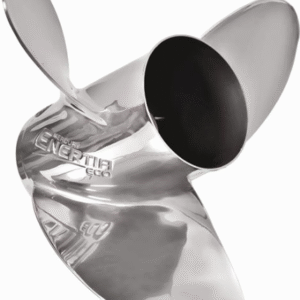
Enertia Eco Propellers
€613.00Select options This product has multiple variants. The options may be chosen on the product page -
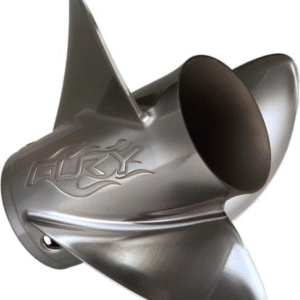
Mercury Marine Fury Propeller
€520.00Select options This product has multiple variants. The options may be chosen on the product page -
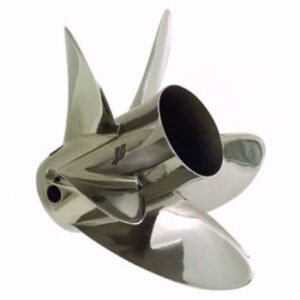
Mercury Maximus 5 Blade Performance Propeller
€984.00Select options This product has multiple variants. The options may be chosen on the product page -
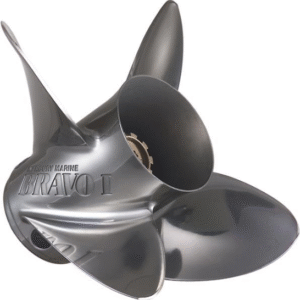
Bravo 1 Performance Propellers
€500.00Select options This product has multiple variants. The options may be chosen on the product page
Reviews
There are no reviews yet.