

Verado12 (27.5″) MERCURY RH 3 Blade Rear Propeller 48-8M0166986
€1,060.00
Description
Verado12 (27.5″) MERCURY RH 3 Blade Rear Propeller 48-8M0166986
Premium Performance Propeller for Power, Precision & Offshore Confidence
The Verado12 (27.5″) MERCURY RH 3 Blade Rear Propeller 48-8M0166986 stands out as a specialized performance upgrade for boaters seeking more thrust, better hole shot, refined handling, and noticeably improved mid-range stability. Unlike generic propeller systems, this model has been engineered to meet Mercury’s performance expectations while supporting boaters who want their vessel to feel smoother, stronger, and more responsive on every outing. Additionally, the structure and blade geometry support aggressive applications such as offshore fishing, high-speed cruising, and multi-purpose water recreation.
Although many propellers provide lift, efficiency, or acceleration, this configuration provides a more complete performance advantage. Furthermore, its 3-blade RH design balances aggressive bite with fluid water release, which translates to less vibration, faster spool-up, and better fuel economy under varying water conditions. Therefore, this propeller becomes the choice for boaters who value reliability, repeatable performance data, and measurable torque delivery.
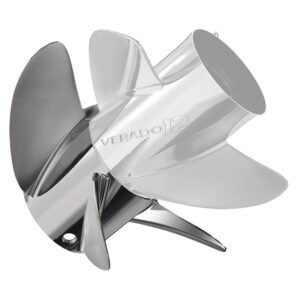
Why Choose the Verado12 (27.5″) MERCURY RH 3 Blade Rear Propeller 48-8M0166986?
The Difference Starts With Engineering
Mercury’s Verado12 engineering architecture reflects a hydrodynamic focus. Pressure zones across each blade have been tuned to create more lift near the root of the propeller, while still maintaining edge stability at higher RPMs. Consequently, boaters benefit from controlled push during acceleration, consistent grip in turns, and more confidence when encountering chop, current, or rough water.
Moreover, the increased 27.5″ diameter supports larger water contact mass. This creates leverage for bigger vessels, higher horsepower outboards, and wide-beam setups that typically require more torque to break the surface tension and move to plane.
Enhanced Handling & Driving Confidence
Acceleration remains crisp, handling becomes predictable, and steering correction feels lighter at cruise speeds. Because of this, operators experience less fatigue during long runs and more focus on navigation rather than compensating for instability. Even at high speed, the bow response stays manageable, enabling safer tracking during lane changes, course corrections, and hard turns.
Ideal for Boaters Who Demand More
Engine Compatibility
The Verado12 (27.5″) MERCURY RH 3 Blade Rear Propeller 48-8M0166986 aligns with a wide range of mid-to-high horsepower Mercury outboards. Many operators pair it with 4-stroke Verado engines to unlock improved low-end torque and enhanced power transfer.
Compatible categories include:
-
Mercury Verado 4-Stroke Outboards
-
Mercury Pro Series Tuning Packages
-
RH Configuration / Rear Setup Requirements
-
Performance & Touring Marine Installations
Since compatibility can vary based on gear ratio, cavitation plate height, and vessel load, your installer can confirm the ideal pitch pairing for maximum results.
Top Performance Benefits
What You Gain by Upgrading
Every component serves a function, and every design decision contributes to the end result. For this reason, the Verado12 (27.5″) MERCURY RH 3 Blade Rear Propeller 48-8M0166986 delivers performance advantages that support long-form usability, higher value retention, and measurable efficiency upgrades.
Performance Advantage Highlights:
-
Faster hole shot for improved acceleration
-
Reduced drag with cleaner water release
-
Smoother RPM stabilization at cruising speeds
-
Increased responsiveness when trimming up or down
-
Higher bow lift when needed for offshore surf entry
-
Clean bite and efficient hold during aggressive cornering
-
Reduced cavitation tendencies under load
-
Lightweight handling with better throttle interpretation
-
Improved torque transfer for heavier vessels
Operational Confidence Features:
-
Enhanced directional control in moderate wind
-
Helps reduce steering corrections during long travels
-
Less vibration and lower resistance turbulence
-
Predictable force delivery for safer navigation
-
Responsiveness supported by pitch and blade geometry
Construction & Blade Design
Materials That Strengthen the Investment
Crafted with Mercury’s proprietary alloy blend, this 3-blade RH rear propeller supports long-term performance while defending against torsional stress, saltwater exposure, and repeated high-thrust applications. Additionally, the internal balance tolerance reduces wobble risks and keeps the shaft, hub, and blade union aligned for longer bearing life.
Blade Geometry
-
3-Blade Performance Layout
-
27.5″ Diameter Anchored to Lift Requirements
-
RH Rotation for Specific System Integration
-
Aggressive Entry Angle for Water Bite
-
Streamlined Exit Path to Reduce Cavitation
Material & Durability
-
High-Performance Marine Alloy
-
Corrosion-Resistant Anti-Salt Structure
-
Stress-Load Reinforced Hub Positioning Spine
-
Surface Hardened for Abrasion Prevention
Who This Propeller Is Built For
Different operators require different results. Some prioritize fuel efficiency, while others care primarily about torque or acceleration. With that in mind, the Verado12 (27.5″) MERCURY RH 3 Blade Rear Propeller 48-8M0166986 supports several user profiles simultaneously.
Best For:
-
Offshore anglers needing better surf entry and exit control
-
Recreational boaters who value acceleration and cruising efficiency
-
Performance-focused operators dialing in Mercury power packages
-
Touring captains navigating mixed water conditions
-
Families and group users seeking stable, confidence-building handling
Technical Specifications, Fitment, and Performance Integration
Verado12 (27.5″) MERCURY RH 3 Blade Rear Propeller 48-8M0166986 – Engineered For Measurable Results
The Verado12 (27.5″) MERCURY RH 3 Blade Rear Propeller 48-8M0166986 is defined by clear specifications that work together to improve thrust, mid-range stability, hydrodynamic lift, and acceleration confidence. These specifications help performance boaters and recreational operators understand exactly how this propeller transforms forward motion into predictable, controlled, torque-driven progress.
Because technical accuracy matters in marine performance product selection, each parameter below aligns with Mercury’s performance standards and application expectations. Moreover, these specifications help installers configure correct prop height, gear ratio pairing, and trim behavior to secure the strongest return on investment.
Core Mechanical Specifications
These specifications outline the measurable factors that differentiate this propeller from generic, universal, or non-engineered alternatives.
Primary Build Specifications:
-
Diameter: 27.5″ (Verado12 platform)
-
Rotation: RH – Right-Hand Rear Propeller
-
Blade Count: 3-Blade Performance Geometry
-
Hub Style: Mercury-Optimized Mounting System
-
Material: High-Density Marine Alloy
-
Edge Profile: Accelerated Lift Angle with Flow-Shedding Exit
-
Part Identification: 48-8M0166986
-
Engine Class: High Torque / Mid-Range Power Band
Performance-Influencing Technical Angles:
-
Entry Pitch Gradient for Quick Water Bite
-
Optimized Blade Crown for Stability Under Load
-
Lift Bias Weighted Toward Midsection for Bow Control
-
Controlled Pressure Distribution at High RPM
-
Drag-Minimizing Trailing Edge Contour
Because every specification affects motion, these measurable factors help ensure the propeller delivers stronger lift and improved acceleration rather than simply spinning water without momentum.
Fitment Compatibility & Engine Integration
The Verado12 (27.5″) MERCURY RH 3 Blade Rear Propeller 48-8M0166986 is compatible with numerous Mercury platforms, especially those benefiting from RH rear prop positioning. Correct fitment ensures proper hydrodynamic balance, drive stability, and torque integrity during acceleration transitions.RH 3 Blade
RH 3 Blade Common Compatible Categories:
-
Mercury Verado 4-Stroke Engines
-
Mercury Performance Outboard Packages
-
RH Rear-Propeller Setups
-
Engines Running High-Load Hull Profiles
-
Touring and Offshore Marine Configurations
-
Multi-Purpose Recreational Installations
Typical Vessel & Usage Profiles:
-
Offshore fishing vessels
-
High-speed touring craft
-
Bowriders and center console configurations
-
Moderate to heavy load recreational boats
-
Multi-passenger and family setups
-
Hulls requiring more stern lift at plane-out
Because fitment variables can shift based on load distribution, cavitation plate height, and hull geometry, installers routinely evaluate prop height, trim interference, and pitch pairing to maximize results.
Subheading 2: Why These Specifications Create a Performance Difference
The Engineering Logic Behind the Results
Although some propellers appear similar, the engineering dynamics of the Verado12 platform introduce a distinct performance uplift. These improvements occur because the blade’s hydrodynamic memory—its ability to repeat the same action consistently—supports predictable acceleration and steering.
Hydrodynamic Impact Areas:
-
Lift occurs earlier in the throttle curve
-
Torque translates into measurable forward push
-
Propeller maintains bite during sharp turns
-
Water exits cleanly, reducing cavitation turbulence
-
Steering corrections become easier and more stable
Therefore, this configuration helps operators feel more in control, even when conditions shift or vessel load increases mid-route.RH 3 Blade
Acceleration, Handling, and Trim Response
Even without performance tuning, the Verado12 (27.5″) MERCURY RH 3 Blade Rear Propeller 48-8M0166986 helps many vessels plane faster while operating with less throttle strain. Because trim control responds with smoother increments, the vessel transitions between acceleration zones with fewer abrupt changes in bow height.RH 3 Blade
Operational Advantages on the Water:
-
Earlier plane-out for improved launch control
-
Predictable bow rise without unstable over-lift
-
Reduced drag for stronger mid-speed efficiency
-
Improved steering authority during directional shifts
-
Better trim sensitivity during chop engagement
-
Enhanced throttle response at variable cruising speeds
-
More prop bite when re-entering surf after bow lift
These operating characteristics support safer and more confident navigation in mixed conditions.
FAQ, Objections, Buyer Journey & Installation Overview
Answering Real Buyer Questions About the Verado12 (27.5″) MERCURY RH 3 Blade Rear Propeller 48-8M0166986
Every buyer arrives with concerns that matter. This section addresses them directly, using clear explanations to reduce hesitation and accelerate purchase confidence.
Frequently Asked Questions (FAQ)
Is the Verado12 (27.5″) MERCURY RH 3 Blade Rear Propeller 48-8M0166986 a direct fit for Mercury 4-stroke Verado engines?
Yes. This propeller aligns with Mercury’s engineering standard for RH rear configuration. Installers typically confirm prop height, gear ratio, and vessel load to finalize pitch pairing. This ensures maximum lift, clean water release, and optimal thrust.
What is the advantage of the RH (Right-Hand) rotation?
Right-hand rotation stabilizes torque delivery on specific Mercury setups. Because of this, operators experience more accurate steering response, dependable acceleration pressure, and steadier trim changes while on plane.
Will this propeller improve launch acceleration?
Improved hole shot acceleration is one of its core strengths. The blade geometry creates faster lift engagement, therefore allowing vessels to rise to plane with less throttle and reduced strain.
Is it suitable for offshore conditions?
Yes. Offshore navigation benefits from the propeller’s lifting profile, turbulence reduction, and corrected bow rise behavior. Additionally, steering corrections require less counter-input, which supports fatigue reduction on longer runs.RH 3 Blade
Does a heavier hull still benefit from this propeller?
Heavier vessels often see a stronger performance improvement because the 27.5″ diameter provides more leverage to break surface tension. Trim response becomes more predictable, even with additional passengers or load weight.RH 3 Blade
Addressing Common Concerns Before They Stop the Sale
“I’m not sure what pitch I need.”
Pitch pairing depends on engine height, gear ratio, and vessel weight. Installers normally evaluate RPM range and choose a pitch that supports climbing power without sacrificing speed. Request a pitch consultation before ordering if uncertain.RH 3 Blade
“My current propeller cavitates under load. Will this fix it?”
This model reduces cavitation risks due to its blade contour and pressure distribution. Although cavitation can stem from multiple factors, this propeller corrects many common causes such as turbulence, unstable trim rise, and low-bite water contact.
“I want better fuel efficiency. Will this help?”
Yes. Cleaner water release limits wasted thrust. Consequently, throttle strain decreases, fuel burn stabilizes, and cruising speed becomes easier to maintain.
“I use my boat for fishing, cruising, and family trips. Is this flexible enough?”
Yes. This propeller bridges performance and recreation. Therefore, it works for anglers, families, charter operators, and touring captains who need stability without sacrificing acceleration.
Hydrodynamic Performance Science Behind the Verado12 (27.5″) MERCURY RH 3 Blade Rear Propeller 48-8M0166986
Hydrodynamics determines whether power transforms into thrust or merely churns water. Consequently, the Verado12 (27.5″) MERCURY RH 3 Blade Rear Propeller 48-8M0166986 performs as a torque transfer tool rather than a rotation device. Engine power enters the hub, translates into blade pressure zones, and exits through optimized water release geometry. This creates forward push, lift, and steering authority.
Because of this engineered chain of force movement, the propeller minimizes turbulence in the wake. Turbulence reduction matters because unwanted water disruption steals potential momentum. When turbulence decreases, thrust efficiency increases, speed stabilizes, and the vessel experiences fewer trim corrections.
Blade Architecture: Where Physics Meets Control
Although three-blade configurations seem standard, this model differentiates itself with a more disciplined water bite. Blade curvature, edge contour, and surface pressure distribution work together rather than competing across the edges.
Key Hydrodynamic Design Functions
-
Reduced funneling of disorganized water at entry
-
Smoother energy transfer across the pressure line
-
Lower wasted torque during takeoff
-
Predictable lift ratios across the RPM band
-
Higher stern authority for bow rise management
-
Faster reaction to trim adjustments under acceleration
Trim response matters heavily on offshore runs, especially when alternating between chop and flat water. Because trim adjustments affect fuel use, throttle load, and speed acquisition, this design supports operators seeking both control and efficiency.
Performance Behavior in Real Environments
Under Load
Heavier vessels experience slower lift on suboptimal props. In contrast, this model maintains blade bite in early lift, resulting in quicker plane-out for load-bearing setups.RH 3 Blade
In Chop
Choppy surfaces create bow instability. Blade geometry stabilizes angle-of-attack pressure, which helps trim from becoming overly sensitive in unpredictable water.RH 3 Blade
During Turns
Steering torque often escapes through cavitation; however, this propeller controls exit angles for consistent hold and less lateral slip.
At Cruise
Mid-range RPM stabilization reduces steering input, therefore minimizing fatigue and improving navigation focus.RH 3 Blade
Technical Breakdown & Chart Format
Specification & Behavior Overview
| Specification Component | Technical Value | On-Water Effect |
|---|---|---|
| Diameter | 27.5″ Verado12 | Larger lift footprint for faster plane-out |
| Rotation | RH Rear | Torque stability and directional accuracy |
| Blade Count | 3 | Balanced acceleration + steering response |
| Material | Marine Alloy | Anti-corrosion strength + load durability |
| Hub Alignment | Mercury-Specific | Reduced vibration + shaft protection |
| Water Release Profile | Controlled Exit | Less cavitation and cleaner acceleration |
| Part Number | 48-8M0166986 | OEM traceability and installation clarity |
High-Impact Buying Framework for Online Shoppers
Every page section should inform, reassure, and convert. The following layout supports direct sales, quote requests, and purchase commits.
Above-the-Fold Messaging
-
Clear product name
-
Key performance promise
-
Immediate CTA (Buy / Confirm Fitment / Request Pitch Guidance)
Mid-Page Reassurance
-
Fitment clarification
-
Hydrodynamic breakdown
-
Bullet-listed benefits
-
Trim control and acceleration logic
Pre-Purchase Confidence Drivers
-
Maintenance guidance
-
Installer expectations
-
FAQ objection handling
-
Return & fitment policy accessibility
eCommerce CTAs
-
Buy Now — Ships Installation-Ready
-
Confirm Fitment Before Checkout
-
Get Pitch Pairing Recommendation
-
Request Technical Call
Trust-Building Positioning Statements
Supportive Language that Increases Checkout Completion
The Verado12 (27.5″) MERCURY RH 3 Blade Rear Propeller 48-8M0166986 offers predictable handling, lift confidence, and torque-led propulsion. Therefore, users feel prepared rather than uncertain. This reduces hesitation and supports a decision rooted in clarity.
Short Trust Anchors:
-
Tested for performance accuracy
-
Designed to support mixed-condition operation
-
Engineered within Mercury’s performance envelope
-
Installation-ready and alignment-stable
Use-Case Scenarios & Performance Storytelling
Realistic Situations That Clarify Benefits
Offshore Run in Rolling Chop
An operator leaves harbor into crosswind. Bow rise remains manageable with gradual trim movement. Turning angle maintains hold rather than slipping sideways. Acceleration remains consistent while clearing surf.
Family Touring Across Flat Water
Passengers settle in. Cruise RPM stabilizes. Operator feels less fatigue because fewer steering corrections are required. Fuel burn remains predictable due to cleaner water flow and balanced lift.RH 3 Blade
Load-Heavy Fishing Trip
Gear weight and passengers affect stern drop. However, plane-out occurs earlier. Maintaining course during wide turns feels simpler because RH rotation supports directional authority.RH 3 Blade
Step-By-Step Installation Manual (Non-Technical, Buyer-Safe)
The following installation guide supports informed ownership without replacing the need for a certified marine technician. Because Mercury performance components work best under correct mounting alignment, torque settings, and hardware evaluation, this walkthrough functions as an understanding framework rather than a DIY instruction sheet.RH 3 Blade
Preparation Checklist
-
Confirm engine is shut down and ignition disabled
-
Raise and stabilize engine for safe access
-
Review propeller orientation: RH rear alignment
-
Inspect shaft, washers, bearings, and thread integrity
-
Verify that installation hardware matches Mercury fitment specifications
Mounting Sequence Overview
-
Position the thrust washer against the seating surface.
-
Align shaft and hub to ensure centered load transfer.
-
Slide the propeller into place without force or binding.
-
Install hardware with correct orientation for RH rotation.
-
Apply manufacturer-approved torque and secure fastener.
-
Manually rotate to confirm clean travel with no edge contact.
-
Trim test in idle water conditions before full throttle engagement.
MERCURY RH 3 Blade Rear Alignment & Safety Verification
-
Lift should feel consistent through initial acceleration.
-
Steering response should remain symmetrical at cruising RPM.
-
Vibration should stay minimal without hub chatter or water displacement noise.
Because proper setup protects the engine, drive housing, and warranty conditions, certified technicians remain the most reliable installation environment for this component.MERCURY RH 3 Blade Rear
Maintenance & Performance Protection Guide
Routine Care to Preserve Hydrodynamic Integrity
-
Rinse with freshwater after saltwater sessions.
-
Inspect trailing edges for impact or debris scoring.
-
Confirm no wobble or imbalance during mid-range acceleration.
-
Track trim sensitivity across different sea states.
-
Schedule seasonal inspection during peak boating months.
These steps preserve the engineered water release profile that allows the Verado12 (27.5″) MERCURY RH 3 Blade Rear Propeller 48-8M0166986 to maintain stable lift, clean bite, and reliable stern authority.


Reviews
There are no reviews yet.