
Mercury Avator 7.5E 20” Outboard Motor
€2,600.00
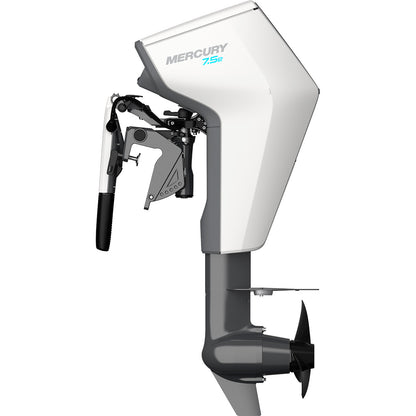
Discover a new, sustainable way to explore the water with a Mercury® Avator 7.5e electric outboard. Available in a portable tiller configuration or with remote throttle controls, the 7.5e outboard can be paired with a variety of small boats, including jon boats, inflatables and small fishing boats, or as secondary power on a sailboat. It makes going boating easy. Just slide the quick-connect battery in place, turn it on, and you’re on your way. With advanced lithium-ion battery technology and a powerful electric motor, you’ll enjoy smooth, quiet, efficient performance.
- Kit includes: outboard, 1 kWh battery, 110W charger, prop, safety lanyard
- Capable of speed and acceleration similar to 3.5hp Mercury FourStroke outboard (varies based on boat, load and conditions)
- Up to 19 hours of runtime at 25% throttle and 1 hour at 100% throttle (varies based on boat, load and conditions)
- Included charger recharges a fully depleted battery in as little as 9 hours
- Quick-connect 1 kWh battery pack installs under cowl
- Integrated display shows battery level, remaining runtime and more
- No exhaust fumes, zero direct emissions
- Industry-exclusive high-torque, high-efficiency transverse flux motor
- Fully adjustable multi-purpose tiller converts to a carrying handle
- Quick-connect transom bracket for easy installation and removal
Specifications
| Steering Type | Tiller |
| Shaft Length | 20″ |
| Battery Type | Integrated 1kWh |
| Battery Weight | 17 lbs. |
| Charger Size | 110W |
| Engine Weight | 43 lbs. |
| Pursuit | Recreational Boating |
| Model Number | 1001E971A |
Description
Mercury Avator 7.5E 20” Outboard Motor
Innovation in marine propulsion has entered a decisive new chapter. Positioned at the intersection of performance, sustainability, and usability, the Mercury Avator 7.5E 20” Outboard Motor has been engineered to meet the evolving expectations of modern boaters. Rather than adapting legacy combustion frameworks, this outboard motor has been designed as a fully electric solution from inception, ensuring that efficiency, reliability, and environmental responsibility are structurally embedded.
Through deliberate engineering choices, a propulsion system has been delivered that prioritizes smooth power transfer, intuitive control, and long-term value. As a result, boating experiences are enhanced without sacrificing operational confidence. Importantly, inclusive design principles have been applied throughout, ensuring that individuals across experience levels and physical abilities can engage comfortably and safely.
Because waterways are increasingly regulated and user expectations continue to rise, electric propulsion is no longer a niche alternative. Instead, it has become a strategic upgrade. Within this context, the Mercury Avator 7.5E 20” Outboard Motor stands as a benchmark solution, combining trusted marine engineering with forward-looking electric innovation.
The Evolution of Electric Outboard Technology
Marine propulsion has historically relied on internal combustion engines. While effective, those systems introduced noise, emissions, vibration, and recurring maintenance burdens. Over time, limitations became increasingly evident, particularly in environmentally sensitive areas and recreational settings where quiet operation is valued.
Electric outboard motors have emerged as a response to these challenges. However, early solutions often lacked the power consistency and durability required for widespread adoption. That gap has now been closed.
By leveraging advanced electric motor design and marine-grade energy management systems, modern electric outboards deliver torque characteristics that outperform their combustion counterparts at low and mid-range speeds. Consequently, maneuverability is improved while operator fatigue is reduced.
With the Mercury Avator 7.5E 20” Outboard Motor, this evolution has been fully realized. Performance expectations are met, environmental impact is reduced, and ownership complexity is minimized. Therefore, electric propulsion is positioned not as a compromise, but as an upgrade.
Why the Mercury Avator 7.5E Represents a Category Shift
Purpose-Built Electric Engineering
Unlike retrofitted electric conversions, this outboard motor has been purpose-built for electric operation. Each component has been optimized to function within an integrated electric ecosystem, ensuring efficiency at every stage of power delivery.
Because mechanical complexity has been reduced, reliability is increased. Fewer moving parts translate directly into fewer failure points. Additionally, wear-related degradation is minimized, extending service life and reducing downtime.
As a result, long-term ownership costs are significantly lowered, a factor that is increasingly important for both individual owners and commercial operators.
Designed for Real-World Marine Use
Marine environments are unforgiving. Exposure to moisture, temperature variation, and continuous vibration demands robust construction. For that reason, materials and sealing systems have been selected to withstand sustained use in freshwater and saltwater conditions.
Thermal regulation systems actively manage operating temperatures, ensuring consistent performance even during extended operation. Because overheating risks are mitigated, confidence is reinforced during longer excursions.

Environmental Responsibility Without Sacrificing Power
Zero Operational Emissions
During operation, the Mercury Avator 7.5E 20” Outboard Motor produces zero direct emissions. This characteristic supports compliance with increasingly strict environmental regulations while preserving the natural quality of waterways.
Fuel spills, exhaust fumes, and oil leaks are entirely eliminated. Consequently, surrounding ecosystems remain undisturbed, and onboard air quality is preserved for all occupants.
Reduced Noise and Vibration
Noise pollution has long been an accepted drawback of boating. With electric propulsion, that assumption no longer applies. Operation remains exceptionally quiet, allowing natural soundscapes to be enjoyed without interruption.
Because vibration levels are also significantly reduced, physical strain on both operators and vessels is minimized. Over time, this contributes to improved comfort and extended structural integrity of the boat itself.
Performance Characteristics That Inspire Confidence
Instant Torque Delivery
Electric motors deliver torque immediately. This characteristic transforms low-speed handling and docking precision. Instead of gradual power buildup, thrust is applied smoothly and predictably.
As a result, vessel control is enhanced in tight spaces, marinas, and shallow waters. For new boaters, this predictability reduces learning curves. For experienced operators, precision is elevated.
Consistent Power Output
Unlike combustion engines that fluctuate based on RPM and load, electric propulsion delivers consistent power throughout its operating range. Therefore, performance remains stable even as conditions change.
This consistency supports safer navigation and more efficient energy usage, particularly during long cruising periods or stop-and-go operation.
Shaft Length and Vessel Compatibility (20-Inch Configuration)
The 20-inch shaft length has been selected to support broad compatibility across common transom heights. This configuration ensures proper propeller immersion, which is critical for thrust efficiency and cooling performance.
Because balance and weight distribution have been carefully engineered, additional hull reinforcement is typically unnecessary. Installation can be completed with minimal modification, reducing setup time and associated costs.
As a result, this outboard motor integrates seamlessly with aluminum fishing boats, small pontoons, utility skiffs, and similar vessel types.
User-Centric and Inclusive Design Philosophy
Ease of use has been prioritized throughout the design process. Controls are intuitive, response curves are predictable, and physical strain is minimized. This approach ensures that boating remains accessible to a wide range of users.
Because inclusive design principles have been applied, individuals of varying strength levels and experience backgrounds can operate the motor confidently. In turn, shared boating experiences become more enjoyable and less intimidating.
Advanced Engineering Behind the Mercury Avator 7.5E 20” Outboard Motor
Engineering excellence is not achieved through isolated features; instead, it is realized through system-level integration. With the Mercury Avator 7.5E 20” Outboard Motor, every mechanical and electrical element has been developed to operate cohesively. As a result, performance consistency, reliability, and efficiency are elevated simultaneously.
Rather than prioritizing raw output alone, this outboard motor has been optimized for sustained, real-world use. Consequently, power delivery remains smooth, thermal stability is maintained, and energy consumption is intelligently regulated. These attributes combine to create a propulsion system that performs predictably across a wide range of boating conditions.
Because electric propulsion demands precision, design tolerances have been refined to minimize loss at every stage. Therefore, energy drawn from the battery is converted into usable thrust with exceptional efficiency.
Electric Powertrain Architecture Explained
Integrated Electric Motor Design
At the heart of the system lies a high-efficiency electric motor engineered specifically for marine propulsion. Unlike generalized electric motors, this unit has been calibrated to deliver consistent torque under variable hydrodynamic loads.
Because torque is produced instantly, acceleration is both smooth and controlled. Sudden surges are avoided, which enhances safety and improves handling accuracy. Additionally, rotational efficiency has been maximized, allowing more forward thrust to be generated with less energy input.
As fewer mechanical components are required, frictional losses are reduced. This design choice directly contributes to lower operating temperatures and extended component lifespan.
Digital Motor Management System
Power delivery is governed by a digital control system that continuously monitors operational conditions. Variables such as load demand, motor temperature, and energy draw are evaluated in real time.
When adjustments are required, output is modified seamlessly. Therefore, efficiency is preserved without interrupting performance. Because this process occurs automatically, operator intervention is unnecessary, allowing full attention to remain on navigation and safety.
Battery Technology and Energy Storage Strategy
High-Density Lithium-Ion Battery System
Energy storage is provided through advanced lithium-ion battery technology designed for marine environments. High energy density allows substantial power reserves to be stored without excessive weight.
Because weight distribution has been carefully considered, vessel balance is preserved. This contributes to predictable handling and reduces stress on the transom and hull structure.
Thermal management systems are integrated to regulate battery temperature. As a result, performance consistency is maintained across varying ambient conditions, and long-term battery health is protected.
Modular Battery Configuration for Flexible Range Planning
Rather than limiting users to a fixed energy capacity, a modular battery approach has been implemented. This allows range to be scaled according to specific use cases.
For short recreational outings, a lighter configuration may be selected. Conversely, extended excursions can be supported through additional battery capacity. Because flexibility has been prioritized, users retain control over both performance and investment.
Energy Efficiency and Intelligent Power Utilization
Optimized Energy Conversion
Energy efficiency is achieved not only through advanced hardware, but also through intelligent software control. Power conversion losses have been minimized through optimized electrical pathways and precision motor control.
Because energy is used more effectively, operating range is extended without increasing battery size. This efficiency advantage becomes particularly valuable during low-speed cruising and maneuvering, where traditional engines are least efficient.
Regulated Power Demand
Instead of delivering excess power unnecessarily, output is matched precisely to demand. This approach reduces wasted energy and prevents unnecessary component strain.
As a result, battery charge is preserved, and overall system longevity is enhanced. Over time, this translates into reduced operating costs and fewer replacements.
Thermal Regulation and Operational Stability
Heat management is a critical factor in electric propulsion. Excessive temperatures can degrade performance and shorten component life. For that reason, the Mercury Avator 7.5E 20” Outboard Motor incorporates active and passive thermal regulation strategies.
Heat generated during operation is dissipated efficiently, preventing thermal buildup. Because operating temperatures remain within optimal ranges, performance remains stable even during extended use.
This stability supports confidence, particularly during longer trips where consistent output is essential.
Durability Through Reduced Mechanical Complexity
Traditional outboard motors rely on complex mechanical assemblies that are subject to wear. In contrast, electric propulsion significantly reduces mechanical dependency.
Because fewer moving parts are involved, routine wear is minimized. Oil changes, fuel system servicing, and exhaust maintenance are eliminated entirely. Consequently, maintenance schedules are simplified, and ownership becomes more predictable.
This reduction in complexity also improves reliability, an important consideration for both recreational and professional applications.
Product Listing Highlights: Engineering & Energy
Engineering and Power Advantages
-
Purpose-built electric powertrain architecture
-
High-efficiency marine-grade electric motor
-
Digital motor management for real-time optimization
-
High-density lithium-ion battery system
-
Modular battery configuration for adjustable range
-
Advanced thermal regulation for consistent performance
-
Reduced mechanical wear and simplified maintenance
-
Optimized energy conversion for extended operating time
Real-World Benefits of Intelligent Engineering
Because engineering decisions directly influence user experience, the benefits of this system are felt immediately. Acceleration is smoother. Noise is reduced. Maintenance is simplified. Confidence is increased.
Importantly, these advantages are not limited to experienced operators. Inclusive usability ensures that new boaters can engage without intimidation, while seasoned users benefit from refined control and efficiency.
Real-World Performance of the Mercury Avator 7.5E 20” Outboard Motor
Performance is ultimately defined on the water, not on a specification sheet. With the Mercury Avator 7.5E 20” Outboard Motor, engineering intent translates directly into real-world capability. From initial throttle engagement to sustained cruising, power delivery remains smooth, controlled, and confidence-inspiring.
Rather than relying on high RPM operation, usable thrust is delivered immediately. Consequently, vessels respond predictably across varying speeds and load conditions. This behavior enhances safety while also improving the overall boating experience.
Because electric propulsion behaves differently than combustion engines, expectations are reset in a positive way. Control becomes more precise. Noise becomes negligible. Stress during maneuvering is reduced.
Acceleration, Thrust, and Control Characteristics
Immediate Torque for Precise Maneuvering
Instant torque is a defining advantage of electric propulsion. As throttle input is applied, thrust is generated without delay. This responsiveness proves particularly valuable during docking, launching, and low-speed navigation.
Because power is applied progressively rather than abruptly, overcorrection is avoided. As a result, boaters experience improved confidence when operating in confined or congested environments.
This predictable behavior supports inclusive use, allowing individuals with varying experience levels to operate the vessel comfortably.
Smooth Power Curve Across Operating Range
Instead of fluctuating power bands, output remains consistent throughout the operating range. Throttle response is linear, enabling fine adjustments without sudden changes in speed.
Therefore, maintaining steady cruising speeds becomes easier, especially during trolling or leisure cruising. Energy usage is also optimized, as unnecessary power spikes are avoided.
Handling and Stability on the Water
Improved Balance and Reduced Vibration
Weight distribution has been engineered carefully to preserve vessel balance. Because the motor produces minimal vibration, structural stress on the transom and hull is reduced.
This reduction in vibration enhances comfort for occupants while also contributing to long-term durability of the vessel. Over extended outings, fatigue is noticeably diminished.
Enhanced Low-Speed Control
Low-speed handling represents one of the most significant performance improvements over traditional engines. Fine throttle control allows gradual movement without jerking or stalling.
As a result, tasks such as positioning for fishing, navigating shallow areas, or approaching docks become more controlled and less stressful.
Speed Expectations and Practical Use
While electric outboards are often misunderstood in terms of speed capability, practical performance tells a more accurate story. The Mercury Avator 7.5E 20” Outboard Motor delivers speeds appropriate for its class while excelling in efficiency and control.
Because emphasis has been placed on usable performance rather than peak output, the motor performs exceptionally well in the operating ranges most commonly used by recreational and utility boaters.
This balance ensures that expectations are met without compromising efficiency or longevity.
Vessel Compatibility and Use Scenarios
Ideal Boat Types for the 20-Inch Shaft Configuration
The 20-inch shaft length has been selected to support a broad range of vessel designs. Proper propeller immersion is maintained, ensuring efficient thrust and reliable cooling.
Common compatible vessels include:
-
Aluminum fishing boats
-
Utility skiffs
-
Small pontoons
-
Jon boats
-
Lightweight workboats
Because installation requirements are minimal, retrofitting existing boats is typically straightforward.
Load Handling and Passenger Considerations
Performance remains consistent across varying load conditions. Whether operating solo or with additional passengers and gear, thrust delivery adapts smoothly.
This adaptability supports recreational outings, family use, and light commercial applications. Because balance and control are preserved, safety margins remain intact.
Quiet Operation and Its Practical Advantages
Enhanced Fishing and Wildlife Observation
Quiet propulsion significantly improves fishing experiences. Fish are less likely to be disturbed, and natural environments remain undisturbed.
For wildlife observation and eco-tourism activities, silent operation allows closer interaction without disruption. Therefore, the motor aligns naturally with environmentally focused boating.
Improved Communication Onboard
Because engine noise is minimal, communication between passengers remains clear. Instructions, conversations, and safety cues can be shared without shouting or distraction.
This advantage enhances group outings and supports inclusive participation for individuals who may be sensitive to noise.
Energy Usage During Typical On-Water Activities
Energy consumption varies based on speed, load, and operating conditions. However, intelligent power regulation ensures efficient usage across common boating activities.
Low-speed cruising and maneuvering consume minimal energy, extending usable range. During higher demand situations, power delivery remains controlled to prevent unnecessary drain.
As a result, range planning becomes more predictable and manageable.


Reviews
There are no reviews yet.