
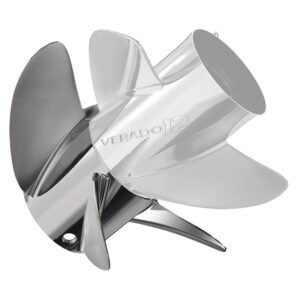
Quicksilver Bravo 3 14.25″ Diameter X 22.5″ Pitch, 3-Blade Stainless Steel Propeller, Right Hand Rotation, Matte Finish
€620.00
QUICKSILVER Bravo Three 14.25″ Diameter X 22.5″ Pitch, 3-Blade Stainless Steel Propeller, Right Hand Rotation, Matte Finish
This innovative contra-rotating propeller system includes a large diameter front 4-blade propeller and small diameter rear 3-blade propeller that provides better acceleration and holding than the Quicksilver Thunderbolt BIII. The counter-rotating system also allows for unbelievable control of your boat, so you won’t ever feel like you’re not in control. This sleek prop comes in a tough matte finish.
Key Features
- 14.25″ diameter, 22.5″ pitch, right-hand rotation
- Stainless steel propeller
- Up to an 8% gain in acceleration versus the original Quicksilver Thunderbolt BIII
- Unbelievable handling and boat control with contra-rotating propellers
Description
Quicksilver Bravo 3 14.25″ Diameter X 22.5″ Pitch Stainless Steel Propeller
Precision-Engineered Performance for Confident, High-Efficiency Boating
Choosing the right propeller directly influences how confidently, efficiently, and smoothly a boat performs on the water. For operators who demand durability without compromising precision, the Quicksilver Bravo 3 14.25″ Diameter × 22.5″ Pitch 3-Blade Stainless Steel Propeller delivers a carefully engineered balance of strength, responsiveness, and long-term reliability.Quicksilver Bravo 3 14.25″ Diameter X 22.5″ Pitch
Designed for right-hand rotation Bravo 3 drives, this matte-finish stainless steel propeller supports consistent thrust, predictable handling, and enhanced control across a wide range of boating conditions. Whether you are cruising, towing, or navigating variable water loads, this propeller offers dependable performance that aligns with both recreational and professional expectations.Quicksilver Bravo 3
Engineered for Precision, Built for Confidence
Performance on the water improves when every component works in harmony. This propeller was developed to integrate seamlessly with Bravo 3 sterndrive systems while maintaining optimal hydrodynamic efficiency.
Rather than focusing on raw speed alone, Quicksilver engineered this model to deliver balanced acceleration, reduced vibration, and improved fuel efficiency. As a result, smoother transitions between throttle ranges are experienced, especially under load.Quicksilver Bravo 3
Because stainless steel resists flexing under pressure, consistent blade geometry is preserved even at higher RPMs. That structural integrity translates directly into predictable handling and enhanced operator confidence.
Quicksilver Bravo 3 Product Specifications at a Glance
-
Brand: Quicksilver
-
Series Compatibility: Bravo 3
-
Diameter: 14.25 inches
-
Pitch: 22.5 inches
-
Blade Count: 3
-
Material: Marine-grade stainless steel
-
Rotation: Right-hand
-
Finish: Matte stainless steel
-
Application: Sterndrive propulsion systems
Each specification contributes to an overall design that emphasizes efficiency, longevity, and smooth power delivery.
Why Diameter and Pitch Matter in Real-World Performance
Understanding diameter and pitch helps ensure the propeller you select aligns with your boating needs.
Diameter: Controlled Thrust and Stability
A 14.25-inch diameter allows for sufficient water displacement, improving thrust without introducing unnecessary drag. Because water is engaged more evenly, smoother acceleration is achieved, particularly during mid-range cruising.Quicksilver Bravo 3
Pitch: Optimized Speed and Efficiency
With a 22.5-inch pitch, this propeller advances farther through the water with each rotation. Consequently, cruising speeds can be maintained at lower RPMs, which supports fuel efficiency and reduces engine strain over time.Quicksilver Bravo 3
Together, these measurements create a balanced profile suited for boaters who value consistent performance rather than aggressive extremes.
Advantages of a 3-Blade Stainless Steel Design
Enhanced Efficiency Without Complexity
Three-blade propellers remain a preferred option for many operators because they offer a reliable blend of speed, efficiency, and control. This configuration minimizes drag while still providing sufficient blade surface for effective thrust.
Stainless Steel Strength
Unlike aluminum alternatives, stainless steel blades resist deformation. Because flexing is reduced, the engine’s power is transferred more efficiently into forward motion. Over time, that efficiency contributes to both fuel savings and improved handling consistency.
Long-Term Durability
Marine-grade stainless steel is engineered to withstand corrosion, impact stress, and prolonged exposure to saltwater environments. As a result, the propeller maintains performance characteristics longer, even under demanding conditions.
Matte Finish: Functional Elegance Meets Practical Benefits
While appearance is not the primary concern for most operators, the matte finish serves more than an aesthetic purpose.
-
Glare reduction improves visual comfort during inspection and maintenance
-
Minor surface wear is less visually pronounced over time
-
A clean, professional appearance complements modern marine setups
Functionality and form work together, ensuring the propeller remains visually consistent even after extended use.
Right-Hand Rotation: Compatibility That Matters
This propeller is specifically designed for right-hand rotation Bravo 3 sterndrives. Because rotational compatibility directly affects handling, vibration, and drivetrain health, correct matching is essential.
When paired correctly:
-
Steering response becomes more predictable
-
Gear stress is reduced
-
Smooth power transfer is maintained
Correct rotation is not optional—it is fundamental to long-term performance and safety.
Performance Benefits You Can Expect
Smoother Acceleration
Throttle response improves as power is transferred more efficiently into water movement. Instead of abrupt surges, controlled acceleration becomes the norm.
Improved Cruise Stability
At cruising speeds, consistent blade geometry helps maintain steady RPM levels, reducing oscillation and vibration.
Enhanced Fuel Efficiency
Lower RPM requirements at cruise reduce fuel consumption, especially during extended outings.
Confident Handling Under Load
When carrying passengers or equipment, balanced thrust distribution supports predictable maneuverability.
Ideal Applications and Use Cases
This propeller suits a wide range of boating scenarios, including:
-
Recreational cruising
-
Family and group outings
-
Light towing applications
-
Coastal and inland water navigation
Because performance characteristics remain consistent across varied conditions, it adapts well to changing loads and water environments.
Installation and Compatibility Considerations
Although professional installation is recommended, the propeller is manufactured to meet precise OEM tolerances.
Before installation:
-
Confirm Bravo 3 compatibility
-
Verify right-hand rotation requirements
-
Inspect drive hardware for wear
Proper installation ensures maximum efficiency and protects drivetrain components from premature wear.
Maintenance and Care Guidelines
Maintaining performance over time requires routine inspection.
Recommended practices include:
-
Periodic cleaning to remove marine growth
-
Visual inspection for blade damage
-
Proper torque checks during seasonal servicing
Because stainless steel resists corrosion, maintenance demands remain minimal compared to alternative materials.
Why Choose Quicksilver?
Quicksilver products are designed to meet the demands of modern marine propulsion systems. Their engineering standards emphasize reliability, compatibility, and performance consistency.
By choosing Quicksilver, operators benefit from:
-
OEM-level design precision
-
Proven marine engineering expertise
-
Broad compatibility across sterndrive platforms
Trust is built through performance, not promises.
Advanced Hydrodynamic Design: How This Propeller Moves Water More Intelligently
Hydrodynamics determine how efficiently engine power converts into forward motion. Rather than relying on aggressive blade angles, this propeller uses a balanced hydrodynamic profile that prioritizes smooth water flow across each blade surface.
As water passes over the stainless steel blades, controlled pressure differentials form. Consequently, cavitation risk is reduced, especially during rapid acceleration or tight maneuvering. Because turbulence remains minimized, thrust remains consistent even when water conditions change.
Importantly, balanced hydrodynamics support predictable steering behavior, which many operators value more than marginal top-speed gains.
Blade Geometry and Its Impact on Real-World Handling
Progressive Blade Taper
Each blade gradually tapers from hub to tip. This design choice spreads load evenly, reducing stress concentration points. As a result, vibration levels decrease, and long-term structural integrity improves.
Optimized Cup Distribution
The blade cup has been calibrated to hold water efficiently without creating excessive drag. Therefore, grip remains strong during acceleration while efficiency is preserved during cruising.
Controlled Rake Angle
Moderate rake angles help maintain bow stability without forcing excessive lift. Because lift remains controlled, handling stays predictable when trimming for comfort or efficiency.
Load-Based Performance Scenarios
Different boating conditions introduce varying demands. This propeller adapts effectively across common load profiles.
Light Load Conditions
When operating with minimal passengers or equipment:
-
Throttle response feels crisp
-
RPM climbs smoothly
-
Fuel efficiency improves during steady cruise
Because blade flex remains minimal, power transfer stays efficient even at higher RPM ranges.
Moderate Load Conditions
Under typical recreational use:
-
Acceleration remains smooth
-
Planing occurs predictably
-
Steering response stays balanced
As weight increases, the 14.25″ diameter continues to displace sufficient water, preventing sluggish response.
Heavier Load Conditions
When additional passengers or gear are onboard:
-
Thrust remains controlled
-
Cavitation risk stays low
-
Engine strain is reduced at cruise
Instead of forcing the engine to overwork, the propeller maintains forward momentum efficiently.

Stainless Steel vs Aluminum: A Practical Comparison
Structural Integrity Differences
Aluminum propellers flex under load. Stainless steel does not. Because flexing alters blade geometry, aluminum designs often lose efficiency at higher speeds. Stainless steel preserves shape, ensuring consistent performance.
Performance Longevity
Over time, aluminum blades can deform permanently. Stainless steel resists deformation, maintaining original performance characteristics longer.
Cost vs Value Perspective
Although stainless steel propellers require a higher upfront investment, long-term value often exceeds that of aluminum alternatives due to:
-
Reduced replacement frequency
-
Stable fuel efficiency
-
Consistent handling performance
For many operators, durability offsets initial cost.
Fuel Efficiency: Where Design Meets Savings
Fuel efficiency rarely depends on a single factor. Instead, it emerges from the interaction of pitch, diameter, blade count, and material.
Because this propeller allows cruising speeds at lower RPMs:
-
Fuel burn decreases during extended runs
-
Engine operating stress reduces
-
Overall operating costs decline
Over a full season, even modest efficiency improvements can translate into meaningful savings.
Noise and Vibration Control
Noise fatigue affects enjoyment over time. Fortunately, this propeller’s balanced blade geometry reduces vibration at the source.
Key contributors include:
-
Even blade loading
-
Reduced cavitation
-
Precise hub alignment
As vibration decreases, onboard comfort improves, especially during long cruising sessions.
Seasonal Performance Considerations
Warm-Water Operation
In warmer water, density decreases slightly. Because blade grip remains strong, thrust consistency remains reliable even during peak summer conditions.
Cold-Water Operation
Colder water increases density. Consequently, propeller efficiency often improves. This model adapts well, delivering smooth response without excessive RPM changes.
Variable Conditions
Whether navigating inland lakes or coastal waters, performance remains predictable across seasonal transitions.
Quicksilver Bravo 3 Safety and Control Benefits
Control directly influences safety. Predictable thrust and steering response reduce operator workload, particularly during docking or low-speed maneuvering.Quicksilver Bravo 3
Because this propeller delivers consistent bite:
-
Slow-speed handling improves
-
Sudden throttle changes feel manageable
-
Directional control remains intuitive
These characteristics support both experienced operators and those newer to Bravo 3 platforms.
Installation Precision and OEM Alignment
Manufacturing tolerances align with OEM specifications. As a result, fitment remains precise when installed correctly.
Key installation reminders:
-
Use proper torque values
-
Inspect hub components
-
Confirm rotation orientation
Correct installation protects both propeller and drivetrain integrity.
Quicksilver Bravo 3 Long-Term Ownership Experience
Ownership satisfaction extends beyond initial performance. Over time, operators often value reliability more than incremental speed differences.Quicksilver Bravo 3
This propeller supports long-term ownership through:
-
Corrosion resistance
-
Structural durability
-
Stable performance characteristics
Maintenance demands remain minimal, which simplifies seasonal preparation.
Pitch Selection Explained: Why 22.5” Works for Balanced Performance
Pitch selection plays a decisive role in how a boat feels under throttle. Rather than chasing maximum speed, many operators prioritize controllability, efficiency, and engine longevity. A 22.5-inch pitch supports those goals by striking a practical middle ground.Quicksilver Bravo 3
Instead of forcing the engine to operate at higher RPMs to maintain cruise speed, this pitch allows forward momentum to build efficiently. Consequently, cruising becomes smoother and more economical, especially during extended outings.Quicksilver Bravo 3
Because pitch directly influences engine load, the selected measurement helps protect drivetrain components over time.
Quicksilver Bravo 3 Understanding RPM Optimization Without Overcomplication
Maintaining the Optimal RPM Band
Every engine performs best within a specific RPM range. When pitch aligns correctly, the engine reaches that range without strain.
With a 22.5″ pitch:
-
Cruise RPM stabilizes comfortably
-
Throttle adjustments feel gradual
-
Engine response remains predictable
As a result, the operator experiences less mechanical stress and greater confidence.
Avoiding Over-Revving and Under-Loading
Lower pitch propellers can cause excessive RPMs. Higher pitch designs may overload the engine. This propeller avoids both extremes, creating a balanced operating environment.
Towing and Multi-Use Performance Capabilities
Versatility matters when a single boat serves multiple purposes. Although this propeller does not target aggressive towing exclusively, it handles light towing scenarios effectively.
Light Towing Applications
When pulling inflatables or engaging in casual watersports:
-
Acceleration remains controlled
-
Propeller grip stays consistent
-
Steering response remains manageable
Because thrust delivery stays smooth, transitions between towing and cruising feel natural.
Passenger-Heavy Cruising
With additional passengers onboard:
-
Planing occurs without hesitation
-
Speed stabilizes quickly
-
Handling remains predictable
This adaptability supports families and mixed-use operators.Quicksilver Bravo 3
Trim Behavior and Handling Dynamics
Trim adjustment affects how the hull interacts with water. A well-matched propeller responds smoothly to trim changes rather than amplifying instability.Quicksilver Bravo 3
As trim increases:
-
Bow lift remains controlled
-
Steering feedback stays consistent
-
Cavitation risk remains low
Because blade geometry supports stable water flow, trim adjustments feel intentional rather than reactive.
Low-Speed Maneuverability and Docking Control
Precision matters most at low speeds. This propeller’s design enhances slow-speed control, particularly during docking or tight navigation.
Key benefits include:
-
Predictable thrust engagement
-
Minimal prop walk sensation
-
Smooth directional response
For operators navigating marinas or confined waterways, these characteristics reduce stress and improve safety.
Durability Under Real-World Conditions
Marine environments introduce constant stressors. From debris contact to prolonged saltwater exposure, durability becomes essential.
Impact Resistance
Stainless steel construction resists minor impacts better than softer materials. While no propeller is immune to damage, structural integrity remains higher under comparable conditions.
Corrosion Resistance
Marine-grade stainless steel resists oxidation effectively. Consequently, surface integrity remains intact even after extended exposure to harsh environments.
Quicksilver Bravo 3 Long-Term Cost Efficiency Perspective
Upfront cost rarely tells the full story. Long-term ownership costs matter more for most operators.
This propeller contributes to cost efficiency through:
-
Reduced replacement frequency
-
Stable fuel consumption
-
Lower maintenance demands
Over several seasons, these advantages often outweigh the initial investment.
Quicksilver Bravo 3 Environmental and Efficiency Considerations
Efficiency supports both cost savings and environmental responsibility.
Because this propeller enables lower RPM cruising:
-
Fuel consumption decreases
-
Emissions reduce proportionally
-
Engine wear slows
For operators who value sustainable boating practices, efficiency gains align with broader environmental goals.
Buyer Persona Alignment: Who This Propeller Is Designed For
Different operators evaluate performance through different priorities. This propeller intentionally aligns with multiple buyer profiles without forcing compromise.
The Efficiency-Focused Cruiser
For operators who value relaxed cruising and predictable handling, this propeller supports steady RPM ranges and smooth throttle transitions. Consequently, fuel efficiency improves while engine stress decreases.
The Family and Group Boater
When passengers, gear, and comfort matter most, balanced thrust becomes essential. This propeller maintains consistent performance under moderate load changes, which helps keep outings smooth and enjoyable for everyone onboard.
The Long-Term Ownership Planner
Instead of replacing components frequently, some buyers prioritize durability and stability over time. Stainless steel construction and OEM-level tolerances support that mindset by reducing deformation, corrosion, and performance drift.
Quicksilver Bravo 3 Use-Case Driven Performance Scenarios
Weekend Cruising Scenarios
During extended weekend outings:
-
Cruise speed stabilizes quickly
-
Steering feedback remains predictable
-
Fuel consumption stays manageable
As a result, operators spend less time adjusting throttle and more time enjoying the experience.
Mixed-Use Day Trips
On days that include cruising, docking, idle maneuvering, and light towing:
-
Acceleration remains controlled
-
Low-speed response stays precise
-
Transition between activities feels seamless
Because the propeller does not favor a single extreme, versatility becomes its strength.
Variable Water Conditions
Changing chop, currents, or traffic require confidence. This propeller’s consistent blade engagement helps maintain directional control even when conditions shift unexpectedly.
Competitive Differentiation Without Overstatement
Rather than competing on exaggerated performance claims, this propeller differentiates through balance and reliability.Quicksilver Bravo 3
Key differentiation factors include:
-
Consistent blade geometry under load
-
Reduced vibration across RPM ranges
-
Predictable handling characteristics
While some alternatives emphasize aggressive speed gains, this model focuses on control, efficiency, and longevity—qualities that matter every time the boat leaves the dock.Quicksilver Bravo 3
Maintenance Best Practices for Sustained Performance
Proper care preserves both performance and appearance.
Routine Inspection Habits
Before and after outings:
-
Visually inspect blades for nicks or debris
-
Check for fishing line near the hub
-
Confirm secure mounting
These habits help identify issues early, preventing larger problems later.
Seasonal Maintenance Recommendations
At the start and end of each season:
-
Clean blades thoroughly
-
Apply appropriate corrosion protection
-
Verify torque specifications
Because stainless steel resists corrosion, maintenance remains straightforward rather than burdensome.
Understanding Wear Patterns Over Time
All propellers experience wear. However, wear patterns vary by material and design.
With stainless steel:
-
Edge wear progresses slowly
-
Blade shape remains stable longer
-
Performance degradation occurs gradually rather than suddenly
This predictability helps operators plan maintenance proactively.
Decision-Making Confidence: Matching Expectations to Reality
Choosing a propeller often involves balancing expectations. This model delivers clarity by aligning performance outcomes with realistic use cases.Quicksilver Bravo 3
Instead of promising extreme speed or aggressive lift, it offers:
-
Smooth power delivery
-
Consistent handling
-
Dependable efficiency
For many operators, those attributes define success more accurately than peak numbers.


Reviews
There are no reviews yet.