

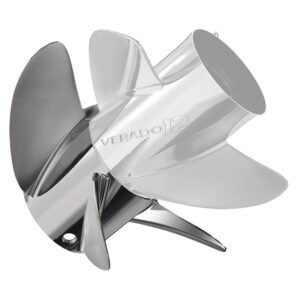
VERADO12 26 PITCH MERCURY RH 3-BLADE REAR PROPELLER 48-8M0166984
€1,050.00
Description
VERADO12 26 PITCH MERCURY RH 3-BLADE REAR PROPELLER 48-8M0166984
Purpose-Built Propulsion for Precision, Power, and Confidence on the Water
Performance on the water is shaped by details that often go unseen. One of those critical details is the propeller—an engineered interface between engine power and real-world marine conditions. The VERADO12 26 Pitch Mercury RH 3-Blade Rear Propeller 48-8M0166984 has been developed to deliver dependable propulsion while supporting smooth handling, controlled acceleration, and long-term operational stability.
Rather than relying on generalized design assumptions, this propeller was produced to align with the performance characteristics of Mercury Verado outboard systems. Through that alignment, consistent thrust delivery is supported while minimizing unnecessary stress on drivetrain components.
Because every boating experience is different, versatility was prioritized without sacrificing precision.
What This Propeller Is Designed to Achieve
Propeller performance is not defined by speed alone. Control, efficiency, responsiveness, and reliability all contribute to a refined on-water experience. For that reason, the VERADO12 26 Pitch Mercury RH 3-Blade Rear Propeller 48-8M0166984 was engineered with a balanced performance profile that adapts to real operating conditions.
Core Performance Objectives
-
Sustained propulsion efficiency at cruising RPMs
-
Predictable acceleration under varying load conditions
-
Reduced vibration for enhanced ride comfort
-
Reliable thrust transfer in both calm and demanding waters
-
Optimized compatibility with Mercury Verado torque curves
By addressing these objectives collectively, a more controlled and confident boating experience is enabled.
Precision Engineering for Mercury Verado Applications
Compatibility should never be assumed in high-performance marine systems. This rear propeller was manufactured to meet Mercury’s OEM specifications, ensuring dimensional accuracy, correct spline engagement, and consistent hub alignment.
Because Verado outboards deliver high torque at lower RPMs, blade geometry was refined to maintain grip without inducing excess cavitation. As a result, smoother transitions through acceleration ranges are supported while maintaining efficient fuel usage.
In practice, that engineering focus translates into predictable behavior at the helm.
Understanding the Role of Pitch in Performance
Pitch selection directly influences how engine power is translated into forward motion. A 26-pitch propeller is commonly chosen when maintaining efficient cruising speed and achieving higher top-end performance are both desired outcomes.
How a 26 Pitch Impacts Operation
-
Engine RPM remains closer to optimal operating ranges
-
Forward movement per revolution is increased
-
Throttle response remains controlled rather than aggressive
-
Excess engine strain is reduced during sustained operation
Because balance is emphasized, performance gains are achieved without compromising reliability.

Right-Hand Rotation: Control That Feels Natural
Directional stability plays a major role in overall handling confidence. With right-hand (RH) rotation, torque forces are effectively managed, particularly when paired with Verado steering systems.
Instead of compensating for unpredictable pull, steering input feels more intuitive. Consequently, precise maneuvering during acceleration, cruising, and directional changes becomes easier to maintain.
3-Blade Configuration: Proven, Efficient, Trusted
Blade count affects how water is displaced and how power is delivered. The 3-blade design used in this propeller remains one of the most widely trusted configurations for balanced marine performance.
Why a 3-Blade Design Is Often Preferred
-
Reduced hydrodynamic drag
-
Strong mid-range acceleration
-
Efficient fuel consumption at cruise
-
Stable handling at higher speeds
Because water resistance is managed efficiently, consistent thrust can be maintained across a broad RPM spectrum.
Built for Real-World Marine Environments
Marine conditions are rarely forgiving. Exposure to saltwater, debris, and variable temperatures places constant demands on propulsion components. That reality guided the material and finishing choices used in this propeller’s construction.
Corrosion-resistant alloys were selected to extend service life while preserving structural integrity. In addition, precision balancing processes help minimize vibration, which contributes to smoother operation and reduced wear over time.
Engine Compatibility Without Guesswork
Selecting a propeller should never involve uncertainty. The VERADO12 26 Pitch Mercury RH 3-Blade Rear Propeller 48-8M0166984 was engineered specifically to align with Mercury Verado outboard platforms, ensuring fitment accuracy and operational consistency.
Because propulsion efficiency depends on precise mechanical integration, OEM dimensional standards were followed throughout the manufacturing process. As a result, spline engagement, hub alignment, and torque transfer are supported without the need for modification.
Rather than adapting performance to the propeller, the propeller adapts to the engine.
Supported Engine Platforms
-
Mercury Verado outboard engines
-
Verado-powered single and multi-engine setups
-
Applications requiring rear propeller configurations
-
High-torque outboard systems designed for sustained cruising
Compatibility confidence allows focus to remain on performance rather than installation concerns.
Vessel Types That Benefit Most
Different vessels impose different demands on propulsion systems. Load distribution, hull design, and intended usage all influence propeller performance outcomes. For that reason, this propeller was optimized to perform consistently across a range of common Verado-powered vessels.
Common Use Cases
-
Offshore fishing boats requiring reliable mid-range thrust
-
Center console vessels balancing speed and stability
-
Recreational cruisers prioritizing smooth, efficient operation
-
Professional or utility boats operating under consistent load
Because versatility is built into the design, performance remains predictable across diverse boating styles.
Performance Behavior Under Varying Load Conditions
Load variability is a reality on the water. Fuel levels change, passenger counts vary, and equipment weight fluctuates. This propeller was designed to manage those variables without sudden performance degradation.
Through refined blade geometry, thrust is distributed evenly even when load increases. Consequently, acceleration remains controlled rather than abrupt, while cruising efficiency is preserved.
Performance Characteristics by Load
-
Light Load: Improved top-end efficiency and smooth acceleration
-
Moderate Load: Balanced RPM stability and fuel efficiency
-
Heavier Load: Maintained thrust with reduced cavitation risk
Rather than excelling in only one scenario, adaptability is consistently supported.
Fuel Efficiency and Operating Economy
Efficiency is measured over time, not in isolated moments. By maintaining optimal blade engagement at cruising RPMs, unnecessary fuel consumption is reduced during extended operation.
Because the engine remains closer to its efficient operating range, throttle input can be moderated more effectively. Over time, that efficiency contributes to lower operating costs and reduced mechanical stress.
Reduced Vibration and Improved Comfort
Ride quality is often overlooked when evaluating propulsion components. However, vibration directly affects comfort, control, and component longevity. Precision balancing processes were applied during manufacturing to address this factor.
As vibration is minimized, steering feedback becomes smoother and fatigue is reduced during long periods at the helm. That improvement enhances both recreational enjoyment and professional usability.
Installation Confidence and Maintenance Considerations
Proper installation supports long-term performance. This propeller was produced to Mercury OEM standards, which simplifies installation and supports correct torque application.
Installation and Ownership Advantages
-
Accurate fit without modification
-
Secure hub engagement
-
Reduced risk of premature wear
-
Straightforward inspection and maintenance routines
Because reliability begins at installation, design accuracy plays a critical role.
VERADO12 26 Pitch Mercury RH Safety and Control Benefits
Predictable propulsion contributes directly to safer operation. When thrust delivery remains consistent, maneuvering becomes more controlled, particularly during docking, acceleration, and directional changes.VERADO12 26 Pitch Mercury RH
With right-hand rotation and balanced blade geometry, steering input remains responsive rather than reactive. That stability supports confident operation across varying water conditions.
Engineering That Prioritizes Consistency Over Compromise
Marine propulsion performance is not accidental. Every curve, edge, and tolerance of the VERADO12 26 Pitch Mercury RH 3-Blade Rear Propeller 48-8M0166984 exists to serve a defined purpose. Rather than optimizing for a single performance metric, the design philosophy emphasizes consistency across operating ranges.
Because Verado outboards generate substantial torque, particularly at lower RPMs, structural integrity and blade efficiency were prioritized simultaneously. Through that balance, power is transferred smoothly without excessive flex or turbulence.VERADO12 26 Pitch Mercury RH
Hydrodynamic Blade Geometry Explained
Water displacement efficiency defines how effectively engine power is converted into forward motion. Blade geometry plays a central role in that conversion process.
Key Hydrodynamic Design Elements
-
Refined blade camber to maintain continuous water contact
-
Optimized leading edges to reduce turbulence during acceleration
-
Controlled blade rake to stabilize lift at cruising speeds
-
Balanced surface area to minimize drag without sacrificing grip
As water flows evenly across the blade surface, cavitation risk is reduced. Consequently, propulsion efficiency remains consistent even as speed and load change.VERADO12 26 Pitch Mercury RH
Cavitation Control and Thrust Stability
Cavitation occurs when pressure drops cause water vapor bubbles to form and collapse against the blade surface. Over time, that process can degrade performance and damage materials.
To address this, blade thickness and curvature were engineered to maintain pressure balance. Instead of sudden pressure changes, smoother flow transitions are encouraged. As a result, thrust remains stable while blade surfaces are protected.VERADO12 26 Pitch Mercury RH
Structural Strength Without Excess Weight
Durability does not require unnecessary mass. This propeller was engineered to withstand operational stress while maintaining an efficient weight profile.
High-strength marine-grade alloys were selected to support:
-
Resistance to bending under torque load
-
Long-term structural integrity
-
Reduced fatigue over extended use cycles
By avoiding excessive material thickness, rotational efficiency is preserved while strength requirements are still met.
Corrosion Resistance for Harsh Marine Conditions
Marine environments expose propulsion components to saltwater, minerals, and temperature fluctuations. Without proper material selection, degradation occurs quickly.
This propeller utilizes corrosion-resistant alloys designed specifically for prolonged marine exposure. Protective finishing processes further enhance resistance to oxidation and surface pitting.
Because durability is built into the material itself, performance consistency is maintained across seasons rather than declining prematurely.
Precision Balancing for Smooth Operation
Imbalance at high rotational speeds amplifies vibration, which negatively affects comfort and mechanical longevity. To prevent this, precision balancing was applied during manufacturing.
Benefits of Precision Balancing
-
Reduced vibration at cruising and high RPMs
-
Smoother steering feedback
-
Lower stress on engine mounts and driveline components
-
Enhanced long-term reliability
When balance tolerances are controlled, operational refinement becomes noticeable immediately.
Heat Management and Sustained Operation
During extended use, friction and load generate heat throughout the propulsion system. Blade efficiency plays a role in managing that thermal load.VERADO12 26 Pitch Mercury RH
By reducing drag and turbulence, this propeller helps limit unnecessary heat buildup. Consequently, sustained cruising remains efficient without placing additional thermal stress on the engine or hub components.
Design Choices That Support Long-Term Ownership
Short-term gains often come at the expense of longevity. In contrast, the design priorities of this propeller emphasize sustained value.VERADO12 26 Pitch Mercury RH
Ownership-Focused Engineering Outcomes
-
Slower wear rates on blade edges
-
Reduced hub stress under load
-
Stable performance across operating seasons
-
Fewer performance inconsistencies over time
Because long-term reliability is engineered in, ownership confidence is reinforced.
Performance That Feels Predictable on the Water
Laboratory specifications only matter when they translate into real-world results. The VERADO12 26 Pitch Mercury RH 3-Blade Rear Propeller 48-8M0166984 was engineered so that performance feels controlled, intentional, and repeatable across common boating scenarios.VERADO12 26 Pitch Mercury RH
Instead of delivering aggressive bursts followed by instability, thrust is applied progressively. That behavior supports confidence during acceleration, cruising, and directional changes.VERADO12 26 Pitch Mercury RH
Because predictability improves control, overall handling becomes easier to manage under varying conditions.
Acceleration Characteristics and Hole-Shot Behavior
Acceleration is influenced by pitch, blade design, and torque compatibility. With a 26-pitch configuration and optimized blade geometry, this propeller delivers a smooth yet assertive hole-shot when paired with Mercury Verado outboards.
Rather than forcing the engine to work outside its optimal range, RPM builds in a controlled manner. As a result, forward momentum increases steadily without sudden surges.
What Users Commonly Experience
-
Controlled launch without excessive bow rise
-
Smooth RPM climb during initial throttle input
-
Maintained grip during transitional speeds
These characteristics support both comfort and control during takeoff.
RPM Stability at Cruising Speeds
Cruising efficiency depends heavily on RPM stability. When RPM fluctuates unnecessarily, fuel consumption increases and ride quality suffers.
This propeller was designed to keep RPM within efficient operating bands during sustained cruising. Because blade engagement remains consistent, throttle adjustments feel minimal rather than corrective.
Consequently, long-distance operation becomes smoother and more economical.
Top-End Speed Expectations
While maximum speed varies based on vessel type and load, the 26-pitch design supports improved top-end efficiency when paired with compatible Verado setups.VERADO12 26 Pitch Mercury RH
Instead of sacrificing stability to achieve speed, balanced thrust distribution helps maintain control at higher velocities. That balance allows speed gains to be realized without compromising handling confidence.
Handling and Steering Response
Steering response is directly influenced by how evenly thrust is applied. With right-hand rotation and balanced blade geometry, helm input feels responsive rather than reactive.
During turns, thrust remains predictable, reducing the need for constant correction. As a result, maneuvering at speed feels more natural and less demanding.VERADO12 26 Pitch Mercury RH
Performance in Challenging Conditions
Water conditions are rarely ideal. Chop, current, and variable depth introduce additional demands on propulsion systems.
This propeller was designed to maintain blade grip under less-than-ideal conditions. Because cavitation control was prioritized, thrust stability is preserved even when water flow becomes inconsistent.
Conditions Where Performance Remains Consistent
-
Moderate chop
-
Variable load distribution
-
Changing throttle inputs
-
Long-distance cruising
Consistency across conditions contributes to safer and more enjoyable operation.
Comparative Advantages Over Alternative Configurations
Buyers often compare blade counts, pitch options, and rotation types. Understanding where this propeller excels helps clarify its value.
Compared to Lower Pitch Options
-
Higher cruising efficiency
-
Reduced over-revving risk
-
Improved top-end performance
Compared to Higher Blade Counts
-
Lower drag
-
Better fuel efficiency at cruise
-
Enhanced top-end speed potential
Rather than excelling in only one category, balanced performance is delivered across multiple metrics.
Choosing the Right Propeller with Confidence
Propeller selection can feel complex, especially when performance, compatibility, and long-term reliability are all at stake. The VERADO12 26 Pitch Mercury RH 3-Blade Rear Propeller 48-8M0166984 was designed to simplify that decision by offering a balanced solution for Mercury Verado-powered vessels.
Instead of requiring constant adjustment or experimentation, this propeller supports predictable performance when installed within recommended specifications. Because of that consistency, confidence replaces uncertainty throughout the ownership experience.
Is a 26 Pitch the Right Choice?
Pitch selection directly influences how your engine operates across RPM ranges. A 26-pitch propeller is commonly selected when cruising efficiency and controlled top-end speed are prioritized.
A 26 Pitch Is Often Ideal If:
-
Your engine reaches recommended WOT RPM with current setup
-
Your vessel operates at cruising speeds for extended periods
-
Load conditions remain relatively consistent
-
Fuel efficiency matters as much as speed
By supporting efficient power transfer, this pitch helps avoid unnecessary engine strain.
Understanding Right-Hand (RH) Rotation
Rotation direction affects handling and steering response. This propeller features right-hand rotation, which is commonly used in single-engine setups and specific dual-engine configurations.VERADO12 26 Pitch Mercury RH
RH Rotation Is Typically Preferred When:
-
Steering systems are configured for RH torque management
-
Predictable helm response is desired
-
Compatibility with existing propeller setups is required
Rather than compensating for torque pull, steering input feels more intuitive.
Why a 3-Blade Propeller Makes Sense
Blade count decisions often come down to balancing speed, efficiency, and control. A 3-blade configuration remains one of the most versatile options available.VERADO12 26 Pitch Mercury RH
Advantages for Most Users
-
Efficient cruising performance
-
Reduced drag compared to 4-blade options
-
Smoother acceleration curve
-
Balanced handling at speed
Because versatility is emphasized, this configuration supports a wide range of boating styles.
Common Buyer Questions Addressed
Will this propeller improve fuel efficiency?
Fuel efficiency improvements depend on vessel setup and operating habits. However, by maintaining RPM stability at cruise, unnecessary fuel consumption is often reduced.
Is this propeller suitable for saltwater use?
Yes. Corrosion-resistant materials and protective finishes were selected specifically for marine environments, including saltwater exposure.
Does this require professional installation?
While professional installation is recommended for best results, the propeller is manufactured to OEM specifications, making installation straightforward for qualified individuals.
Can this propeller handle heavier loads?
Blade geometry was designed to manage variable loads without excessive cavitation, supporting consistent thrust under moderate to heavy conditions.
When This Propeller May Not Be the Best Fit
Transparency supports trust. While this propeller excels in many applications, alternative configurations may be more suitable if:
-
Your vessel consistently operates under extreme heavy loads
-
Low-speed maneuvering is prioritized over cruising efficiency
-
A different pitch is required to reach optimal RPM
In those cases, consultation with a marine professional is recommended.


Reviews
There are no reviews yet.